





Building conservation; meaning, understanding and implementation
[edit] Technical Information Sheet description
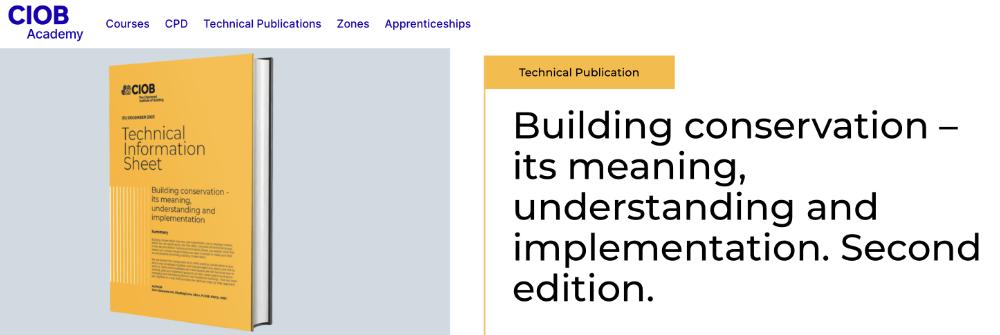
This second edition Technical Information Sheet on building conservation focuses on heritage values, referred to as significance, and technical considerations. It provides the background as to what building conservation is and covers the principles and ethics involved. It offers practical insights with work examples and case studies detailing steps for developing, planning and implementing projects. It outlines what is involved in managing and maintaining historic and traditional buildings and provides the optimum step-by-step approach.
It is available here and is free to CIOB members. £15.00 to non-members.
Contents
- Introduction: What building conservation means
- The conservation process
- Maintenance and management of buildings
- The required competencies
CIOB members can access Technical Information Sheets for FREE and receive a 20% discount on our Codes and Guides. Your discount codes are in the members’ portal. If you experience difficulties accessing the portal, contact: lis@ciob.org.uk.
[edit] About the Author
John Edwards is Director of UK based Edwards Hart Consultants and Professor of Practice at the University of Wales Trinity St David. Specialising in the understanding and work to existing buildings, which includes energy efficiency retrofit to buildings of all types and age and building conservation. John holds a Masters degree in architectural conservation and is certified in building conservation.
This article appears on the CIOB Academy site as "Technical Publication: Building conservation – its meaning, understanding and implementation. Second edition." dated December 2023.
--CIOB
[edit] Related articles on Designing Buildings
- Archaeology.
- Building pathology.
- Building survey.
- CIOB articles.
- Conservation area.
- Conservation of the historic environment.
- Conservation officer.
- Designated areas.
- Historic building investigation.
- Historic environment.
- IHBC articles.
- Listed buildings.
- Principles of conservation.
- Renovation.
- Restoration.
- Structure relocation.
- Types of work to existing buildings.
Featured articles
Check out some of the best features and news from Designing Buildings as well as key stories from around the web.

CIOB celebrates positive Ofsted report.

The Building Safety Regulator announces a call for evidence.

Government approach could undermine delivery and regeneration.
World's first mass timber data centre.

The overlooked environmental aspect of data centre development.
Introduction to radon awareness

New technical information sheet published by CIOB.

Updated supplier guide can help electrical contractors engage with NHP.

CIAT confirm the winners of the 2026 architectural technology awards.

Government launches a one stop shop for flood preparedness.

Sir Edwin Lutyens: Britain's greatest architect? Book review.

CIOB publishes free template to help assess and manage risks.
ECA's reflections on Party Conference season

Burnham wants to be confident of winning before asking for a fresh mandate.
New Chief Construction and Scientific Adviser

Sergio Cavalaro, Professor of Infrastructure Systems at Loughborough University.