





Brise soleil
Solar gain is short wave radiation from the sun that heats a building, either directly through an opening such as a window, or indirectly through the fabric of the building. Very broadly, solar gain can be beneficial in cooler climates when it can be used to passively heat buildings. However, too much solar gain can cause overheating and for this reason, Part L of the UK building regulations places restrictions on the amount of glazing that can be used in buildings.
The situation is complicated by the variation of conditions throughout the day and year and the movement of the sun, which can mean that solar gain is beneficial in the morning and evening, or during the winter, but problematic during the middle of the day or in the summer.

Brise soleil can be used to allow low-level sun to enter a building in the mornings, evenings and during winter when it can help heat and light the building, but to shade higher sun during the middle of the day and during the summer which tends to be ‘hotter’, brighter and less beneficial.
Brise soleil are external shading structures which can be fitted over the entire exterior of a building or solely over the windows. They can range from simple lattices or patterned concrete structures, to mechanical baffles, offering architects a practical solution for controlling year round solar radiation, reducing energy costs and helping to reduce glare.
A typical brise soleil extends horizontally from the exterior of glazed sections on buildings to help reduce glare and prevent the building from overheating by reflecting direct, high-level light, but transmitting diffuse and low-level light. Louvres are often incorporated into brise soleil that can be angled to optimise the shading provided depending on the local conditions and the design of the building.
Brise Soleil can be fixed or motorised (automatic or manual), and can be part of a curtain walling system or independent structures. As they are designed to intercept the strong summer sun, they can also incorporate photovoltaic cells.
The southern sides of buildings typically require horizontal, angled baffles to block the high summer sun. For the east and west facing sides of a building a motorised fin system can be used, to follow the sun and actively control the solar gain of the building. This allows optimum protection at the appropriate time of day and year.
[edit] Related articles on Designing Buildings Wiki.
Featured articles
Check out some of the best features and news from Designing Buildings as well as key stories from around the web.
Bridging the gap between clients and contractors

Concerns remain around contractor quality, capability, and delivery.
Construction Management, 10 June.
Heat pumps beat boilers in new home tests.
Building Safety Act implementation in Wales

CIAT to host industry panel on 26 June.

New and updated CLC building safety guidance.
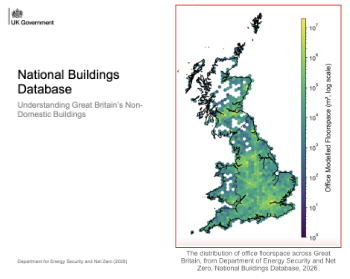
New UK National Buildings Database.
Building Safety Wiki Interviews

Chief executive of the British Woodworking Federation.
Planning condition discharge in England and Wales

A brief explanation from a building compliance expert, with further links.
Overheating guidance and tools for building designers

Guidance for dealing with element of building fabric control that have increasing importance.
Shading for housing, a design guide

From the Good Homes Alliance and British Blind and Shutter Association.
UK Standard Skills Classification (SSC)

A shared framework for describing skills needs.
Social media ban consultation comes to close

CIOB urges UK Government to consider social media’s role in careers guidance in ban debate.