




Blobitecture

'Blobitecture', also known as 'blobism', is a term given to a post-modern architectural style characterised by curved and rounded building shapes, or 'blob architecture'. Blobitecture buildings appear to have an organic form that is soft and free-flowing, yet comes together to produce a complex whole.
The design of buildings has historically been limited by the performance of materials found in nature or easily manufactured from available materials. With the modern capability of technology to supply entirely 'artificial' complex substances, with unique performance characteristics the range of possible design forms has grown considerably.
Architecture radicals, such as Archigram in the 1960s, Buckminster Fuller and the deconstructivists, began to design unusual, inflatable and 'plastic' buildings that exploited this potential, and sometimes were even beyond the structural possibilities of the time.
However, it was in the 1990s, with the wide-spread adoption of computer-aided design (CAD) that buildings adopting unconventional geometric shapes, free of right-angles, became practical. The architect Greg Lynn coined the term 'blobitecture', which he based on the software feature that created Binary Large Objects.
Some of the most prominent examples of blobitecture include:
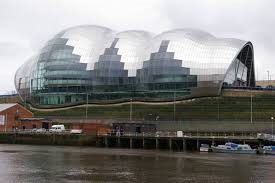
De Admirant Entrance Building, Eindhoven

Selfridges Buildings, Birmingham

Metropol Parasol, Seville

Eden Project, Cornwall

Kunsthaus Graz (see top image)
Experience Music Project, Seattle

[edit] Related articles on Designing Buildings Wiki
Featured articles
Check out some of the best features and news from Designing Buildings as well as key stories from around the web.
Code of Practice for Electrical Energy Storage Systems.

ECA calls on members to comment on draft 4th edition.
Bringing together expertise and creating cultural benefits.

CIOB celebrates positive Ofsted report.

The Building Safety Regulator announces a call for evidence.

Government approach could undermine delivery and regeneration.
World's first mass timber data centre.

The overlooked environmental aspect of data centre development.
Introduction to radon awareness

New technical information sheet published by CIOB.

Updated supplier guide can help electrical contractors engage with NHP.

CIAT confirm the winners of the 2026 architectural technology awards.

Government launches a one stop shop for flood preparedness.

Sir Edwin Lutyens: Britain's greatest architect? Book review.

CIOB publishes free template to help assess and manage risks.