





Air pressure n50 test
The n50-value over one hour is used by the Passivhaus standard to describe the number of air changes that occur within a building's envelope at a pressure difference of 50 Pascals (Pa). The Passivhaus standard is based on a building physics principle that a building can be heated only by the occupants' activities and solar gains. As such the standard is primarily interested in the volume of air that needs to be heated and thus the rate at which that volume of air would be replenished through uncontrolled ventilation or minimised through air tightness.
This is measured through an n50 pressure test which is carried out by closing and sealing doors and windows and installing a door blower to create a pressure differential of 50 Pa (equivalent to a 5 mm water column) between the inside and outside to measure the air change rate. The standard (or n50) requires a test result which is less than 0.6 air changes per hour @ 50 Pascals expressed as < 0.6h-1@50pa. Note that the volume of the building is based on the sum volume of all individual rooms rather than the total volume within the envelope.
[edit] Related articles on Designing Buildings
- Accredited construction details ACDs.
- Air change rates.
- Air permeability testing.
- Air tightness in buildings
- Airtightness of energy efficient buildings.
- Draughts in buildings.
- Energy audit.
- Floor plenum airtightness.
- Indoor air quality.
- Indoor air velocity.
- Passivhaus.
- Site inspections.
- Thermographic survey.
- The history of non-domestic air tightness testing.
Featured articles
Check out some of the best features and news from Designing Buildings as well as key stories from around the web.

Your guide to The Construction Reset at UKCW Birmingham.

Accommodating the Victorian and Edwardian working woman. Book review.
Rethinking passive fire protection in design

PFP demands the same level of design rigour as structure or services.

38% of Gen Zs feel safe when a fire door is wedged open.
Stunning images from around the world

Shortlist for CIOB’s Art of Building photography competition.

Guidance for conversion of traditional pre-1919 stone buildings.
Industrial heritage in the Ruhr

A marked difference to the fate of industrial landscapes in the UK.
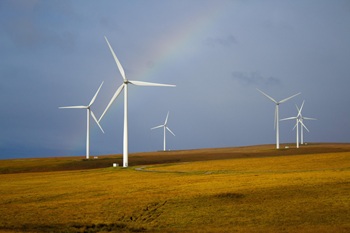
Communities will be able to build their own clean energy.
Why diversity and inclusion matters for SMEs

CIOB’s D&I Charter shows how practical changes can support long-term growth.
Cut electricity bills to power growth

Coalition sends joint letter to the Chancellor.

Gasholders: a history in pictures. Book review.
Recognition, influence and growth

SocEnv identifies three strategic pillars in new strategy to 2045.