





Types of pile foundation

Very broadly, foundations can be categorised as shallow foundations or deep foundations. Shallow foundations are typically used where the loads imposed by a structure are low relative to the bearing capacity of the surface soils. Deep foundations are necessary where the bearing capacity of the surface soils is insufficient to support loads imposed and so they are transferred to deeper layers with higher bearing capacity.
Pile foundations are deep foundations. They are formed by long, slender, columnar elements typically made from steel or reinforced concrete, or sometimes timber. A foundation is described as 'piled' when its depth is more than three times its breadth (ref. Atkinson, 2007).
There are a wide variety of pile types the use and design of which depends on the type and size of load to be supported, the ground conditions, the space available, the equipment available and so on.
A list of commonly-used types of pile foundations is listed below, with links to sources of additional information:
- Bored piles.
- Contiguous piles.
- Continuous flight auger piles.
- Driven piles.
- End-bearing piles.
- Friction piles.
- Geothermal piles.
- King pile.
- Knee pile.
- Micropiles.
- Monopile.
- Pile walls.
- Piled raft foundation.
- Plank pile.
- Pre-cast pile.
- Raking piles.
- Screw piles.
- Secant pile wall.
- Sheet pile.
- Socket piles.
- Tension pile.
- Z piles.
[edit] Related articles on Designing Buildings
Featured articles
Check out some of the best features and news from Designing Buildings as well as key stories from around the web.
Undervaluing our industrial past

Heritage value changes as taste for building styles changes.
Changing expectations around competence and compliance

New information sheet from CIAT.
Grenfell investigation files passed to CPS

Angela Rayner apologises on behalf of the British state.

Electrical contractors need to understand the practical implications.

The real barrier to getting more value from digital technology.

Your guide to The Construction Reset at UKCW Birmingham.

Accommodating the Victorian and Edwardian working woman. Book review.
Rethinking passive fire protection in design

PFP demands the same level of design rigour as structure or services.

38% of Gen Zs feel safe when a fire door is wedged open.
Stunning images from around the world
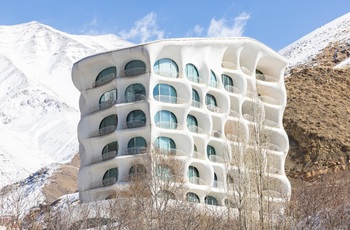
Shortlist for CIOB’s Art of Building photography competition.

Guidance for conversion of traditional pre-1919 stone buildings.
Industrial heritage in the Ruhr

A marked difference to the fate of industrial landscapes in the UK.
Comments
[edit] To make a comment about this article, click 'Add a comment' above. Separate your comments from any existing comments by inserting a horizontal line.