





Property

Property can be defined as something that a person or business has legal title over. Having legal title over property provides the owner with certain enforceable rights.
Property may be categorised as tangible (‘real’) or intangible. In the built environment, tangible property refers to real estate or land, whereas ‘personal property’, or chattel, is all that which is not ‘real property’.
In English common law, property includes all structures integrated with or affixed to the land, such as; buildings, dams, ponds, canals, roads, and so on. Property tends to have a monetary value attached to it and is therefore treated as an asset. However, it can also be seen as a liability, for example, if there is contamination on land or if someone is injured while on land and a court holds the property owner responsible for not preventing their injury.
Property can also be viewed as:
- A means to an end, providing space for a business to establish a working environment.
- An investment.
- A corporate asset that can be used as collateral to raise money.
- A development opportunity in which profit can be generated by adding value.
Property ownership is one of the key tenets of the capitalist socio-economic system. Adam Smith, one of the foremost capitalist thinkers, wrote that one of the ‘sacred laws of justice is to guard a person’s property and possessions’.
Property ownership may be private, collective or common; with the legal determination relating to who has the ‘bundle of rights’ and duties over the property. The four basic components, often referred to as a ‘bundle of rights’, of an economic good are:
- The right to use the good or resource.
- The right to derive income from the good or resource.
- The right to transfer the good or resource to others.
- The right to enforce property rights.
Ownership is referred to as being self-propagating, which means that the property owner is legally entitled to own the economic benefits of that property.
In economics, property rights are theoretical and legal constructs for determining control over, and use of, a resource or good. The basis for all forms of market exchange is derived from property rights.
Property developers construct, redevelop or refurbish buildings in order to make a profit. They are not the same as a property investors, who purchase completed buildings and sell them or rent them for profit, however, there is clearly considerable overlap.
Investment property is real estate that is used for the purposes of investment, with the aim being to earn a financial return. This return can be earned either through rental income, the capital gain on future resale of the property or, as is typical, both.
NB Digitisation for construction product manufacturers: a plain language guide, published by the Institution of Engineering and Technology (IET) in 2021 defines a property as: ‘…an inherent, or acquired feature of, a construction object, such as thermal efficiency or colour.’
Designing Buildings Wiki has a range of articles relating to property, including:
- Building.
- Commercial premises.
- Commonhold.
- Common land.
- Developer.
- Easements.
- Estate.
- Equity and loan capital for property development.
- Freehold.
- Glossary of property law terms.
- Housing tenure.
- Investment property.
- Land.
- Land acquisition.
- Land law.
- Leasehold.
- Legal indemnities for property.
- Liens.
- Mortgage.
- Owner.
- Personal property.
- Premises.
- Preparing to sell a commercial property.
- Place.
- Property chain.
- Property development finance.
- Property guardianship.
- Property marketing.
- Property ownership.
- Property rights.
- Property valuation.
- Off-plan property.
- Restrictive covenant.
- Right of entry.
- Right to access land.
- Specialised property.
- Types of building.
- Units.
Featured articles
Check out some of the best features and news from Designing Buildings as well as key stories from around the web.
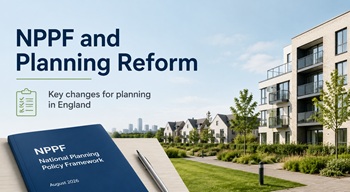
CIAT publishes briefing on planning reforms.
Leaders in Learning for Practice Network

Call for conservation leaders in learning to register interest in new network.
The importance of early engagement

Construction lessons from the Trillium HealthWorks Experience Centre.
Mayors are to be given planning call in powers
Mayors across England will be able to make the most important planning decisions.
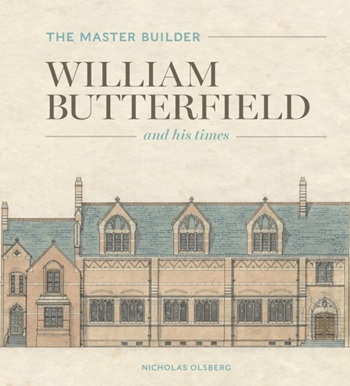
The Master Builder: William Butterfield and his times. Book review.

Why construction can't afford to ignore the skills gap.
Building Safety Regulator, 19 August

Gill Kernick appointed Independent Chair of Residents’ Panel.
Connecting knowledge, technology and conservation
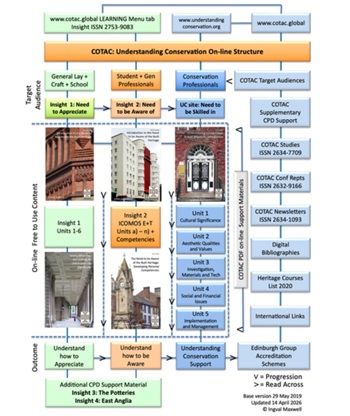
Building competence for the future of built heritage.
Building Regulations and Building Safety Act
CIOB publishes free advice for non-domestic clients.
Building Safety Newsletter from MHCLG.
An extraordinary record of steel engineering worldwide.

Households living near new pylons to save on bills.
Comments
[edit] To make a comment about this article, or to suggest changes, click 'Add a comment' above. Separate your comments from any existing comments by inserting a horizontal line.