






At a glance - 3D printing

In August 2017, BSRIA launched an At a glance - 3D Printing Guide to highlight the accuracy and speed benefits, in addition to offering quick facts and answers to key issues on a myriad of 'need to know' issues.
These include:
- What is 3D printing?
- 3D design tools.
- 3D printing process.
- Methods of 3D printing.
- 3D printing applications – in construction.
- Advantages and disadvantages.
- How can 3D printing be used in the real world?
Chris Thompson, Research Engineer, Sustainable Construction Group, BSRIA, said:
“There’s a new kind of printer that prints three-dimensional objects. The technology has developed significantly in the past 20 years and 3D printing now has a whole host of uses. The aim of this topic guide is to give a background to 3D printing technology and show what 3D printing can offer the construction industry in general and building services in particular.
"In the future – the scope of 3D printing is only going to increase – including prosthetics, food, cars and even houses… !
"3D printing is mainly used in the manufacturing sector for prototyping, helping new products go to market faster. It is also increasingly being used for one-off bespoke components. These can range from the microscopic scale to large structures weighing tens of kilograms.”
What is 3D printing?
The 3D printer uses a model design created in CAD (computer aided design) as its template which is broken down into individual layers by the 3D printer’s software. Material is then deposited, usually via a nozzle device layer by layer until the 3D product is complete. There are other methods of 3D printing that vary the method from this example.
What has put 3D printing at the forefront of product development and opened up new markets are the increases in speed and accuracy and the increased range of materials that can be used. Improvements in technology, especially CAD have aided this – a manually controlled 3D printer would almost be impossible to use accurately.
3D printing also makes the manufacture of different shapes such as hollow structures possible which previously were not with traditional subtractive methods such as milling.
Who is the topic guide for?
- Architects.
- Building surveyors.
- Building designers.
- Manufacturers.
- System Integrators (SIs).
- HVAC engineers.
- Building Services engineers.
To find out more and access the document, see here.
This article was originally published here on 1 Aug 2017 by BSRIA.
--BSRIA
[edit] Find out more
[edit] Related articles on Designing Buildings Wiki
- BSRIA articles on Designing Buildings Wiki.
- 3D printing in construction.
- 3D concrete printer.
- 3D concrete printing market.
- 3D printed bridge.
- 3D printing Michelangelo's David in concrete.
- Advanced construction technology.
- At a glance - Indoor air quality.
- BSRIA launch smart technology topic guide.
- Printing 3D models of buildings.
Featured articles and news
Change of use legislation breaths new life into buildings

A run down on Class MA of the General Permitted Development Order.
Solar generation in the historic environment

Success requires understanding each site in detail.
Level 6 Design, Construction and Management BSc

CIOB launches first-ever degree programme to develop the next generation of construction leaders.

Open for business as of April, with its 2026 prospectus and new pipeline of housing schemes.
The operational value of workforce health

Keeping projects moving. Incorporating unplanned absence and the importance of health, in operations.
A carbon case for indigenous slate
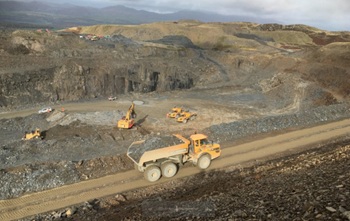
UK slate can offer clear embodied carbon advantages.
Costs and insolvencies mount for SMEs, despite growth

Construction sector under insolvency and wage bill pressure in part linked to National Insurance, says report.
The place for vitrified clay pipes in modern infrastructure
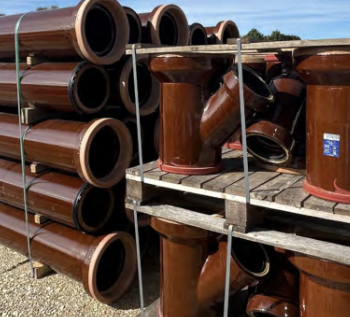
Why vitrified clay pipes are reclaiming their role in built projects.
Research by construction PR consultancy LMC published.
Roles and responsibilities of domestic clients
ACA Safety in Construction guide for domestic clients.
Fire door compliance in UK commercial buildings

Architect and manufacturer gives their low down.
The new towns and strategic environmental assessments
12 locations of the New Towns Taskforce reduced to 7 within the new towns draft programme and open consultation.
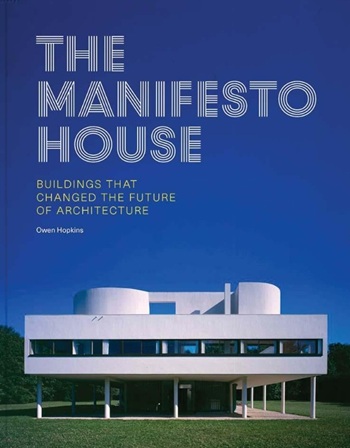
Buildings that changed the future of architecture. Book review.