






Why Approved Document E Is Failing Quiet Homes (and What ISO/TS 19488 Fixes)
Approved Document E (ADE) of the Building Regulations sets the legal baseline for sound insulation in dwellings. But in practice, ADE’s targets are minimal—designed to ensure “reasonable resistance” rather than genuine acoustic comfort.
ADE’s separating element requirements (e.g., DnT,w + Ctr ≥ 45 dB for walls; L’nT,w ≤ 62 dB for floors in new builds) have barely changed since 2003. They are sufficient for compliance, but surveys and resident feedback consistently highlight dissatisfaction with noise transfer, low-frequency thuds, and traffic ingress in homes that meet ADE.
By contrast, ISO/TS 19488:2021 Acoustics – Acoustic classification of dwellings introduces a graded system (Classes A–F) covering airborne, impact, façade, and building services noise. Each class step equates to an audible difference (around 4 dB increments for airborne/impact insulation). ADE’s minimums sit roughly at the lower end of this scale(Classes D/E), meaning that a compliant building may still perform poorly in real-world conditions.

[edit] Why this matters
- Performance vs perception: Compliance doesn’t guarantee comfort; occupants experience a clear difference between ADE minimums and higher ISO/TS classes.
- Holistic coverage: ADE deals primarily with walls, floors and reverberation; ISO/TS integrates façade and services noise into a single framework.
- Future-proofing: With urban densification and mixed-use developments, acoustic quality is increasingly critical to health, wellbeing, and marketability.
[edit] Moving forward
Design teams can adopt ISO/TS class targets early in design stages (e.g., aiming for Class B or better) to protect acoustic quality through procurement and value engineering. While ADE remains the statutory minimum, ISO/TS provides a clearer language for quality and a pathway to homes that are not just compliant, but genuinely quiet and beneficial for human health.
Have a question about this article? Please get in touch with us, or email us at: [email protected]
--Polarisacoustics 18:40, 30 Aug 2025 (BST)
Featured articles and news
A safe energy transition – ECA launches a new Charter
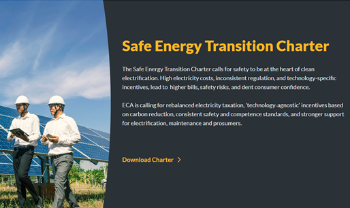
Practical policy actions to speed up low carbon adoption while maintaining installation safety and competency.
Frank Duffy: Researcher and Practitioner

Reflections on achievements and relevance to the wider research and practice communities.
The 2026 Compliance Landscape: Fire doors
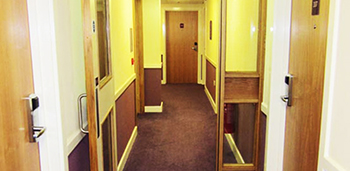
Why 'Business as Usual' is a Liability.
Cutting construction carbon footprint by caring for soil

Is construction neglecting one of the planet’s most powerful carbon stores and one of our greatest natural climate allies.
ARCHITECTURE: How's it progressing?
Archiblogger posing questions of a historical and contextual nature.
The roofscape of Hampstead Garden Suburb

Residents, architects and roofers need to understand detailing.
Homes, landlords. tenants and the new housing standards

What will it all mean?
The Architectural Technology podcast: Where it's AT

Catch-up on the latest episodes.
Edmundson Apprentice of the Year award 2026
Entries now open for this Electrical Contractors' Association award.

Traditional blue-grey slate from one of the oldest and largest UK slate quarries down in Cornwall.

There are plenty of sources with the potential to be redeveloped.
Change of use legislation breaths new life into buildings

A run down on Class MA of the General Permitted Development Order.
Solar generation in the historic environment
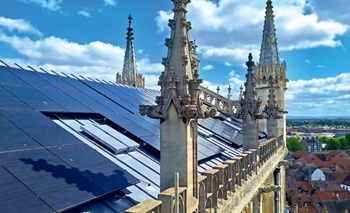
Success requires understanding each site in detail.
Level 6 Design, Construction and Management BSc

CIOB launches first-ever degree programme to develop the next generation of construction leaders.

Open for business as of April, with its 2026 prospectus and new pipeline of housing schemes.
The operational value of workforce health

Keeping projects moving. Incorporating unplanned absence and the importance of health, in operations.
A carbon case for indigenous slate
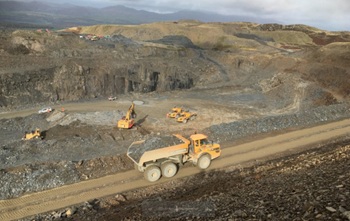
UK slate can offer clear embodied carbon advantages.
Costs and insolvencies mount for SMEs, despite growth

Construction sector under insolvency and wage bill pressure in part linked to National Insurance, says report.