






West & Anor v Ian Finlay & Associates
West & Anor v Ian Finlay & Associates [2013] EWHC 868 (TCC)
NB This case was subsequently heard at the Court of Appeal in 2014. See West & Anor v Ian Finlay & Associates appeal for more information.
This case provides salutary lessons to consultants and others with net contribution clauses in their engagement terms who assume they are adequately protected. You may need to think again!
Mr and Mrs West (“the claimants”) bought a £1.7m house in Putney. They engaged an architect and main contractor (“Armour”), as well as other directly appointed contractors, to undertake major changes to the layout of the house. The project proved disastrous with significant damp and M&E problems resulting in extensive damp remedial works and the replacement of the M&E works.
Armour became insolvent so the claimants pursued Ian Finlay & Associates, the architect (“the defendant”) claiming £800,000 for negligence for its lack of advice regarding damp and failure to notice and have rectified the defective M&E works.
The defendant was found liable for design defects and a failure of its inspection duties as well as a failure to properly co-ordinate the works.
The defendant argued its liability was limited as its terms of engagement contained the following clause: “Our liability for loss or damage will be limited to the amount that it is reasonable for us to pay in relation to the contractual responsibilities of other consultants, contractors and specialists appointed by you.” The defendant did not explain the meaning and effect of the clause to the claimants and it was queried whether he understood the clause himself. Neither was the clause negotiated between the parties.
The judge, Mr Justice Edwards-Stuart, looked at the clause applying the Unfair Terms in Consumer Contracts Regulations 1999 (“UTCCR”). This legislation protects consumers against unfair standard terms in contracts with businesses and states that any ambiguity should be interpreted in favour of the consumer. The defendant was not seen as trying to take advantage of the claimants by including the net contribution clause in his engagement terms, arguing that such clauses are recommended by the RIBA for use in architects’ appointments. However, the judge decided the clause was ambiguous and interpreting it in context concluded that it did not encompass Armour, as the main contractor, only the other contractors and specialists appointed directly by the claimants. Correspondence between the parties suggested this was their understanding of the clause. Consequently, the clause did not limit the defendant’s liability to the claimants rendering him liable for the whole of the loss.
Net contribution clauses are limitation clauses, designed to limit a party’s liability to the proportion of loss which is fair/reasonable for it to pay taking account of other parties who share liability for the same loss. If the clause is not properly drafted to include all those parties who share liability for the loss then it may not operate to limit liability, as here. The need for clear and careful drafting is therefore critical. Net contribution clauses are intended to afford protection to those seeking to rely on them against another party’s insolvency but unfortunately in this case, due to the clause’s ambiguity, did not protect the defendant from Armour’s insolvency.
The RIBA guidance notes accompanying the 2010 (2012 revision) conditions recognises the application of the UTCCR in contracts with consumers and provides that net contribution clauses need to be drawn to consumers’ attention and carefully explained.
This case highlights the treatment of net contribution clauses affecting consumers where the UTCCR applies but other limitation clauses have been decided in the context of the Unfair Contract Terms Act 1977, most recently the Ampleforth Abbey Trust vs Turner & Townsend Project Management Limited case where a financial cap was found to be unreasonable due to the particular facts of the case. These cases demonstrate the need to bring such clauses to the specific attention of the client and negotiate and agree them without assuming the automatic protection it is thought they afford.
This article was created by --Najma Dunnett as part of an ongoing series of legal articles written for Designing Buildings.
[edit] Related articles on Designing Buildings
- Ampleforth Abbey Trust vs Turner & Townsend Project Management Limited.
- Contract.
- Contra proferentem.
- Defects.
- Joint and several liability.
- Net contribution clauses.
- Professional Indemnity Insurance.
- West & Anor v Ian Finlay & Associates appeal.
[edit] External references
- BAILII, the decision in full.
Featured articles
Check out some of the best features and news from Designing Buildings as well as key stories from around the web.

CIOB photography competition is open for entries.
ECA Edmundson apprentice of the year award

Finalists announced.
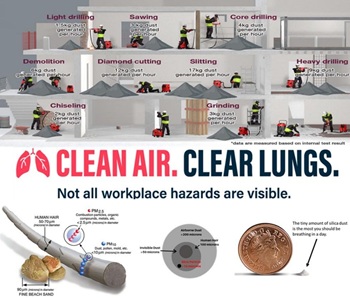
Major new study exposes serious knowledge gaps.

Generating energy from internal light as well as sunshine.

ECA welcomes plans to strengthen subcontractor quality control.

Combining mid-career qualifications with experience broadens career opportunities.

Why being a mentor can help your career.

Channel 4 broadcaster to host 125th anniversary ceremony.
Listed structures on the rail network
Heritage interests and operational requirements must be balanced.

Historic England publishes research into embodied carbon when retrofitting traditional buildings.

New Prime Minister delivers on ECA call for cut in electricity costs.

CIOB reacts to the announcement of Andy Burnham as Prime Minister.