





Wayland Young
‘It can be said that no other single minister before or since has done as much for conservation as Lord Kennet achieved from 1965–1970’ – John Delafons (1997)[1]

|
| Young examined the conservation funding mechanisms used in the historic city of Avignon. (Photo: Gillag, Wikimedia). |
A perhaps unlikely quiz question could be: what connects the signing of the first conservation order on a London pub, the fact that St Pancras is still standing, and the existence of books about Italy, the future of Europe, and nuclear disarmament? The answer would be that they were all achieved by Wayland Young, the 2nd Baron Kennet, also known as Lord Kennet. The praised heaped on Kennet by John Delafons in his magisterial examination of 20th-century conservation policy is therefore just one aspect of Kennet’s long and varied career in public life.
Despite this, Lord Kennet is arguably the least well known of the names attached to changes to conservation policy in the 1960s. Perhaps Duncan Sandys and Richard Crossman are the better-known names, but Lord Kennet, in his first government post, left an indelible mark on both how we now conserve and also why we should preserve our historic built environment.
The second Lord Kennet, Wayland Young, assumed a role in Harold Wilson’s government in the mid-1960s as a result of a being a hereditary peer. His father, the first Lord Kennet, Sir Hilton Young, was also involved in planning and conservation, introducing the Town and Country Planning Act 1932 as minister of health and housing, but this was not, initially, a track that Wayland Young wanted to follow. Instead Wayland pressed for a position within the Foreign Office, a position to which he was well suited given his previous work and writing about Italy. This European connection would however serve him well as he worked within the Ministry of Housing and Local Government (MHLG) most notably, as parliamentary secretary to the Ministry of Housing, and was involved in that pivotal period of British conservation policy which still shapes decision-making today.
Wayland’s career inside the MHLG can be characterised as successful and durable. Wayland recalls how he was able to skilfully manoeuvre policies and practices across the period of two government ministers, Richard Crossman and Anthony Greenwood. In so doing Wayland directly informed a number of key areas within the practice of conservation, including the developing of ideas that led to conservation areas, conservation orders, the Four Towns Studies (Bath, Chester, Chichester and York), the Town and Country Planning Act 1968, supporting the maintenance and upgrading of older homes, and chairing the Preservation Policy Group.
However, it is in Wayland Young’s work around conservation areas that his greatest legacy lies. John Delafons, principal private secretary to Richard Crossman, believed that ‘It was thanks to him [Wayland Young] that the conservation area concept took hold so quickly and, some would later argue, was applied so indiscriminately’. Indeed Delafons went further to say that this was when the ‘floodgates of conservation were opened’ and that Wayland Young would forever be associated with the ‘presumption in favour of preservation’.[2] This resulted from Wayland Young’s skilful manoeuvring of policy and practice behind the scenes.
Young recounts: ‘I wanted the local authorities to designate many and large areas, which they probably would if they did so without thinking out what had to be done, and then apply increasingly energetic policies in them. If they first discovered how much had to be done and how troublesome it was all going to be, and only then began to designate the areas in the light of that newly acquired knowledge, they would no doubt designate more sparingly… So we advised the local authorities to designate first and think later, and this, broadly speaking, is what they did’.[3]
Wayland Young’s commitment to conservation areas was very much in keeping with the zeitgeist, but whereas Duncan Sandys popularised the option by pushing it through a private members bill, it was Young who found ways to implement the policy. This was not a case of following orders but instead Young’s interest in the group value of historic buildings pre-dated the Civic Amenities Act. Indeed, perhaps in keeping with Young’s predilection for foreign affairs, he spent time in both France and Italy trying to understand how both countries extended formal protection to the areas surrounding historic monuments.
Young concluded that the zone protégée law ‘seemed superior to ours in the protection it gave against ugly or over-large new developments’. [4] He went further to examine practice, law and finance to understand how these ideas could be implemented in the UK by taking a keen interest in the central/local delivery mechanisms, as well as the role of the Caisse des Depots and the Société d’Economie Mixte, in funding the conservation of historic parts of Paris, Lyon and Avignon.
He did not just go on travels abroad but also sought to understand preservation from the perspective of places in the UK. He recalled visiting Poole, Gosport, Peterborough, York, Oxford and Cambridge, and it is this experiential dimension of his work that allowed him to match an awareness of cultural changes with his ability to implement legislative and administrative changes.
Indeed, Young recounted: ‘There was a general shift of our national consciousness towards the visual, and a greater flow than ever of good and readable scholarship about architecture and the arts. Everywhere local amenity societies sprang to life, and more and more people became conscious that their street, their village, their town, their quarter of the city, was different from others because it had grown differently, and that was interesting… It was my job to see that, in the restricted field of architectural heritage, no less than in others, the structure of public law and administration was adequate to meet this new and rightful public demand’.
The later years of Young’s involvement saw him chair the Preservation Policy Group, comprised of an esteemed group of individuals including Sir Nikolaus Pevsner. The remit of the group was to use the Four Town Studies (Bath, Chester, Chichester and York) to support the implementation of conservation policies. Kennet was also involved in plans for financing the repair of older houses. He did not leave conservation behind when he left the MHLG, going on to hold a range of positions across the built environment, including parliamentary vice president of the Local Authorities World Heritage Forum, honorary fellow of RIBA, and president of the Avebury Society and the Stonehenge Alliance, to name just a few.
With the latter, Young displayed the same commitment to conservation as he had within the MHLG. He and his wife, Lady Elizabeth Young, were part of the earliest campaign movements to prevent traffic issues around the world heritage site. Wayland Young stated that the plans for a tunnel in 2004 were ‘barbaric… No other country in the world would contemplate treating a site which is a world icon in such a way.’[5] Young died in 2009, leaving a legacy of passionate commitment to both historic places and procedural work. Perhaps this drive to conserve historic places, both inside and outside of government, came from his deep understanding of why historic places are important to people and how this motivates action. In the first few pages of his book Preservation he hints at his understanding of the emotional effects of old places and how this informs action: ‘If something moves people, they are bound to want to keep it’.[6]
The years inside the MHLG were the highlight and show how Lord Kennet combined this perception of why historic places matter with an understanding of the inner workings of government to push forward a whole raft of initiatives that have ensured that historic places have a better chance of become part of the future of places. For that, and much else, the conservation profession owes a degree of thanks to him.
References:
- [1] John Delafons (1997) Politics and Preservation: a policy history of the built heritage, 1882-1996, Spon, London.
- [2] Delafons (1997)
- [3] Wayland Kennet (1972) Preservation, Temple Smith, London.
- [4] Kennet (1972)
- [5] www.stonehengealliance.org.uk/thestonehenge-sagacontinues/
- [6] Kennet (1972)
This article originally appeared as ‘Lord Kennet: making government work’ in the Institute of Historic Building Conservation’s (IHBC’s) Context 184, published in June 2025. It was written by Rebecca Madgin, professor of urban studies at the University of Glasgow and programme director for the Arts and Humanities Research Council’s place-based research programme. Her latest book is Why Historic Places Matter Emotionally (Cambridge University Press, 2025).
--Institute of Historic Building Conservation
Related articles on Designing Buildings Conservation.
IHBC NewsBlog
IHBC sponsors Gardens Trust event 23-4 Sept 2026
.jpeg)
'Learning from the Past, Shaping the Future’ takes place in Milton Keynes
Renovations to Frank Lloyd Wright's Fallingwater complete
.jpg)
World Heritage Preserved project opens house for tours again
Shakespeare Birthplace Trust places Hall's Croft on HAR Register
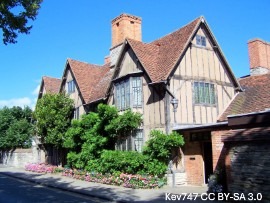
Stratford-upon-Avon home of Shakespeare's daughter is 'At Risk'
Lady Grange’s House repaired on St Kilda
.jpg)
National Trust for Scotland repairs stone cleit with link to famous island resident
Griff Rhys Jones on BBC Radio 4 Today programme
,_Green_Lane,_Derby.jpg)
The Victorian Society’s President unveiled its latest Top Ten Endangered Buildings 2026.
Need a MATE? Book your place now.

IHBC offers free webinars on applying for IHBC accreditation (Full & Associate).
UK Stained Glass Repository finds windows new homes
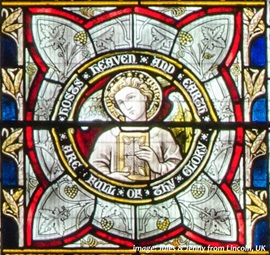
How are stained glass windows are rescued, stored and repurposed?
APPGEBE report sets high aims for quality
'Government must not sacrifice quality in drive to build 1.5m homes'
New measures protect Historic Shipwrecks from heritage crime

Underwater cultural heritage benefits from new HE guidance
How could the City of London skyline look in 6 years' time?

Visualisation shows approved planning applications as completed buildings
National Trust for Scotland calls for VAT cuts
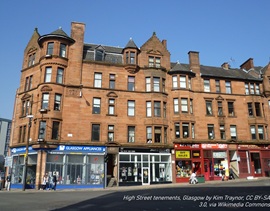
Heritage neglect is encouraged by current policies
IHBC's 'Context' Issue 186 features Industrial Heritage
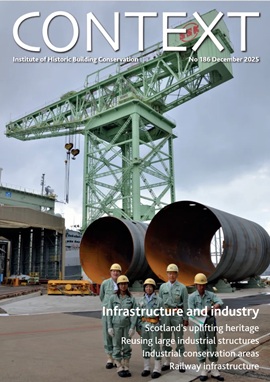
IHBC's members' journal reports on the challenges of conserving infrastructure
Book now for IHBC Annual School 2026

IHBC Annual School is taking place 18-20 June 2026 in Newcastle
RICHeS Research Infrastructure offers ‘Full Access Fund Call’
RICHeS offers a ‘Help’ webinar on 11 March
Latest IHBC Issue of Context features Roofing
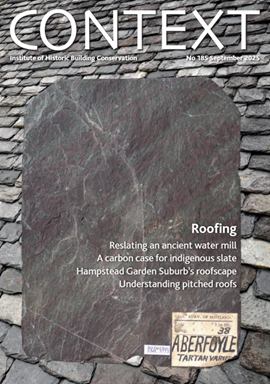
Articles range from slate to pitched roofs, and carbon impact to solar generation to roofscapes
Three reasons not to demolish Edinburgh’s Argyle House

Should 'Edinburgh's ugliest building' be saved?
IHBC’s 2025 Parliamentary Briefing...from Crafts in Crisis to Rubbish Retrofit
IHBC launches research-led ‘5 Commitments to Help Heritage Skills in Conservation’
How RDSAP 10.2 impacts EPC assessments in traditional buildings

Energy performance certificates (EPCs) tell us how energy efficient our buildings are, but the way these certificates are generated has changed.