





Variable refrigerant flow VRF
Variable refrigerant flow (VRF) is a system for the heating, ventilation and air conditioning (HVAC) of buildings.
It was first developed by Daikin Industries in Japan, under the trade name ‘variable refrigerant volume’ (VRV), but is now widely used throughout the world under the generic name ‘variable refrigerant flow’ (VRF). VRF systems are becoming increasingly popular as they can be more efficient, more compact and offer greater flexibility than other HVAC systems.
VRF systems are based on the flow of refrigerant between an external condensing unit and multiple internal evaporators (typically fan coil units). Each internal evaporator serves a different thermal zone within the building, and the flow of refrigerant to each evaporator is adjusted depending on the local requirement. This gives a great deal of flexibility, and as the output of the outdoor condenser adjusts to match the total internal demand, it allows the systems as a whole to operate at optimum efficiency.
Very broadly, VRF systems can be two-pipe or three pipe systems:
- Two pipe systems can provide either cooling or heating (heat pump systems) to all of the zones.
- Three pipe systems, can provide heating and cooling simultaneously, heating some zones and cooling others, with heat recovery enabling heat from zones requiring cooling to be used to heat zones that require heating. Whilst this has a greater capital cost, the heat recovery allows very efficient operation and so lower operating costs.
VRF systems are best suited to buildings with multiple spaces, varying heating and cooling demand and the need for good local control, such as hotels, where some rooms may be unoccupied whilst others have a very high thermal demand. Because of their limited space requirements (depending on how ventilation is provided) compared to some other systems, they may also be suited to retrofitting older buildings.
They may be less suited to large uniform spaces such as gymnasiums or theatres.
[edit] Related articles on Designing Buildings Wiki
- 2021 UK HVAC trends: winners and losers.
- Air conditioning.
- Air handling unit.
- Building services.
- Chilled beam.
- Chiller unit.
- Cooling systems for buildings.
- Constant air volume.
- COVID-19 and the US HVAC sector.
- Cross ventilation.
- Fan coil unit.
- Heat pump.
- Mechanical ventilation.
- Natural ventilation.
- Refrigerants.
- Thermal comfort.
- US among top 2020 global variable refrigerant flow markets.
- Variable air volume.
- Ventilation.
Featured articles
Check out some of the best features and news from Designing Buildings as well as key stories from around the web.
Bridging the gap between clients and contractors

Concerns remain around contractor quality, capability, and delivery.
Construction Management, 10 June.
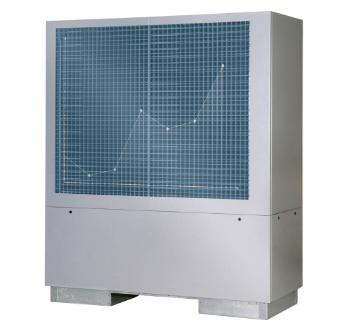
Heat pumps beat boilers in new home tests.
Building Safety Act implementation in Wales

CIAT to host industry panel on 26 June.

New and updated CLC building safety guidance.
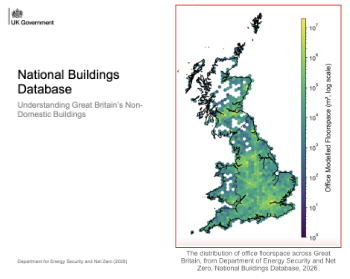
New UK National Buildings Database.
Building Safety Wiki Interviews

Chief executive of the British Woodworking Federation.
Planning condition discharge in England and Wales

A brief explanation from a building compliance expert, with further links.
Overheating guidance and tools for building designers

Guidance for dealing with element of building fabric control that have increasing importance.
Shading for housing, a design guide

From the Good Homes Alliance and British Blind and Shutter Association.
UK Standard Skills Classification (SSC)

A shared framework for describing skills needs.
Social media ban consultation comes to close

CIOB urges UK Government to consider social media’s role in careers guidance in ban debate.