





Types of pile foundation

Very broadly, foundations can be categorised as shallow foundations or deep foundations. Shallow foundations are typically used where the loads imposed by a structure are low relative to the bearing capacity of the surface soils. Deep foundations are necessary where the bearing capacity of the surface soils is insufficient to support loads imposed and so they are transferred to deeper layers with higher bearing capacity.
Pile foundations are deep foundations. They are formed by long, slender, columnar elements typically made from steel or reinforced concrete, or sometimes timber. A foundation is described as 'piled' when its depth is more than three times its breadth (ref. Atkinson, 2007).
There are a wide variety of pile types the use and design of which depends on the type and size of load to be supported, the ground conditions, the space available, the equipment available and so on.
A list of commonly-used types of pile foundations is listed below, with links to sources of additional information:
- Bored piles.
- Contiguous piles.
- Continuous flight auger piles.
- Driven piles.
- End-bearing piles.
- Friction piles.
- Geothermal piles.
- King pile.
- Knee pile.
- Micropiles.
- Monopile.
- Pile walls.
- Piled raft foundation.
- Plank pile.
- Pre-cast pile.
- Raking piles.
- Screw piles.
- Secant pile wall.
- Sheet pile.
- Socket piles.
- Tension pile.
- Z piles.
[edit] Related articles on Designing Buildings
Featured articles
Check out some of the best features and news from Designing Buildings as well as key stories from around the web.
Bridging the gap between clients and contractors

Concerns remain around contractor quality, capability, and delivery.
Construction Management, 10 June.

Heat pumps beat boilers in new home tests.
Building Safety Act implementation in Wales

CIAT to host industry panel on 26 June.
New and updated CLC building safety guidance.
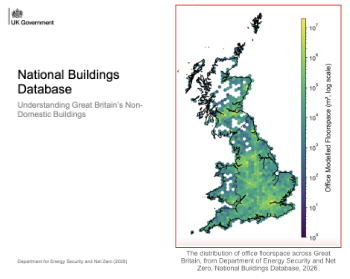
New UK National Buildings Database.
Building Safety Wiki Interviews

Chief executive of the British Woodworking Federation.
Planning condition discharge in England and Wales

A brief explanation from a building compliance expert, with further links.
Overheating guidance and tools for building designers

Guidance for dealing with element of building fabric control that have increasing importance.
Shading for housing, a design guide

From the Good Homes Alliance and British Blind and Shutter Association.
UK Standard Skills Classification (SSC)

A shared framework for describing skills needs.
Social media ban consultation comes to close

CIOB urges UK Government to consider social media’s role in careers guidance in ban debate.
Comments
[edit] To make a comment about this article, click 'Add a comment' above. Separate your comments from any existing comments by inserting a horizontal line.