





Trenchless pipe rehabilitation market
The trenchless pipe rehabilitation market is projected to grow at an impressive rate over the next five years to reach an estimated value of US$ 6.4 billion in 2025., according to a newly added report by Stratview Research.
The market is mainly driven by an increase in spending by governments and municipal corporations for infrastructure rehabilitation. Furthermore, increasing awareness towards trenchless (no-dig) technologies in many nations, especially the emerging economies, is acting as a catalyst for growth.
Ageing water mains and wastewater pipelines in the major markets, such as the USA, Germany, and Canada, coupled with the increased movement towards trenchless pipe rehabilitation technologies are paving the way for further growth.
There are more than two million miles of pipes installed in the USA, and most of them were laid in the mid of the 20th Century. The American Water Works Association estimates US$ 1 trillion of investment is required over the next 25 years to repair the degrading water services and ensure they serve the growing population of the nation. Similar trends were also observed in other major countries such as Germany and Canada.
The report offers detailed insights in relevant market segments, their growth rates, latest market trends, forecasts, and other important details for the forecast period of 2020-2025.
Among different application types, water mains pipe is likely to remain the most dominant as well as the fastest-growing segment during the forecast period. Trenched pipe repair usually takes twice the time of trenchless pipe rehabilitation, increasing the cost considerably. Furthermore, trenched pipe repair can damage landscaping and other permanent structures.
Based on method, the market is segmented as CIPP, Pipe Bursting, Slip-lining, SIPP, and others.
CIPP is projected to remain the dominant segment during the forecast period, whereas pipe bursting will remain the fastest-growing segment. The high penetration of the CIPP technology is mainly due to its excellent performance over competing technologies along with its applicability in a wide range of pipe diameters.
North America is projected to remain the largest market for trenchless pipe rehabilitation during the forecast period. Most of the pipelines installed in the region have passed their retirement age or are approaching it; hence, there is a need for rehabilitation. Rehabilitation of infrastructure gives an extended life of around 30-50 years to the pipe. The USA is the growth engine of the North American market. It is not only the largest market for trenchless pipe rehabilitation in North America but also in the world. The country is also among the early movers into trenchless pipe rehabilitation.
Asia-Pacific is expected to see the highest growth during the forecast period, primarily driven by Japan, China, and Australia. Ageing pipeline infrastructure in the key economies of the region is driving the demand for trenchless pipe rehabilitation.
[edit] Related articles on Designing Buildings Wiki
Featured articles and news
Cutting construction carbon footprint by caring for soil

Is construction neglecting one of the planet’s most powerful carbon stores and one of our greatest natural climate allies.
ARCHITECTURE: How's it progressing?

Archiblogger posing questions of a historical and contextual nature.
The roofscape of Hampstead Garden Suburb
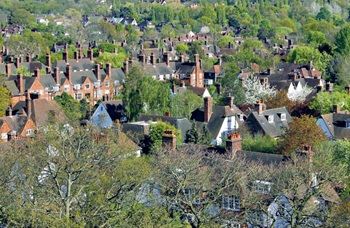
Residents, architects and roofers need to understand detailing.
Homes, landlords. tenants and the new housing standards

What will it all mean?
The Architectural Technology podcast: Where it's AT

Catch-up on the latest episodes.
Edmundson Apprentice of the Year award 2026

Entries now open for this Electrical Contractors' Association award.

Traditional blue-grey slate from one of the oldest and largest UK slate quarries down in Cornwall.

There are plenty of sources with the potential to be redeveloped.
Change of use legislation breaths new life into buildings

A run down on Class MA of the General Permitted Development Order.
Solar generation in the historic environment
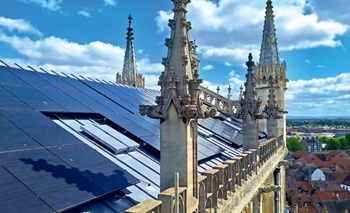
Success requires understanding each site in detail.
Level 6 Design, Construction and Management BSc

CIOB launches first-ever degree programme to develop the next generation of construction leaders.

Open for business as of April, with its 2026 prospectus and new pipeline of housing schemes.
The operational value of workforce health

Keeping projects moving. Incorporating unplanned absence and the importance of health, in operations.
A carbon case for indigenous slate
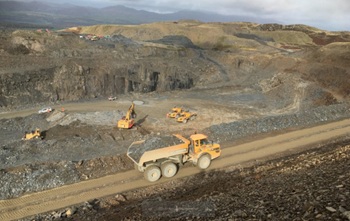
UK slate can offer clear embodied carbon advantages.
Costs and insolvencies mount for SMEs, despite growth

Construction sector under insolvency and wage bill pressure in part linked to National Insurance, says report.