





M&E

Contents |
[edit] What does M&E mean in the construction industry?
In the construction industry, the term 'M&E' means 'mechanical and electrical'. It may be used to refer to mechanical and electrical systems, or mechanical and electrical engineers, mechanical and electrical drawings and so on.
[edit] What are mechanical and electrical systems?
Mechanical systems can include elements of infrastructure, plant and machinery, tool and components, heating and ventilation and so on.
For more information see: Mechanical engineer.
Electrical systems might include, power supply and distribution, telecommunications, computing instrumentation, control systems and so on.
For more information see: Electrical engineer.
Clearly there is a great deal of overlap, with many systems including both mechanical and electrical components, hence the term M&E.
[edit] What qualifications do M&E engineers have?
There are both mechanical and electrical engineering professionals who specialise in M&E. M&E engineers will often hold a degree in mechanical, electrical or M&E engineering. There are also combined mechanical and electrical engineering courses are available, with joint accreditation between the Engineering Council, Institution of Engineering and Technology (IET) and Institution of Mechanical Engineers. Chartered Engineer status can be awarded through the Chartered Institution of Building Services Engineers.
There are a large number of specialist M&E subcontractors and suppliers, and many of the bigger main contractors will have their own M&E divisions. A great deal of integration and co-ordination is required and designs are often a collaboration between consultants, contractors and specialists. This can cause problems where there are a number of separate disciplines, packages and suppliers, with no one party taking overall responsibility for co-ordination.
[edit] What is the difference between M&E and building services?
The terms 'M&E' and 'M&E engineer' are often taken as interchangeable with the terms 'building services'/ 'building services engineer'.
Building services are the systems installed in buildings to make them comfortable, functional, efficient and safe and might include:
- Building control systems.
- Energy distribution.
- Energy supply (gas, electricity and renewable sources such as solar, wind, geothermal and biomass).
- Escalators and lifts.
- Facade engineering (such as building shading requirements).
- Fire safety, detection and protection.
- Heating, ventilation and air conditioning (HVAC).
- Information and communications technology (ICT) networks.
- Lighting (natural and artificial).
- Lightning protection.
- Refrigeration.
- Security and alarm systems.
- Water, drainage and plumbing (including sustainable urban drainage systems (SUDS)).
- Carbon emissions calculations and reduction.
However, mechanical and electrical engineering can be a wider field than this, including areas beyond building design and construction, such as; large-scale power generation and transmission, transportation systems, infrastructure controls, industrial installations and so on.
For more information see: Building services engineer.
[edit] Related articles on Designing Buildings
- Air conditioning.
- Air handling unit.
- BSRIA.
- Building engineering physics.
- Building services.
- Building services engineer.
- CIBSE.
- Electrical engineer.
- Engineer.
- Institution of Mechanical Engineers.
- Mechanical engineer.
[edit] External references
Featured articles
Check out some of the best features and news from Designing Buildings as well as key stories from around the web.
Undervaluing our industrial past

Heritage value changes as taste for building styles changes.
Changing expectations around competence and compliance

New information sheet from CIAT.
Grenfell investigation files passed to CPS

Angela Rayner apologises on behalf of the British state.

Electrical contractors need to understand the practical implications.

The real barrier to getting more value from digital technology.

Your guide to The Construction Reset at UKCW Birmingham.

Accommodating the Victorian and Edwardian working woman. Book review.
Rethinking passive fire protection in design

PFP demands the same level of design rigour as structure or services.

38% of Gen Zs feel safe when a fire door is wedged open.
Stunning images from around the world

Shortlist for CIOB’s Art of Building photography competition.
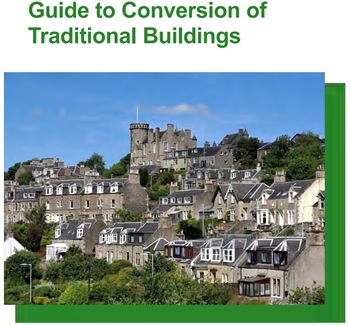
Guidance for conversion of traditional pre-1919 stone buildings.
Industrial heritage in the Ruhr
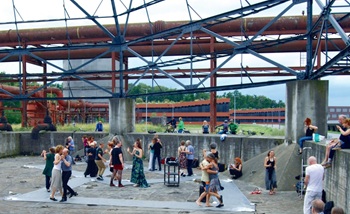
A marked difference to the fate of industrial landscapes in the UK.
Comments
[edit] To make a comment about this article, click 'Add a comment' above. Separate your comments from any existing comments by inserting a horizontal line.
Really helpful explanation thanks.