





Assembly drawing

Contents |
[edit] What are assembly drawings?
Assembly drawings are a type of technical drawing used to represent items that consist of more than one component. They show how those components fit together and may be in the form of, orthogonal plans, sections and elevations, or three-dimensional views.
The location of assemblies may be shown on general arrangement drawings, or sometimes on detail drawings. The components that form the assembly may be shown shop drawings that allow their fabrication.
[edit] What are assembly drawings for?
Assembly drawings may show assembled components, or an exploded view of the relationship between components and how they fit together. For example, they may be used to show how to assemble the parts of a kit such as furniture, how to assemble a complex part of a building (an assembly), or the relationship between a number of details.
[edit] What do assembly drawings include?
Assembly drawings might include instructions, lists of component parts, reference numbers, references to detail drawings or shop drawings, and specification information. They may also include dimensions, notation and symbols. It is important that these are consistent with industry standards so that their precise meaning is clear and can be understood.
Assembly drawings should not duplicate information provided elsewhere, as this can become contradictory and may cause confusion.
The scale at which drawings are prepared should reflect the level of detail of the information they are required to convey. Different line thicknesses can be used to provide greater clarity for certain elements.
Assembly drawings may be drawn to scale by hand, or prepared using Computer Aided Design (CAD) software. However, increasingly, building information modelling (BIM) is being used to create 3 dimensional representations of buildings and their components.
BS EN ISO 7519:1997 Technical drawings. Construction drawings. General principles of presentation for general arrangement and assembly drawings establishes general principles of presentation to be applied to construction drawings for general arrangement and assembly. This standard compliments the ISO 128 series on technical drawings.
[edit] What are the different types of assembly drawings?
Different types of assembly drawings include:
- General assembly drawings, showing an overall assembly.
- Outline assembly drawings, showing the exterior shape.
- Diagrammatic assembly drawings, representing the assembly with the use of symbols.
- Unit assembly or sub-assembly drawings, showing in more detail a part of the overall assembly.
- Fitted assembly drawings, showing the completed assembly.
- Exploded assembly drawing, showing the relationship between the separated parts.
[edit] Related articles on Designing Buildings
- As-built drawings and record drawings.
- Assembly.
- Building information modelling.
- Component drawing.
- Computer aided design.
- Design drawings.
- Detail drawing.
- Drawings.
- Engineering drawing.
- Exploded view.
- General arrangement drawing.
- Installation drawings.
- Notation and symbols.
- Production information.
- Projections.
- Scale drawing.
- Shop drawings.
- Technical drawing.
- Technical drawing pen sizes.
Featured articles
Check out some of the best features and news from Designing Buildings as well as key stories from around the web.
Undervaluing our industrial past

Heritage value changes as taste for building styles changes.
Changing expectations around competence and compliance

New information sheet from CIAT.
Grenfell investigation files passed to CPS

Angela Rayner apologises on behalf of the British state.

Electrical contractors need to understand the practical implications.

The real barrier to getting more value from digital technology.

Your guide to The Construction Reset at UKCW Birmingham.

Accommodating the Victorian and Edwardian working woman. Book review.
Rethinking passive fire protection in design

PFP demands the same level of design rigour as structure or services.

38% of Gen Zs feel safe when a fire door is wedged open.
Stunning images from around the world
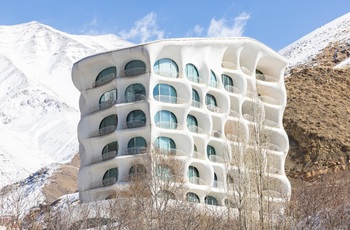
Shortlist for CIOB’s Art of Building photography competition.
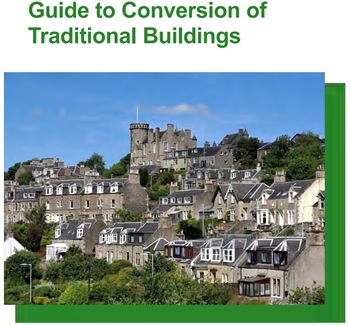
Guidance for conversion of traditional pre-1919 stone buildings.
Industrial heritage in the Ruhr
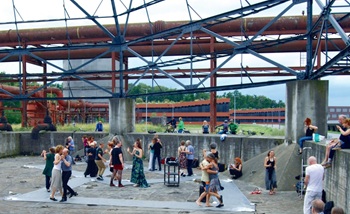
A marked difference to the fate of industrial landscapes in the UK.
Comments
[edit] To make a comment about this article, click 'Add a comment' above. Separate your comments from any existing comments by inserting a horizontal line.