





Solar Reflectance Index in the built environment
The Solar Reflectance Index (SRI) is a measure of the solar reflectance and emissivity of materials that can be used as an indicator of how hot they are likely to become when solar radiation is incident on their surface. The lower the SRI, the hotter a material is likely to become in the sunshine.
This is important as solar radiation can cause buildings to overheat if their external fabric has a high solar absorptance and is unable to 'lose' (emit) absorbed heat by re-radiating it to the outside. In addition, the high solar absorbent nature of many human-made surfaces means that urban areas can have a higher average temperature than surrounding green spaces. This is referred to as the urban heat island effect.
The Solar Reflectance Index can be used in 'cool roof' calculations to demonstrate compliance with LEED (Leadership in Energy and Environmental Design), a voluntary environmental certification system developed by the U.S. Green Building Council.
SRI is a scale from 0 to 100 on which materials that absorb and retain solar radiation (and so become hotter in sunshine) have a lower number, whilst highly reflective materials (which remain cooler in sunshine) have a higher number.
The US department of energy defines the Solar Reflectance Index (SRI.) as '…a measure of the roof's ability to reject solar heat, as shown by a small temperature rise. It is defined so that a standard black (reflectance 0.05, emittance 0.90) is 0 and a standard white (reflectance 0.80, emittance 0.90) is 100. For example, the standard black has a temperature rise of 90 deg. F (50 deg. C) in full sun, and the standard white has a temperature rise of 14.6 deg. F (8.1 deg. C). Once the maximum temperature rise of a given material has been computed, the SRI can be computed by interpolating between the values for white and black.'
NB This definition means that it is possible to have materials with an SRI of less than 0 or more than 100.
SRI can be calculated based on the pitch of a roof, its weight, its solar reflectance, thermal emittance (emissivity) and its ageing characteristics. Ref Cool Roof Rating Council Solar reflectance index calculation worksheet.
The selection of materials with a high SRI can reduce indirect solar gain in buildings and reduce the urban heat island effect. For example, metal roofs finished with a high SRI coating will have a lower temperature under sunny conditions compared to a similar, uncoated metal roof. However, effective solar design is more complicated than simply selecting high SRI materials, as in cooler locations solar gain may actually be desirable.
SRI can be considered a better indicator of a materials response to solar radiation than 'albedo' (from the Latin for 'whiteness') as albedo is a simple ratio of reflected to incident radiation and does not take account of emissivity.
Source: Cambridge Science Park
[edit] Related articles on Designing Buildings Wiki
- Albedo.
- Amber warnings raise building overheating concern.
- Cool roofs.
- Emissivity.
- Green roofs.
- G-value.
- Light reflectance value.
- Low-e glass.
- Part L.
- Passive building design.
- Preventing overheating.
- Shading coefficient.
- Solar gain.
- Solar heat gain coefficient.
- Solar transmittance (gtot).
- Thermal comfort.
- Thermal mass
- Thermal optical properties.
- Types of cool roofs.
- Urban heat island effect.
[edit] External references
- Autodesk, Direct solar gain.
- The US department of energy, Cool roofs.
- Cool Roof Rating Council Solar reflectance index calculation worksheet.
Featured articles
Check out some of the best features and news from Designing Buildings as well as key stories from around the web.
Bridging the gap between clients and contractors

Concerns remain around contractor quality, capability, and delivery.
Construction Management, 10 June.
Heat pumps beat boilers in new home tests.
Building Safety Act implementation in Wales

CIAT to host industry panel on 26 June.
New and updated CLC building safety guidance.
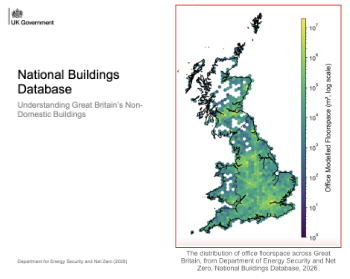
New UK National Buildings Database.
Building Safety Wiki Interviews

Chief executive of the British Woodworking Federation.
Planning condition discharge in England and Wales

A brief explanation from a building compliance expert, with further links.
Overheating guidance and tools for building designers

Guidance for dealing with element of building fabric control that have increasing importance.
Shading for housing, a design guide

From the Good Homes Alliance and British Blind and Shutter Association.
UK Standard Skills Classification (SSC)

A shared framework for describing skills needs.
Social media ban consultation comes to close

CIOB urges UK Government to consider social media’s role in careers guidance in ban debate.