





Pre-manufacturing (2D primary structural systems)
Modern Methods of Construction, Introducing the MMC definition framework, published by Ministry of Housing, Communities & Local Government (MHCLG) in 2019 defines 7 categories for MMC:
- Category 1 – Pre-manufacturing (3D primary structural systems).
- Category 2 – Pre-manufacturing (2D primary structural systems).
- Category 3 – Pre-manufacturing components (non-systemised primary structure).
- Category 4 – Additive manufacturing (structural and non-structural)
- Category 5 – Pre-manufacturing (non structural assemblies and sub-assemblies).
- Category 6 – Traditional building product led site labour reduction / productivity improvements.
- Category 7 – Site process led site labour reduction / productivity / assurance improvements.
Category 2 – Pre-Manufacturing (2D primary structural systems) is defined as:
‘A systematised approach using flat panel units for basic floor, wall and roof structures of varying materials which are produced in a factory environment and assembled at the final workface to produce a final three-dimensional structure. The most common approach is to use open panels or frames, which consist of a skeletal structure only, with services, insulation, external cladding and internal finishing being installed on site.
‘More complex panels – typically referred to as closed panels – involve more factory-based fabrication and include lining materials and insulation. These may also include services, windows, doors, internal wall finishes and external claddings. The system includes structural performance for primary walls and all floors (note – this excludes unitised or composite external walling systems that are not load bearing included in Category 5).’
[edit] Related articles on Designing Buildings Wiki
- British post-war mass housing.
- Design for deconstruction.
- Design for Manufacture and Assembly (DfMA).
- MMC definition framework.
- Modern methods of construction.
- Off site, on track.
- Off-site construction.
- Off-site prefabrication of buildings: A guide to connection choices.
- Prefabrication.
- Pre-manufactured value
- Volumetric.
Featured articles
Check out some of the best features and news from Designing Buildings as well as key stories from around the web.
Where performance meets practice

The Building Envelope Stage at UKCW Birmingham.

CIAT publishes briefing on planning reforms.
Leaders in Learning for Practice Network

Call for conservation leaders in learning to register interest in new network.
The importance of early engagement

Construction lessons from the Trillium HealthWorks Experience Centre.
Mayors are to be given planning call in powers

Mayors across England will be able to make the most important planning decisions.

The Master Builder: William Butterfield and his times. Book review.

Why construction can't afford to ignore the skills gap.
Building Safety Regulator, 19 August

Gill Kernick appointed Independent Chair of Residents’ Panel.
Connecting knowledge, technology and conservation
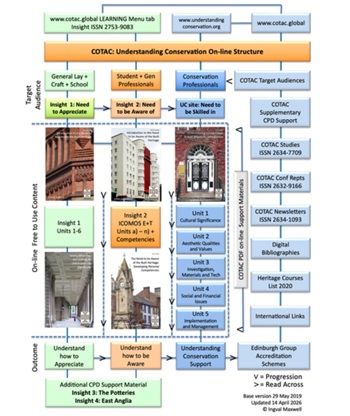
Building competence for the future of built heritage.
Building Regulations and Building Safety Act

CIOB publishes free advice for non-domestic clients.

Building Safety Newsletter from MHCLG.

An extraordinary record of steel engineering worldwide.
Comments
This article is very informative, thank you for sharing helpful content