





Portland Stone
.JPG)
|
| St Paul’s Cathedral. |
Portland Stone is a type of limestone that is commonly used in the construction of traditional buildings in the London area.
Limestone is a sedimentary rock formed during four geological eras: Cretaceous, Jurassic, Permian and Carboniferous, 70 – 345 million years ago. It consists of calcium carbonate, and is formed by the compaction of calcite, primarily from marine organisms, at the bottom of shallow lakes and seas. The presence of marine organisms and other fossil inclusion is often noticeable in limestone. Due to the presence of a variety of minerals, limestone also presents numerous colours, ranging from light grey Portland Stone, to creamy Bath stone and dark grey Purbeck stone.
Portland Stone was formed at the end of the Jurassic period, approximately 145 million years ago. It has been quarried on the Isle of Portland in Dorset since Roman times, and has been used as a building material in London since the 14th century, when it was used in the construction of the Palace of Westminster, the Tower of London and London Bridge. St Paul’s Cathedral, designed by Sir Christopher Wren, was built from Portland Stone, establishing it as the stone of choice for London. During the 19th and early 20th centuries Portland Stone, became popular for building banks, civic buildings and educational establishments, many of which were in the classical style.
It is strong, durable, resistant to weathering, easy to work and carve and can be used for masonry walls, cladding, columns, plinths, flooring, paving, mouldings, sculptures, fireplaces and so on. There are a number of different varieties of Portland Stone, with different appearances, properties and recommended uses depending on the bed that it has been extracted from. These include:
- Bowers Basebed.
- Bowers Roach.
- Fancy Beach Whitbed.
- Grove Whitbed.
- Jordans Basebed.
- Jordans Whitbed.
- Ostrea Patch Reef Whitbed.
[edit] Related articles on Designing Buildings Wiki
- Choosing stone.
- Defects in stonework.
- Finding stone to conserve historic buildings.
- Inspecting stone sample panels.
- Iraq, Afghanistan, Gulf War Memorial.
- Julian Opie Art Wall CitizenM Tower of London Hotel.
- Kentish ragstone.
- Limestone.
- Modern Stonemasonry.
- Sourcing stone to repair Exeter Cathedral.
- Stone dressing.
- Sustainable stone.
- Two New Ludgate Portland Stone Feature Wall.
- Types of stone.
- Use of Stone in Monks Lantern Weybridge.
Featured articles
Check out some of the best features and news from Designing Buildings as well as key stories from around the web.
Bridging the gap between clients and contractors

Concerns remain around contractor quality, capability, and delivery.
Construction Management, 10 June.

Heat pumps beat boilers in new home tests.
Building Safety Act implementation in Wales

CIAT to host industry panel on 26 June.

New and updated CLC building safety guidance.
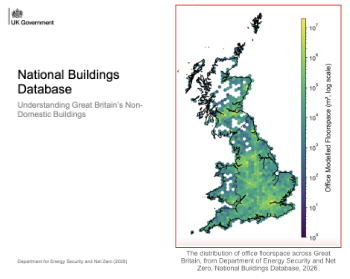
New UK National Buildings Database.
Building Safety Wiki Interviews

Chief executive of the British Woodworking Federation.
Planning condition discharge in England and Wales

A brief explanation from a building compliance expert, with further links.
Overheating guidance and tools for building designers

Guidance for dealing with element of building fabric control that have increasing importance.
Shading for housing, a design guide

From the Good Homes Alliance and British Blind and Shutter Association.
UK Standard Skills Classification (SSC)

A shared framework for describing skills needs.
Social media ban consultation comes to close

CIOB urges UK Government to consider social media’s role in careers guidance in ban debate.