





Metropolis
The word metropolis is derived from the Greek meter meaning ‘mother’ and polis meaning ‘city’. It originally referred to the founding city-state of a region of Ancient Greece.
More recently its meaning has become more ambiguous, taken variously to mean:
- A large, densely populated urban area.
- The main city of a region or county.
- An important city, such as a city that is the centre of a particular activity. For example an industrial metropolis.
A metropolis can encompass more than one city as well as surrounding suburban areas, towns and villages.
Similarly important, but smaller cities may be referred to as a regiopolis.
In the United Kingdom, the designation 'metropolis' historically referred only to London, hence the name of the Metropolitan Police Service. However, the term has been expanded to allow other designations such as metropolitan counties, metropolitan districts and metropolitan areas.
Six metropolitan counties were established under the Local Government Act 1972. This Act introduced a major reorganisation of local government boundaries across Great Britain, merging smaller district councils and altering the boundaries of county council areas. The metropolitan counties were Greater Manchester, Merseyside, South Yorkshire, Tyne and Wear, West Midlands and West Yorkshire.
For more information see: Metropolitan counties.
The term ‘metropolitan city’ may be synonymous with metropolis, or it may be used specifically to describe a city within a metropolitan area which is the main city of that area.
[edit] Related articles on Designing Buildings
Featured articles
Check out some of the best features and news from Designing Buildings as well as key stories from around the web.

The real barrier to getting more value from digital technology.

Your guide to The Construction Reset at UKCW Birmingham.

Accommodating the Victorian and Edwardian working woman. Book review.
Rethinking passive fire protection in design

PFP demands the same level of design rigour as structure or services.

38% of Gen Zs feel safe when a fire door is wedged open.
Stunning images from around the world

Shortlist for CIOB’s Art of Building photography competition.

Guidance for conversion of traditional pre-1919 stone buildings.
Industrial heritage in the Ruhr

A marked difference to the fate of industrial landscapes in the UK.
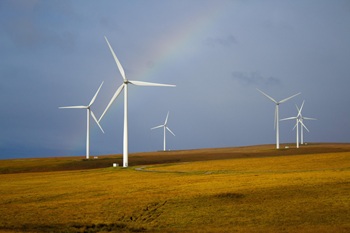
Communities will be able to build their own clean energy.
Why diversity and inclusion matters for SMEs

CIOB’s D&I Charter shows how practical changes can support long-term growth.
Cut electricity bills to power growth

Coalition sends joint letter to the Chancellor.

Gasholders: a history in pictures. Book review.