





Manufacturer’s certificate
Manufacturer’s certificates can be used to ensure quality control, and to verify standards of construction products and workmanship. Third parties test quality characteristics of the manufacturer’s products and provide certification.
Below are a number of different types of quality certificates:
- Certificate of origin: In this case, the certificate states that the product complies with some specifications.
- Accredited laboratory test certificate: The sort of test is performed only on a small sample, and so cannot guarantee all production. They should be used with caution due to their limited scope.
- Product type approval certificate: This approves a prototype and therefore does not guarantee the quality of the subsequent manufacturing process.
- Standard compliance seal or mark: This covers continual production and so it is more reliable than other certificates. When the product is very new and there is no specific standard to regulate it, the certificate is issued in the form of technical suitability documentation.
- The British Board of Agrément (BBA) is an independent UK organisation that offers an approval service for construction products, systems and installers. An agrément certificate is issued for a successful product or system following a detailed assessment including both laboratory testing and inspections. In addition, the manufacturer is audited to ensure they have an adequate quality management system. Repeated testing is undertaken for the duration of the certificate’s validity period.
- The Construction Products Regulation (CPR) was introduced in 2011 to harmonise performance information on construction products across the European Economic Area (EEA). It is made most visible by the mandatory CE marking of regulated products.
- A Kitemark indicates that the product has been independently tested by BSI to confirm that it complies with relevant British Standards, and that BSI have licensed the product manufacturer to use the Kitemark. Manufacturers have to pay to have their products and manufacturing processes tested, and these tests are repeated regularly to confirm continued compliance.
[edit] Related articles on Designing Buildings
- Agrément certificate.
- British Board of Agrément.
- Certificates in the construction industry.
- Construction Products Regulation.
- Design quality.
- Fitness for purpose in construction.
- Kitemark.
- Manufacturer.
- Quality control for construction works.
- Specification.
- Technical specification.
- Testing construction materials.
- Warranty.
- Workmanship.
Featured articles and news
Building Control Independent Panel final report
A precis of a key report lead by Dame Hackitt with full recomendations and link to the government response.
Guide to ISO 19650 for Architecture Firms (2026)
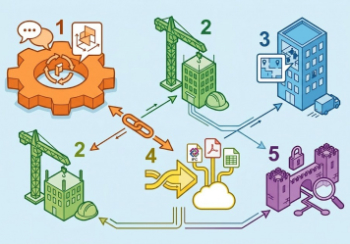
A user gives their low down.

A UK training and membership provider for mould remediation professionals.
Building Safety recap April, 2026
A short and longer run-through of the month, with links to further information and sources.

CIAT May 2026 briefing.
Independent NSI and BAFE study exploring how organisations are changing the way they buy fire safety services.

From medieval scribes to modern word art.

ECA welcomes crackdown on late payment and push for clean energy, whilst CIOB seek fixed cladding removal timeframes.
Cyber Security in the Built Environment
Protecting projects, data, and digital assets: A CIOB Academy TIS.
Managing competence in the built environment

ITFG publishes new industry guide on how to meet the ICC principles.
The UK's campaign to reduce noise pollution: Mythbusting, articles and topic guides.
Setting Expectations on Competence Management
Industry Competence Committee.
New Scottish and Welsh governments

CIOB stresses importance of construction after new parliament elections.
The sad story of Derby Hippodrome

An historic building left to decay.

ECA, JIB and JTL back Fabian Society call to invest in skills for a stronger built environment workforce.