





Lightning conductor

|
| This 1876 Currier & Ives print depicts Franklin's kite experiment in June 1752. It's a fanciful illustration of Franklin's identity of lightning and electricity, from which he invented the lightning conductor. |
Contents |
[edit] Introduction
A lightning conductor (or lightning rod) is a metallic tip typically placed at the highest point of a building. Lightning conductors are most often made from conductive materials, such as copper and aluminium, and come in many different forms including hollow, solid, pointed, rounded, flat or brush shaped. Lightning conductors are also referred to as finials, air terminals or strike termination devices.
In the 1800s, some lighting conductors took on decorative characteristics, frequently topped with glass balls and weather vanes.
[edit] Origin
There are earlier examples of exploratory (or even unintentional) lightning conductors prior to the work of Benjamin Franklin. However, it was Franklin who made the formal connection between lightning and electricity. The Franklin Rod tested his theories as part of his ongoing investigations into the properties of electricity.
For his work with lightning conductors, Franklin explored using an iron pole sharpened to a point. He pursued this theory around the same time he proposed the idea of flying a kite with a key attached during an electrical storm.
[edit] How lightning conductors work
Lightning conductors do not prevent lightning strikes, they simply provide a low-resistance path to earth when strikes occur. In this way, the discharge is transmitted through the conductor instead of through the building so that the latter is protected from electrical and other damage, fire or injury to occupants.
To perform this function, the lightning conductor must be properly grounded. One or more types of conductors, often in the form of metal strips, are used to earth the structure. The conductors are sometimes provided with sharp points. At these points the paths of the electric field are closely concentrated so that ionisation of the air around the points takes place.
[edit] Related articles on Designing Buildings Wiki
Featured articles and news
The roofscape of Hampstead Garden Suburb
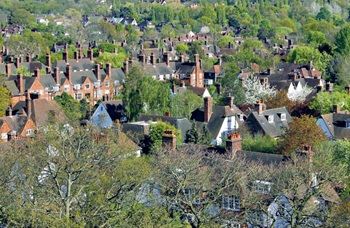
Residents, architects and roofers need to understand detailing.
Homes, landlords. tenants and the new housing standards

What will it all mean?
The Architectural Technology podcast: Where it's AT

Catch-up on the latest episodes.
Edmundson Apprentice of the Year award 2026

Entries now open for this Electrical Contractors' Association award.
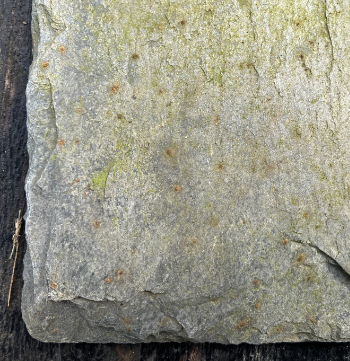
Traditional blue-grey slate from one of the oldest and largest UK slate quarries down in Cornwall.
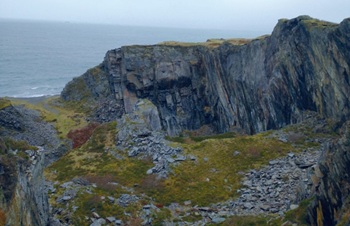
There are plenty of sources with the potential to be redeveloped.
Change of use legislation breaths new life into buildings

A run down on Class MA of the General Permitted Development Order.
Solar generation in the historic environment
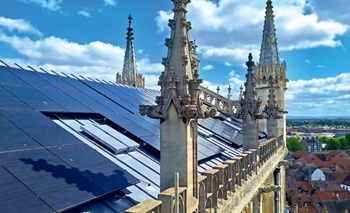
Success requires understanding each site in detail.
Level 6 Design, Construction and Management BSc

CIOB launches first-ever degree programme to develop the next generation of construction leaders.

Open for business as of April, with its 2026 prospectus and new pipeline of housing schemes.
The operational value of workforce health

Keeping projects moving. Incorporating unplanned absence and the importance of health, in operations.
A carbon case for indigenous slate
UK slate can offer clear embodied carbon advantages.
Costs and insolvencies mount for SMEs, despite growth

Construction sector under insolvency and wage bill pressure in part linked to National Insurance, says report.
The place for vitrified clay pipes in modern infrastructure
Why vitrified clay pipes are reclaiming their role in built projects.

Research by construction PR consultancy LMC published.
Roles and responsibilities of domestic clients

ACA Safety in Construction guide for domestic clients.