






Land value
Contents |
[edit] Introduction
Land value is the amount of money that a piece of land, along with the property contained on it, is priced at. This includes any improvements that have been made to the land. Land values increase when demand exceeds the supply, or if the land has intrinsic value greater than neighbouring areas, for example, if it has an oil supply or fresh water.
This article discusses some of the characteristics of a site that affect it's value, beyond the simple fact that a site is worth 'as much as someone is willing to pay'.
[edit] Size
The ideal developable piece of land is of an adequate size to maximise its potential. For example, think about a site that is too big for two houses, but not big enough for three. Simply building bigger houses might not solve this problem as the size of a dwelling is not the only characteristic affecting its price (for example, in some areas the market expects houses of a particular size).
[edit] Proportion
The ideal site for a specific project will be of a certain proportion. For example, a 1,000 sq. m site at 50 m x 20 m is likely to be a well-proportioned site. However, a 1,000 sq. m that is 200 m x 5 m may not be very suitable for development.
[edit] Frontage
As with size, depending on the nature of a project, the proportion of the site that fronts a road is important when assessing its value. In the worst case, where a site is land locked and has no direct access to a public highway, the purchaser will need to buy a second piece of land in order to create access.
[edit] Shape
As with proportion, shape is one of the most influential factors on value, especially in smaller sites. Consider for example, a one acre square compared to a one acre triangle. The amount of wasted space due to the sites shape pushes down the overall value of the land.
[edit] Development potential
It is generally not feasible to build a 20-storey apartment block in a country village or a warehouse in a city centre. Development potential is defined by the permissions that can gained and what can be marketed in a particular area.
[edit] Time constraints
What time pressures is the project under? The vendor can ultimately define the price based on whether or not they require a quick sale. It is important when carrying out this sort of time-based assessment to take into account costs of interest repayments on any loans.
[edit] Location
Where is the site? For example, edge of town sites offer more freedom than city centre sites, but may have less of a premium.
Where is the project's target demographic? What sort of people are likely to use the development? Where are they based? How will they get to the site?
[edit] Use class
If a site has been classed as A1 Retail, it may be difficult to have this changed to C3 Dwellings (although this is very dependent on local policy).
[edit] Assessing value
There are a number of ways that a quick assessment of land value can be made:
- Research what other sites of similar type and location are selling for (e.g. Zoopla, area stats for UK)
- Advertise the site, asking for offers.
- Many commercial estate agents will offer a free initial review of land.
- Seek advice, from a professional such as a surveyor.
This article was created by --Grant Erskine Architects 11:10, 14 January 2013 (UTC)
[edit] Related articles on Designing Buildings
- Asbestos.
- Common land.
- Construction loan.
- Contaminated land.
- Deleterious materials.
- Demolition.
- Development appraisal.
- Development on brownfield land.
- Difference between existing use value and market value.
- Existing use value.
- Home ownership.
- Hope value.
- Investment Property Databank (IPD).
- Land.
- Land acquisition.
- Planning permission.
- Rating valuation.
- Residual valuation.
- Site appraisal.
- Site information.
- Site surveys.
- Speculative construction.
- Stamp duty.
- TA6 Property Information Form.
- Technical due diligence.
- Use class.
Featured articles
Check out some of the best features and news from Designing Buildings as well as key stories from around the web.
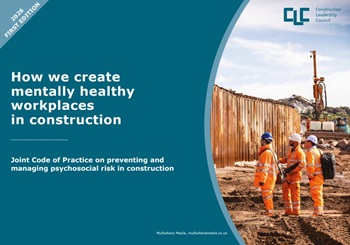
CLC publishes Mental Health Joint Code of Practice.

A quick introduction to its uses and risks.
Construction Management, 17 June

Government rolls out digital planning tool to all local authorities.

Your views needed - a strategy for the professions, trades and occupations.

Confronting competency, codes, capacity and costs.

The hidden risk in modern construction supply chains.
Construction Management, 10 June

24 months to 14: CITB launches accelerated apprenticeships.
Bridging the gap between clients and contractors

Concerns remain around contractor quality, capability, and delivery.
Construction Management, 10 June.

Heat pumps beat boilers in new home tests.
Building Safety Act implementation in Wales

CIAT to host industry panel on 26 June.

New and updated CLC building safety guidance.