





Land Surveyor
A Land Surveyor is a trained and qualified professional responsible for measuring and mapping the Earth's surface to determine property boundaries, topographical features, and other relevant information. Land surveying is a critical field that plays a crucial role in land development, construction, property assessment, and legal matters. These skilled individuals use specialized equipment and techniques to gather precise data, ensuring the accurate depiction of land and its features.
Here are some key aspects of a land surveyor's role:
- Boundary Determination: One of the primary tasks of a land surveyor is to establish property boundaries. They locate and mark these boundaries, which helps property owners understand the extent of their land and can prevent property disputes.
- Topographical Surveys: Land surveyors also create topographical maps that show the natural and man-made features of an area, such as hills, rivers, roads, and buildings. These maps are essential for land development, infrastructure planning, and environmental assessments.
- Construction and Development: Land surveyors play a vital role in the construction and development of properties. They ensure that buildings, roads, and infrastructure are built in the correct locations and adhere to zoning regulations.
- Legal Documentation: Surveyors often provide documentation, such as property descriptions and land records, that can be used in legal proceedings, including property disputes and land ownership matters.
- Environmental Assessment: Land surveyors may be involved in environmental surveys to identify sensitive areas, wetlands, or ecological features that need to be protected during land development.
- Geospatial Technology: In recent years, land surveying has become more technologically advanced with the use of GPS (Global Positioning System) and GIS (Geographic Information Systems). These tools have improved the precision and efficiency of surveying.
- Research and Data Analysis: Surveyors research historical documents, maps, and other records to gain insight into the history of a property and any previous surveys. They then analyze the data to create accurate survey reports.
- Communication: Land surveyors often work closely with property owners, developers, engineers, architects, and local authorities to ensure that land-related projects comply with regulations and guidelines.
To become a land surveyor, one typically needs formal education in surveying or a related field. Additionally, in many regions, professional certification and licensure are required to practice as a land surveyor. These regulations are in place to ensure the competence and ethics of individuals working in this important field.
In summary, land surveyors are professionals who perform a critical role in land management, development, and legal matters. Their work is essential for maintaining property boundaries, ensuring construction accuracy, and supporting informed decision-making in various industries.
Featured articles and news

We're expanding our collaborative mission by launching DB Intelligence, an exclusive market research advisory panel. Built environment professionals can now get paid to share their expertise on industry trends, products and services.
Panel members receive direct financial incentives for participating in research projects like short surveys, 1-2-1 interviews and focus groups. Register today to shape the future of the construction sector.
Building Safety Wiki Interviews

Chief executive of the British Woodworking Federation.
Planning condition discharge in England and Wales

A brief exoplanation from a building compliance expert, with further links.
Overheating guidance and tools for building designers

Guidance for dealing with element of building fabric control that have increasing importance.
Shading for housing, a design guide

From the Good Homes Alliance and British Blind and Shutter Association.
UK Standard Skills Classification (SSC)

A shared framework for describing skills needs.
Social media ban consultation comes to close

CIOB urges UK Government to consider social media’s role in careers guidance in ban debate.
The latest of eight Skills England apprenticeship units

The addition of battery manufacturing welcomed by ECA with a warning about the risks of fast-tracked apprenticeship units.
Building Control Independent Panel final report

A precis of a key report led by Dame Hackitt with full recommendations and link to the government response.
Building Safety recap April, 2026
A short and longer run-through of the month, with links to further information and sources.
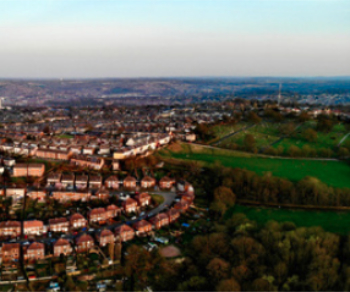
CIAT May 2026 briefing.

From medieval scribes to modern word art.
ECA welcomes crackdown on late payment and push for clean energy, whilst CIOB seek fixed cladding removal timeframes.
Cyber Security in the Built Environment
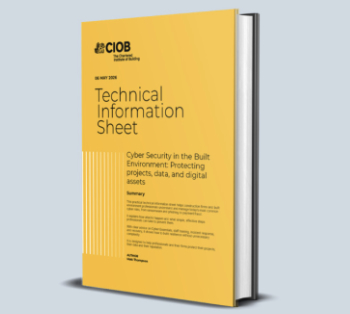
Protecting projects, data, and digital assets: A CIOB Academy TIS.
Managing competence in the built environment

ITFG publishes new industry guide on how to meet the ICC principles.