





In use
NB The 2020 edition of the RIBA Plan of Work has renamed this stage 'Use'.
The process for completing the design and construction of a building is often divided into notional ‘stages’. This can be helpful in establishing milestones for the submission of progress reports, the preparation of information for approval, client gateways, and for making payments. However there is a great deal of ambiguity between the naming of stages by different organisations and the definition of what individual stages include (see comparison of work stages) and so it is important that appointment documents make it clear specifically what activities fall within which stage, and what level of detail is required.
‘In use’ was a new phrase coined by the Royal Institute of British Architects (RIBA) for the 2013 Plan of Work. This plan comprised eight work stages:
- 0 - Strategic definition.
- 1 - Preparation and brief.
- 2 - Concept design.
- 3 - Developed design.
- 4 - Technical design.
- 5 - Construction.
- 6 - Handover and close out.
- 7 - In use.
Stage 7, ‘In Use’ was described by the RIBA as a new stage within the Plan of Work which includes post-occupancy evaluation and post-project review as well as ‘…new duties that can be undertaken during the In Use period of a building.’ Some of these services were previously included in the stages L2: Initial Occupation Services and L3: Post Occupancy Evaluation Services.
The 2020 edition of the RIBA Plan of Work has renamed this stage 'Use'. It suggests that: 'On the majority of projects, the design team and construction team will have no Stage
7 duties to undertake.'
However consultants might provide advice to the client post construction in relation to:
- Letting.
- Rating.
- Maintenance.
- Energy consumption and energy certificates.
- Insurance.
- Tenants queries.
- Facilities management.
- The preparation of tender documents for maintenance and operation contracts.
- Post occupancy evaluation.
- Facilities management.
[edit] Related articles on Designing Buildings Wiki
- Occupation.
- Comparison of work stages.
- Defects liability period.
- Designing Buildings Wiki Project plans.
- Developed design.
- Performance gap.
- Performance in use.
- Post-occupancy evaluation.
- Post-project review.
- RIBA Plan of Work.
- Soft landings.
[edit] External references
Featured articles and news

We're expanding our collaborative mission by launching DB Intelligence, an exclusive market research advisory panel. Built environment professionals can now get paid to share their expertise on industry trends, products and services.
Panel members receive direct financial incentives for participating in research projects like short surveys, 1-2-1 interviews and focus groups. Register today to shape the future of the construction sector.
Planning condition discharge in England and Wales

A brief exoplanation from a building compliance expert, with further links.
Overheating guidance and tools for building designers

Guidance for dealing with element of building fabric control that have increasing importance.
Shading for housing, a design guide

From the Good Homes Alliance and British Blind and Shutter Association.
UK Standard Skills Classification (SSC)

A shared framework for describing skills needs.
Social media ban consultation comes to close

CIOB urges UK Government to consider social media’s role in careers guidance in ban debate.
The latest of eight Skills England apprenticeship units

The addition of battery manufacturing welcomed by ECA with a warning about the risks of fast-tracked apprenticeship units.
Building Control Independent Panel final report
A precis of a key report led by Dame Hackitt with full recommendations and link to the government response.
Building Safety recap April, 2026
A short and longer run-through of the month, with links to further information and sources.
CIAT May 2026 briefing.
From medieval scribes to modern word art.

ECA welcomes crackdown on late payment and push for clean energy, whilst CIOB seek fixed cladding removal timeframes.
Cyber Security in the Built Environment
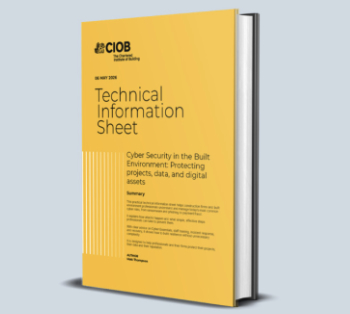
Protecting projects, data, and digital assets: A CIOB Academy TIS.
Managing competence in the built environment
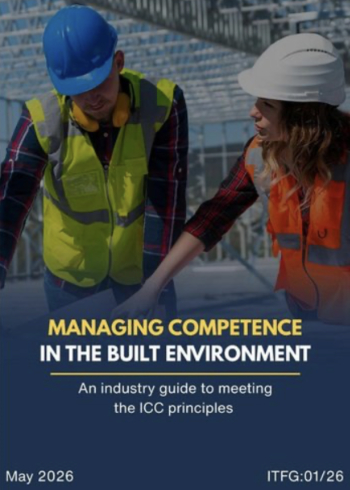
ITFG publishes new industry guide on how to meet the ICC principles.
The UK's campaign to reduce noise pollution: Mythbusting, articles and topic guides.