





Human resource management in construction
[edit] Introduction
Human resource management (HRM) is the process of managing people within an organisation. In construction, HRM is primarily concerned with ensuring that a project has sufficient human resources, with the correct skill-sets and experience, for the project to be successfully completed.
HR managers have to be able to identify and document project roles and responsibilities and develop a plan describing the end-to-end processes that will be required on a project (or series of projects) in order to determine its human resource requirements.
HRM typically involves the following core activities:
- Role analysis.
- Role specification.
- Workforce planning.
- Recruitment and selection of temporary and permanent staff as required..
- Training and development.
- Performance management.
- Compensation (remuneration).
- Legal issues.
- Managing employee payroll, benefits and compensation.
- Communicating with employees.
- Resolving disputes.
- Evaluating performance.
- Managing employee relations.
- Ensuring equal opportunities.
- Making sure staff facilities are suitable and well-maintained.
Some HRM functions can be outsourced to external suppliers, such as those involving payroll functions, background checking, benefits administration, training, the production of employee handbooks, and so on.
[edit] Challenges in construction
The construction industry is one of the most complex sectors within which to manage people:
- The operational realities faced by construction organisations, means there is a risk that the needs of employees are subjugated by performance concerns.
- There can be insufficient time for strategic planning because of the tendency for construction projects to be awarded at short notice following a competitive tendering bid.
- Several organisations may work together on a project, perhaps forming a joint venture or some other form of special purpose vehicle.
- There tends to be a transient workforce that may be made up of different contractors and subcontractors. There is an increasing tendency for construction industry organisations to appoint sub-consultants and sub-contractors with skills suitable for particular projects, rather than making internal permanent appointments. This gives greater flexibility but can make training and long-term planning more difficult.
- The workforce may work long hours, claim high travel expenses, have different nationalities and working cultures, and so on.
- Staff turnover tends to be quite high on construction projects.
- Personnel change as projects progress and different skills and experience are required.
- There are many health and safety risks which must be managed.
- There are a great number of legal requirements that must be satisfied.
[edit] Related articles on Designing Buildings
- Appointing consultants.
- Business administration.
- Business process outsourcing (BPO).
- Construction organisations and strategy.
- Construction recruitment agency.
- Corporate social responsibility in construction.
- Employee.
- Equal opportunities policy.
- Human capital.
- IR35: essential steps for compliance.
- ISO 30415.
- Overcoming imposter syndrome.
- PAYE.
- Relationship management.
- Resource management.
- Succession planning
- Team management for building design and construction projects.
- Welfare facilities.
Featured articles
Check out some of the best features and news from Designing Buildings as well as key stories from around the web.
Bridging the gap between clients and contractors

Concerns remain around contractor quality, capability, and delivery.
Construction Management, 10 June.

Heat pumps beat boilers in new home tests.
Building Safety Act implementation in Wales

CIAT to host industry panel on 26 June.
New and updated CLC building safety guidance.
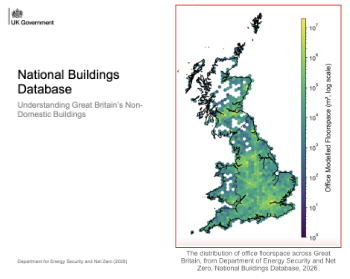
New UK National Buildings Database.
Building Safety Wiki Interviews

Chief executive of the British Woodworking Federation.
Planning condition discharge in England and Wales

A brief explanation from a building compliance expert, with further links.
Overheating guidance and tools for building designers

Guidance for dealing with element of building fabric control that have increasing importance.
Shading for housing, a design guide

From the Good Homes Alliance and British Blind and Shutter Association.
UK Standard Skills Classification (SSC)

A shared framework for describing skills needs.
Social media ban consultation comes to close

CIOB urges UK Government to consider social media’s role in careers guidance in ban debate.
Comments
Architects' must follow the ARB and RIBA Codes of Conduct, as well as the RIBA Chartered Practice Criteria and relevant employment legislation.
Discrimination is illegal under the Equality Act 2010 and against ARB standard 12 and RIBA principles 1.5 and 3.1.
If an interviewee mentions a disability, appropriate questions would need to be asked to help manage that in the work place. It would also need to be taken into account for any tests that form part of the interview process.
Recruitment policies should include: