





How to find a contractor for building works
Contents |
[edit] Introduction
Contractors are organisations appointed by clients (or employers) to carry out construction works. This role is vital to the success of a project, and so great care should be taken to ensure an appropriate contractor is selected. This may involve seeking advice from consultants if the client is inexperienced.
In the construction industry, the process of selecting a contractor is generally referred to as ‘tendering’ and involves preparing tender documents that describe the project, and then inviting tender submissions from prospective contractors from which as selection can be made.
This article describes the process commonly used to put together a list of prospective contractors. Other processes may be used on certain types of projects, such as Private Finance Initiative (PFI) projects.
- For information about selecting a contractor from a list of potential contractors see: How to select a contractor.
- For information about appointing a contractor see: How to appoint a contractor.
[edit] Procurement route
It is first necessary to decide what functions the contractor will be undertaking. The contractual role undertaken by a contractor is referred to as the ‘procurement route’ and will depend on the nature of the work required:
- Its scale and complexity.
- Whether it involves specialist skills or knowledge.
- Its location.
- Whether it involves any design by the contractor.
- Whether it requires early involvement of the contractor to advise on the design.
Most projects are procured following a traditional route, that is, the building is designed in full, then a contractor is appointed to construct the building. However, there are many other different procurement routes available:
- Design and build: A contractor is appointed to design the building (or complete the design) and then to construct it.
- Construction management: A construction manager is appointed to contract and manage individual trades on behalf of the client.
- Management contractor: A management contractor is appointed to contract individual trades directly.
For more information, see Procurement route.
[edit] Tender documents
Once the procurement route has been selected, it is then necessary to prepare a description of what precisely the contractor will be expected to do, so that appropriate contractors can be identified and prices obtained.
This may involve preparing:
- Design drawings.
- Specifications.
- Pricing documents.
- A contract.
- Selection criteria.
This will involve considering issues such as:
- Whether the contractor will be the principal contractor with responsibilities under the CDM regulations.
- Whether building information modelling (BIM) will be used.
- Who the contract administrator will be.
- Start and finish dates.
- The contract that will be used.
- The contract conditions that will be applied.
For more information, see Tender documentation and Construction contract.
[edit] Identifying potential contractors
For some straight-forward projects there may be many contractors that could undertake the contract, whereas for some complex specialist works there may be very few.
Typically, clients will wish to identify a number of potential contractors, then perhaps reduce this down to a shortlist of 3 or 4 from whom to ask for prices. Negotiations may then be entered into with the preferred contractor, and an appointment made.
It may be possible to put together a list of potential contractors based on:
- Existing relationships, such as a contractor the client has worked with before, or a framework agreement.
- Recommendations from other clients or from consultants such as an architect, quantity surveyor or project manager.
- Researching contractors that have carried out similar work in the past.
- Advertising. Historically, advertising was only appropriate for larger projects, however, specialist sites now exist that can allow clients to advertise small jobs and to see reviews of respondents before inviting tenders or making a selection. Large projects that involve public funding may be required to advertise in the official journal of the EU (OJEU), and this can be a time consuming process.
- Competition. Generally this is only appropriate if the project involves design. Competitions can be open, or by invitation. If the project has not been designed, or fully designed, it is possible that it will not have planning permission yet. In this case it is important to establish who is responsible for obtaining permission.
On complex specialist projects, it may be difficult to obtain any prices, particularly if the site is remote, or the industry is busy. In this case, it may be necessary to change the scope or nature of the works. If only one price can be obtained, it may be wise to seek professional advice about whether the price and tender are reasonable, or whether the works should be re-tendered, perhaps with changes to make sure more responses are received, or taking more active steps to ensure contractors respond.
The next stage is the process of selecting a preferred contractor from the list of potential contractors. To find out more, see How to select a contractor.
[edit] Related articles on Designing Buildings Wiki
Featured articles and news
Costs and insolvencies mount for SMEs, despite growth

Construction sector under insolvency and wage bill pressure in part linked to National Insurance, says report.
The place for vitrified clay pipes in modern infrastructure
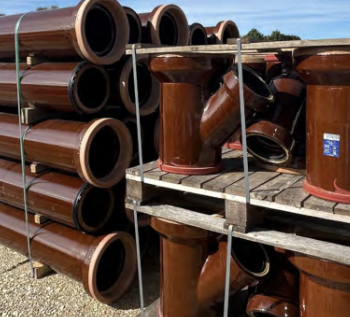
Why vitrified clay pipes are reclaiming their role in built projects.

Research by construction PR consultancy LMC published.
Roles and responsibilities of domestic clients

ACA Safety in Construction guide for domestic clients.
Fire door compliance in UK commercial buildings

Architect and manufacturer gives their low down.
Plumbing and heating for sustainability in new properties

Technical Engineer runs through changes in regulations, innovations in materials, and product systems.
Awareness of the Carbon Border Adjustment Mechanism
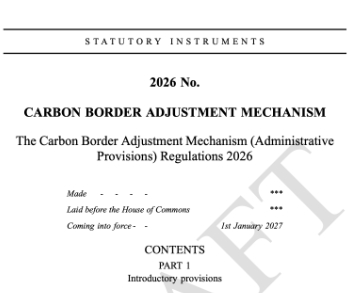
What CBAM is and what to do about it.
The new towns and strategic environmental assessments
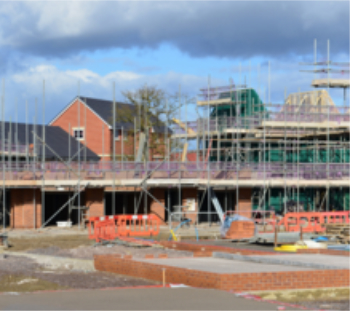
12 locations of the New Towns Taskforce reduced to 7 within the new towns draft programme and open consultation.

Buildings that changed the future of architecture. Book review.
The Sustainability Pathfinder© Handbook
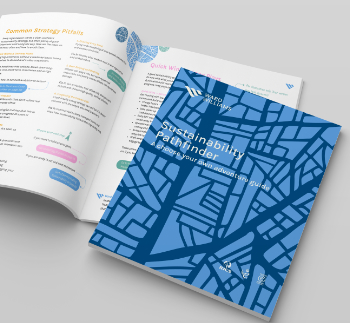
Built environment agency launches free Pathfinder© tool to help businesses progress sustainability strategies.
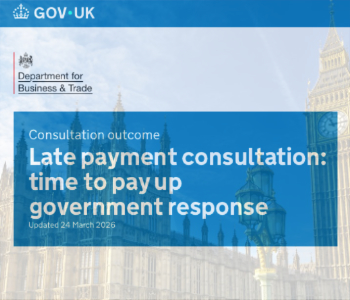
Government outcome to the late payment consultation, ECA reacts.
IHBC 2025 Gus Astley Student Award winners

Work on the role of hewing in UK historic conservation a win for Jack Parker of Oxford Brookes University.
Future Homes Building Standards and plug-in solar
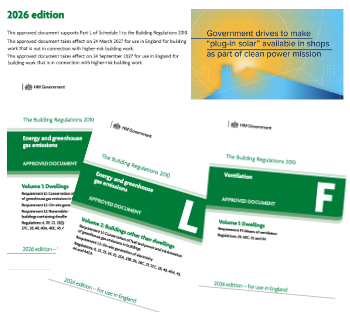
Parts F and L amendments, the availability of solar panels and industry responses.
How later living housing can help solve the housing crisis

Unlocking homes, unlocking lives.
Preparing safety case reports for HRBs under the BSA
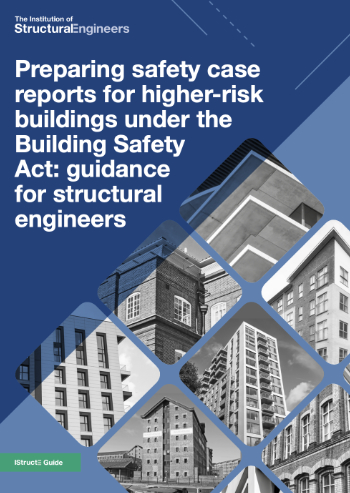
A new practical guide to preparing structural inputs for safety cases and safety case reports published by IStructE.
Male construction workers and prostate cancer

CIOB and Prostate Cancer UK encourage awareness of prostate cancer risks, and what to do about it.