






How canals work

|
| View up the flight of locks on the Caledonian Canal at Fort Augustus in Scotland. The canal drops to the level of Loch Ness at these locks. |
Contents |
[edit] Introduction
Canals are human-made channels used for water conveyance (supply), or to service water transport vehicles. The oldest known canals were used for irrigation purposes, built in approximately 4000 BC in the region of the Middle East that is now modern day Iraq and Iran.
[edit] How canals are constructed
Canals can be constructed in different ways:
- A new canal can be created by excavating the body of the canal and providing water from an external source, such as streams or reservoirs.
- Dredging a channel in the bottom of an existing lake which is then drained.
- A stream can be canalised to make its navigable path more predictable and easier to manoeuvre. This involves dredging, damming and modifying its path.
[edit] What canals do
Canals use engineered structures such as:
- Weirs and dams: To raise river water levels to usable depths.
- Looping descents: To create a longer and gentler channel around a stretch of rapids or falls.
- Locks: So that ships and barges can ascend and descend.
[edit] Canal locks in action
A lock consists of a lock chamber which may be made from brick, stone or metal. This chamber holds the water. There are typically gates at each end of the lock chamber, and these gates control the flow of water.
When a vessel is at a lower point, a gate is allowed to open, which permits water to enter the lock and fill it with water. Once the water level is at the higher height, the vessel can continue on its journey.
The opposite action is used when the vessel is at a higher position and needs to proceed to a lower level. The vessel enters the lock with a high water level and then a gate opens - allowing the water to be released. When the water is at the adjusted lower level, the vessel is able to proceed.
In most instances, the main lock gates can only be opened when the water on both sides is at the same level. This means that the top lock only opens if the lock is full, and the bottom lock only opens when it is nearly empty.
[edit] Legging it
Legging was an early method of navigating vessels through canal tunnels. This practice was sometimes used during the 18th and early 19th centuries.

When horses, donkeys or other towing animals were not able to follow a towpath through a tunnel, people would have to move the boat with their feet by “walking” along the wall or roof of the canal tunnel. Professional wall walkers could be hired to take the vessels on longer tunnels, but it was more common for the operator of the boat to handle the task with assistance from the crew.
[edit] Related articles on Designing Buildings Wiki
Featured articles
Check out some of the best features and news from Designing Buildings as well as key stories from around the web.

New and updated CLC building safety guidance.
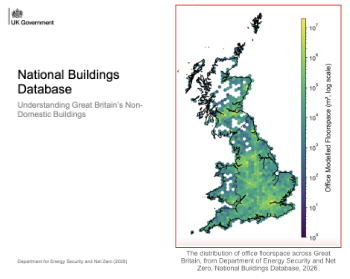
New UK National Buildings Database.
Building Safety Wiki Interviews

Chief executive of the British Woodworking Federation.
Planning condition discharge in England and Wales

A brief explanation from a building compliance expert, with further links.
Overheating guidance and tools for building designers

Guidance for dealing with element of building fabric control that have increasing importance.
Shading for housing, a design guide

From the Good Homes Alliance and British Blind and Shutter Association.
UK Standard Skills Classification (SSC)

A shared framework for describing skills needs.
Social media ban consultation comes to close

CIOB urges UK Government to consider social media’s role in careers guidance in ban debate.
The latest of eight Skills England apprenticeship units

The addition of battery manufacturing welcomed by ECA with a warning about the risks of fast-tracked apprenticeship units.
Building Control Independent Panel final report

A precis of a key report led by Dame Hackitt with full recommendations and link to the government response.
Building Safety recap April, 2026

A short and longer run-through of the month, with links to further information and sources.