





Hawk-winged staircase

A hawk-winged staircase refers to and open staircase and double flight of stairs, best associated with the Spanish Palaso in Naples. The Spanish Palaso was declared a national monument in 1925 because of its considerable historic artistic importance, confirmed in 1939.
In the 1600s Baron don Aniello D'Orso of Abanella owned two adjacent palaces in the Vergini quarter and when he died his assets passed on first to his son, don Fabrizio, who died at an early age and then to his voungest sister; Anna Maria, who married Marquis Nicola Moscati of Poppano, from ay noble family of intellechals that had wade their fortune trading cattle and horses.
In 1738, Nicola Moscati stipulated a works contract with Francesco Attanasio, engineer and "draughtsman" of the Sacred Royal Council, to build a single establishment in place of the nwo pre-existing buildings. During the works, that cost 29,987 ducats, Attanasio relied on the collaboration of the master builder Felice Polito.
In fact, the building's construction has always been attributed to Ferdinando Sanfelice, but the name of the famous architect never appears in any of the notary deeds. However it cannot be ruled out that, while working on the construction of his own palazzo, a few metres away, Sanfelice had given out some "advice", especially on the construction of the elegant staircase with an open double flight of stairs, known as "hawk-winged staircase".
Nicola Moscati thus had his magnificent palazzo which, because of its architectonic beaury and the splendour of its furniture and fittings, was considered one of the most beautiful and famous in.
Naples. For instance, the lunettes and the ornamental panels (over the doors) on the various, Moors, decorated in stucco with busts framed by volutes and typical Baroque floral elements and the stuccoes designed by Giuseppe Astarita, perfectly in keeping with the Neapolitan Rococo style.
Over time, the palazzo had several owners because of debts incurred. In fact. the Moscati were forced to cede it to the Mastrilli, Marquis of Livardi and in 1813 is was almost entirely bought by the Spanish nobleman, don Tommaso Atienza and his wife Anna Maria Pelliccia, after whose nationality the building was named "Spanish".
Atienza, who was the Attorney General and agent of don Vincenzo Ossorio of Madrid, as well as the attorney for the convent of the Discalced Nuns of St. Francis, commissioned the architect, Antonio Pecovaro, to do the extension work of the right side of the building, and the painter Domenico Pane to decorate the ceilings. However, the work was so badly done that it came to a judicial controversy. As a result of the debts deriving from these events, the entire palazzo was expropriated and sold: two portions were ascribed to the wealthy industrialist, Nicola Costa, one to the chemist. Salvatore Chiapparo and one to the brothers Raffaele and Francesco Chambeyront. The other four portions however; remained unsold due to lack of buyers.
It such an imposing building that it has been used in several films, such as "Processo alla citta" by Luigi Zampa and "Giudizio universale" by Vittorio de Sica".
Text from signage at Spanish Palaso in Naples.
[edit] Related articles on Designing Buildings
Featured articles and news
Costs and insolvencies mount for SMEs, despite growth

Construction sector under insolvency and wage bill pressure in part linked to National Insurance, says report.
The place for vitrified clay pipes in modern infrastructure
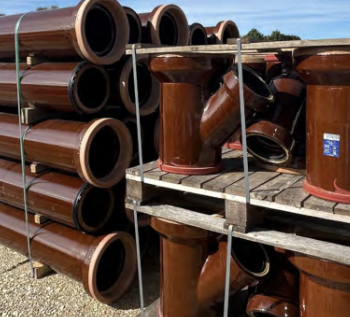
Why vitrified clay pipes are reclaiming their role in built projects.

Research by construction PR consultancy LMC published.
Roles and responsibilities of domestic clients

ACA Safety in Construction guide for domestic clients.
Fire door compliance in UK commercial buildings

Architect and manufacturer gives their low down.
Plumbing and heating for sustainability in new properties
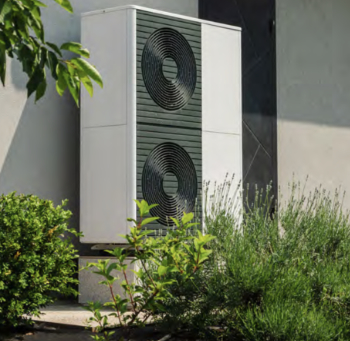
Technical Engineer runs through changes in regulations, innovations in materials, and product systems.
Awareness of the Carbon Border Adjustment Mechanism
What CBAM is and what to do about it.
The new towns and strategic environmental assessments
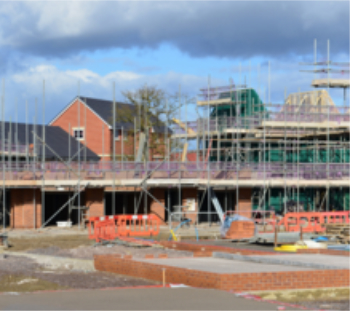
12 locations of the New Towns Taskforce reduced to 7 within the new towns draft programme and open consultation.
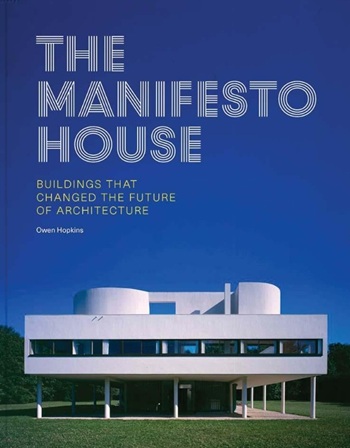
Buildings that changed the future of architecture. Book review.
The Sustainability Pathfinder© Handbook
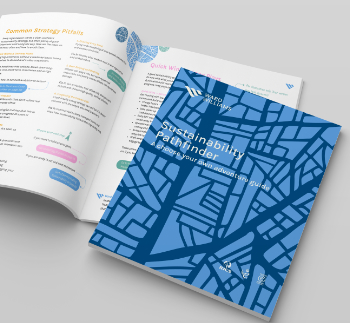
Built environment agency launches free Pathfinder© tool to help businesses progress sustainability strategies.
Government outcome to the late payment consultation, ECA reacts.
IHBC 2025 Gus Astley Student Award winners
Work on the role of hewing in UK historic conservation a win for Jack Parker of Oxford Brookes University.
Future Homes Building Standards and plug-in solar
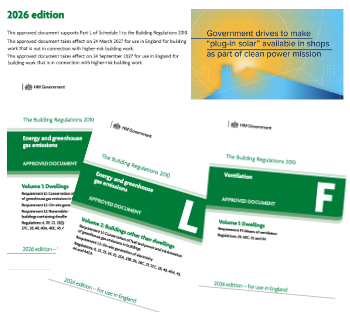
Parts F and L amendments, the availability of solar panels and industry responses.
How later living housing can help solve the housing crisis
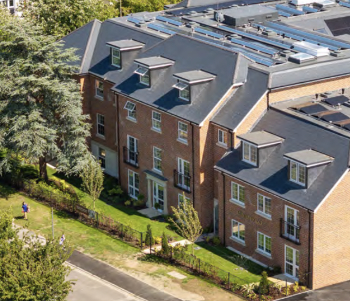
Unlocking homes, unlocking lives.
Preparing safety case reports for HRBs under the BSA
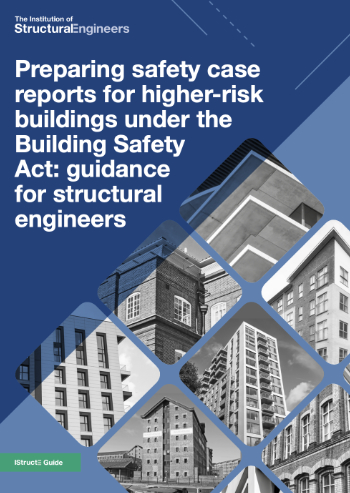
A new practical guide to preparing structural inputs for safety cases and safety case reports published by IStructE.
Male construction workers and prostate cancer

CIOB and Prostate Cancer UK encourage awareness of prostate cancer risks, and what to do about it.