





Green belt planning practice guidance
On 6 October the government published guidance on the protection of the green belt under the National Planning Policy Framework (NPPF). Ref Do housing and economic needs override constraints on the use of land, such as Green Belt?
An accompanying press release on 4 October by the Department for Communities and Local Government (DCLG), ref Councils must protect our precious green belt land, suggested that brownfield land should be prioritised and that ‘Councils should use their Local Plan, drawing on protections in the National Planning Policy Framework, to safeguard their local area against urban sprawl, and protect the green lungs around towns and cities.’
DCLG suggest that once they have been established, green belt boundaries should only be altered in exceptional cases, and that this should be done through the preparation or review of the Local Plan. Housing need does not justify harm to the green belt.
The guidance makes clear that the National Planning Policy Framework should be read as a whole, and that need is not the only issue to be considered in drawing up a Local Plan, it is just the first stage. The local planning authority should then prepare a strategic housing land availability assessment which takes account of constraints such as:
- Sites protected under the Birds and Habitats Directives.
- Sites of special scientific interest.
- Land designated as green belt.
- Local green space.
- Areas of outstanding natural beauty.
- Heritage coast.
- National parks or the Broads.
- Designated heritage assets.
- Locations at risk of flooding or coastal erosion.
Green belt should not be confused with open countryside or 'green-field' development. The conflation of green belt and open countryside can be very misleading.
This is why there is no real policy conflict when, in an interview on BBC2’s Newsnight in November 2012, the then planning minister Nick Boles, suggested that more than 388,000 hectares of open countryside would have to be built on to meet housing demand and said, “We’re going to protect the green belt – but if people want to have housing for their kids they have got to accept we need to build more on some open land”.
Green belt is a very specific planning policy designation, not a general policy applicable to the countryside at large and gives a greater degree of protection from inappropriate development in those areas.
The government's policy position is broadly that the green belt be protected almost at all costs, but consequently that development needs (in particular for new housing) will have to be accommodated in sustainable locations in other areas (including open countryside) outside the specific designations where planning policy imposes specific constraints.
Green Belts are normally designated around major cities and conurbations or historic market towns. The fundamental aim of green belt policy is to prevent urban sprawl by keeping land permanently open. The essential characteristics of green belts are their openness and their permanence.
This concept of permanence appears to be behind the clarification of the guidance and reiterates the principle that there is effectively a presumption against changing the extent of green belt in the preparation of a local plan simply to accommodate an objectively identified housing need.
The implication is that local planning authorities with large areas of designated green belt may not be expected to provide the full quantum of their objectively assessed housing need within their area if this would erode the green belt. The inference of that is then that any unmet need may have to be accommodated in less constrained neighbouring authorities and most likely facilitated through the mechanism of the 'duty to cooperate' at the plan preparation stage.
The guidance also essentially confirms the government's policy position that, in the determination of planning applications in the green belt, the simple unmet need for housing as a material consideration alone is unlikely to outweigh the harm to green belt policies,and other harm, to tip the planning balance in favour of inappropriate development in the green belt.
Permission for inappropriate development in the green belt still relies on the material considerations in favour (whether singularly or combined) outweighing the combined harm to policy and any actual harm that may be identified and creating the very special circumstances that permit such inappropriate development to take place.
[edit] Related articles on Designing Buildings Wiki
- Amberfield land.
- Areas of outstanding natural beauty.
- Brownfield land.
- Designated sites.
- Green belt
- National Planning Policy Framework.
- Planning practice guidance.
- Safeguarding land.
- Sites of special scientific interest.
- The green belt and historic buildings.
- Windfall site.
[edit] External references.
- Planning Practice Guidance, Do housing and economic needs override constraints on the use of land, such as Green Belt? 6 October 2014.
- DCLG, Councils must protect our precious green belt land. 4 October 2014.
- BBC2’s Newsnight in November 2012.
Featured articles and news

Electrical contractors welcome crackdown on late payment and push for clean energy.
Cyber Security in the Built Environment
Protecting projects, data, and digital assets: A CIOB Academy TIS.
Managing competence in the built environment
ITFG publishes new industry guide on how to meet the ICC principles.

The UK's campaign to reduce noise pollution: Mythbusting, articles and topic guides.
Setting Expectations on Competence Management
Industry Competence Committee.
New Scottish and Welsh governments
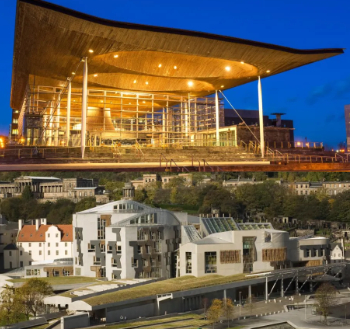
CIOB stresses importance of construction after new parliament elections.
The sad story of Derby Hippodrome

An historic building left to decay.

ECA, JIB and JTL back Fabian Society call to invest in skills for a stronger built environment workforce.

Women's Contributions to the Built Environment.
Calls for the delayed Circular Economy Strategy

Over 50 leading businesses, trade associations and professional bodies, including CIAT, and UKGBC sign open letter.
The future workforce: culture change and skill

Under the spotlight at UK Construction Week London.
A landmark moment for postmodern heritage.
A safe energy transition – ECA launches a new Charter

Practical policy actions to speed up low carbon adoption while maintaining installation safety and competency.
Frank Duffy: Researcher and Practitioner

Reflections on achievements and relevance to the wider research and practice communities.
The 2026 Compliance Landscape: Fire doors

Why 'Business as Usual' is a Liability.
Cutting construction carbon footprint by caring for soil

Is construction neglecting one of the planet’s most powerful carbon stores and one of our greatest natural climate allies.