





Global smart water management
Aging pipe networks in several established cities are driving the demand for better water mains. For example, in London, approximately 40% of the pipes are more than 100 years old. Furthermore, according to the District of Columbia Water and Sewer Authority, the average age of it's city’s water pipes is 76 years.
There is a need to replace such water management systems with smarter, better systems. This, along with increasing government legislation is driving the global smart water management market, which is expected to demonstrate a marked compound annual growth rate (CAGR) of 17.7% from 2013-2019. The market was valued at US$4,813.3 million in 2012 and is projected to reach US$15,232.6 million by 2019.
The global smart water management market will also benefit from the growing need for mapping water resources and the need to reduce water loss and non-revenue water (NRW). In addition, the lack of water management systems in urban areas will provide good growth opportunities.
The global smart water management categorised by meter-read technology into fixed technology and cellular technology. On the basis of components, it can be categorised into; hardware (AMI, AMR, and others), solutions, and services.
The high cost associated with AMI installation will suppress the market, along with the apprehension of water utilities about the adoption of cloud services.
In spite of the high cost of AMI, the hardware segment in the global smart water management (SWM) market will continue to dominate the industry throughout the forecast period. In 2012, the hardware segment held the largest share, of the market, at 40.1%.
Geographically, the global smart water management market is divided into North America, Asia Pacific, the Rest of the World (RoW), and Europe. At present, North America dominates the market due to the high investment in smart water management technologies to curb water loss and optimise the NRW. In 2012, North America generated 47.5% of total revenue in the global smart water management market
Asia Pacific is predicted to demonstrate the highest CAGR of 23.7% during the forecast period. Factors such as higher rainfall variability, ageing facilities, the need for palatable and safe water, and the presence of countries rich in water resources will drive this regional market.
The global smart water management market is fragmented in nature with the presence of local players across the regions. 67.1% of the global smart water management market is held by regional and local companies. Notable players in the global smart water management market include ABB, Arad Metering Technologies, Schneider Electric, Sensus USA, General Electric Company, I20 Water, and TaKaDu.
[edit] Related articles on Designing Buildings Wiki
Featured articles and news

We're expanding our collaborative mission by launching DB Intelligence, an exclusive market research advisory panel. Built environment professionals can now get paid to share their expertise on industry trends, products and services.
Panel members receive direct financial incentives for participating in research projects like short surveys, 1-2-1 interviews and focus groups. Register today to shape the future of the construction sector.
Planning condition discharge in England and Wales

A brief exoplanation from a building compliance expert, with further links.
Overheating guidance and tools for building designers

Guidance for dealing with element of building fabric control that have increasing importance.
Shading for housing, a design guide

From the Good Homes Alliance and British Blind and Shutter Association.
UK Standard Skills Classification (SSC)

A shared framework for describing skills needs.
Social media ban consultation comes to close

CIOB urges UK Government to consider social media’s role in careers guidance in ban debate.
The latest of eight Skills England apprenticeship units

The addition of battery manufacturing welcomed by ECA with a warning about the risks of fast-tracked apprenticeship units.
Building Control Independent Panel final report
A precis of a key report led by Dame Hackitt with full recommendations and link to the government response.
Building Safety recap April, 2026

A short and longer run-through of the month, with links to further information and sources.
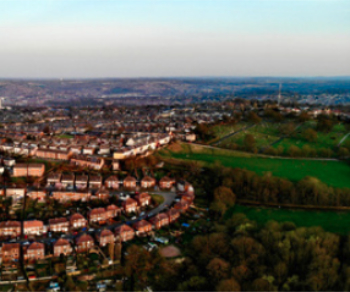
CIAT May 2026 briefing.

From medieval scribes to modern word art.

ECA welcomes crackdown on late payment and push for clean energy, whilst CIOB seek fixed cladding removal timeframes.
Cyber Security in the Built Environment

Protecting projects, data, and digital assets: A CIOB Academy TIS.
Managing competence in the built environment

ITFG publishes new industry guide on how to meet the ICC principles.
The UK's campaign to reduce noise pollution: Mythbusting, articles and topic guides.