





Facility condition index FCI
Contents |
[edit] Introduction
The facility condition index (FCI) is a benchmark used in the facility management industry that objectively assess the current and projected condition of building assets. This tool is primarily used in the United States in government, education, housing, transportation and other organisations that operate and maintain multiple properties.
[edit] History
The facility condition index was initially launched in the United States in 1991. It was published by the National Association of College and University Business Officers (NACUBO), an organisation with more than 1,900 members.
[edit] Defining the facility condition index
At its most basic level, the facility condition index is defined as the ratio of current year required renewal cost to current building replacement value. The purpose of FCI is to provide a means for assessing the building’s condition and allowing decision makers to understand building renewal funding needs.
As a method of communicating this information to decision makers, FCI can be used as a key facility performance indicator (KPI) to:
- Monitor costs.
- Track progress.
- Identify strengths and weaknesses.
- Compare data across and between facilities.
This may improve understanding by non-facilities personnel, since it summarises the comparison of figures against the budgeted values and external, real world benchmarks.
[edit] Data from facilities conditions assessment (FCA)
To determine the value of building assets, a facilities condition assessment (FCA) should be conducted.This is a complete review of the physical building assets based on age, construction techniques, design and materials and so on.
The next step is to categorise condition assessment estimates based on established guidelines, such as the MasterFormat from the Construction Specifications Institute.
[edit] Calculating FCI
FCI is the total cost of the existing maintenance, repair, or renewal of the facility divided by the total estimated replacement value (or CRV, current replacement value) of the facility.
The value of the facility will be based on the monetary value the organisation places on the facility based on data collected from the FCA.
An accurate FCI is dependent on the cost estimates developed for the facility deficiencies and current replacement value.

The higher the FCI, the poorer the condition of the facility. The International Facility Management Association offers the following scale:
- Good: 0 to 5% FCI.
- Fair: 5% to 10% FCI.
- Poor: 10% to 30% FCI.
- Critical: greater than 30% FCI
Even if a facility is in a good range, its condition should be documented on a regular basis. It can be used to prioritise maintenance and help determine how long a building should stay in operation. For instance, if a building with a 15% FCI rating is scheduled for redevelopment in three or four years, inexpensive maintenance projects can be prioritised to keep the building running until demolition is scheduled; meanwhile, expensive maintenance projects can be deferred as long as they don’t prevent the building from being used.
Individual components or systems within the building can also be measured separately using the FCI in order to help maximise the whole life of the building.
[edit] FCIs for multi-facility organisations
If an organisation has multiple facilities, the FCI can be used to compare ratings throughout its portfolio. It can also be used to assign acceptable ratings for specific types of buildings within their portfolios. For instance, a mission critical building can be prioritised for improvements over other facilities.
[edit] Related articles on Designing Buildings Wiki
- Asset management.
- Benchmarking as business tool.
- Construction Specifications Institute CSI.
- Experience Exchange Report EER.
- Facilities management.
- Facilities management audit FMA.
- Facility condition assessment FCA.
- Key performance indicators KPI.
- Maintenance.
- MasterFormat.
- Operational costs.
- Property management.
Featured articles and news
Cyber Security in the Built Environment

Protecting projects, data, and digital assets: A CIOB Academy TIS.
Managing competence in the built environment

ITFG publishes new industry guide on how to meet the ICC principles.

The UK's campaign to reduce noise pollution: Mythbusting, articles and topic guides.
Setting Expectations on Competence Management
Industry Competence Committee.
New Scottish and Welsh governments

CIOB stresses importance of construction after new parliament elections.
The sad story of Derby Hippodrome
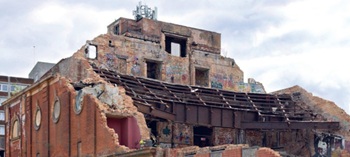
An historic building left to decay.

ECA, JIB and JTL back Fabian Society call to invest in skills for a stronger built environment workforce.

Women's Contributions to the Built Environment.
Calls for the delayed Circular Economy Strategy

Over 50 leading businesses, trade associations and professional bodies, including CIAT, and UKGBC sign open letter.
The future workforce: culture change and skill

Under the spotlight at UK Construction Week London.

A landmark moment for postmodern heritage.
A safe energy transition – ECA launches a new Charter

Practical policy actions to speed up low carbon adoption while maintaining installation safety and competency.
Frank Duffy: Researcher and Practitioner

Reflections on achievements and relevance to the wider research and practice communities.
The 2026 Compliance Landscape: Fire doors

Why 'Business as Usual' is a Liability.
Cutting construction carbon footprint by caring for soil

Is construction neglecting one of the planet’s most powerful carbon stores and one of our greatest natural climate allies.