





Estate agent fees

|
Estate agents are appointed by property owners to find purchasers (or sometimes tenants) for their property and then to facilitate negotiation and agreement of terms between their client and the purchaser.
Although acting as a negotiator between buyer and seller, estate agents are nevertheless appointed by the seller and so represent the seller’s interests. It is therefore inherent in their role that they should strive to get the best possible deal for the seller. This not only means a smooth transaction that sees the timely exchange of contracts and final sign-off, but should also mean getting the best price for their client.
Estate agents' fees are usually paid by the seller, and generally, the higher the sale price the agent negotiates, the more commission the estate agent receives. However, individuals within estate agent organisations may sometimes be under pressure (or be offered incentives) to achieve sales quickly, even where this may result in a lower price for their client.
Fees charged by estate agents vary, depending on the type of agent. In the high street, fees are usually calculated on a commission basis, i.e as a percentage of the price the buyer ultimately pays. This means that estate agents can potentially achieve high incomes given:
- They handle multiple clients and properties.
- Property prices have increased relatively consistently in the long term since the second world war.
- There is relatively little capital required to set up as an estate agent and operating costs tend to be fairly low.
Vendors should expect to pay around 1 to 2% of the property’s selling price as commission to a typical high-street estate agency. At, for example, 1.4%, this would see a sale price of £750,000 generate a commission of £10,500.
It may possible to get a lower rate by giving the agent ‘sole agency’ or ‘sole selling agreement’ thereby excluding other agents from selling the property. Conversely, if the seller appoints more than one agent (multi-agency), each of the agents will likely charge higher rates. Typically, multi-agent commission rates (at 2018 prices) range from around 2% to 3.5%.
Some agents will offer fess on a sliding scale, with a higher sale price resulting in a higher percentage fee.
Selling through a high-street estate agent will usually require the seller to enter into a contract for a specific period but sellers should beware the difference between:
- Sole agency agreements: if the seller finds a buyer (during the contract period), they do not pay the estate agent’s fees.
- Sole selling agreements: if the seller finds a buyer, they may still have to pay the estate agent’s fees.
A relatively low-cost alternative to the high-street are the Internet-based estate agents who charge a fixed fee (usually inclusive of VAT) as opposed to a percentage of the sale price. Generally, online estate agents’ fixed fees can be anything between £600-£2,000.
A significant number of home sellers (around 12%, according to a ‘Which’ survey of 2017) tend to be dissatisfied by the service they receive from their estate agent. Much of this may stem from the perception that estate agents demand high fees for doing relatively little – this may be exacerbated if the property sells very quickly and the agent is thought to have made a ‘fast buck’. Other factors could also contribute to dissatisfaction, such as a breakdown in the relationship between sellers and agents, and the generally poor image estate agents have in the minds of the public.
[edit] Related articles on Designing Buildings Wiki
- Accommodation.
- Bridging loan.
- Code of practice for letting and managing agents.
- Conveyancing in Scotland.
- Conveyancing.
- Development manager.
- Freehold.
- How much does it cost to sell my home.
- Land Registry.
- Leasehold.
- Property chain.
- Property valuation.
- Real estate.
- Stamp duty land tax.
- What is a valuer?
Featured articles
Check out some of the best features and news from Designing Buildings as well as key stories from around the web.

Confronting competency, codes, capacity and costs.

The hidden risk in modern construction supply chains.
Construction Management, 10 June

24 months to 14: CITB launches accelerated apprenticeships.
Bridging the gap between clients and contractors

Concerns remain around contractor quality, capability, and delivery.
Construction Management, 10 June.

Heat pumps beat boilers in new home tests.
Building Safety Act implementation in Wales

CIAT to host industry panel on 26 June.
New and updated CLC building safety guidance.
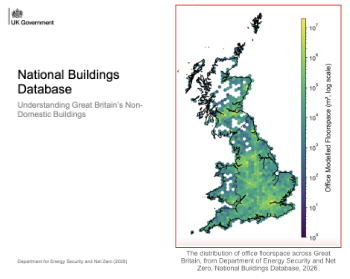
New UK National Buildings Database.
Building Safety Wiki Interviews

Chief executive of the British Woodworking Federation.
Planning condition discharge in England and Wales

A brief explanation from a building compliance expert, with further links.
Overheating guidance and tools for building designers

Guidance for dealing with element of building fabric control that have increasing importance.