





Direct cost

|
Direct costs for goods and services are those costs incurred directly for production and include items such as raw materials, labour, equipment, software and power costs. Direct costs can be traced and attributed to a cost ‘object’ which may be a product, department, cost centre or project.
Indirect costs (sometimes called ‘overheads’) are those necessary to keep a production facility in business and include rent, insurance, advertising and marketing which, although they may be included in the cost of the product or service, they are still indirect costs because they do not vary directly with the volume of goods/services produced and are not easily attributable to a particular process or project.
The amount added to a product’s unit costs by indirect costs will vary according to production levels, as in the following illustration:
The direct cost of manufacturing a steel padlock is £1, made up of:
The factory’s monthly indirect costs (rent, equipment, marketing etc) = £50,000
In January, the factory makes 100,000 padlocks, so the indirect cost element attributed to each unit is £0.50p.
In February, the factory makes 200,000 padlocks, so the indirect cost element attributed to each unit is £0.25p.
But in both months, the indirect costs have not changed, the only variable is in how much indirect cost is incurred by each unit.
So, indirect costs do not vary directly with production levels, whereas direct costs remain dependent on production levels and will vary when production is increased or decreased.
NB Cost prediction, Professional Statement, 1st edition, published in November 2020 by the Royal Institution of Chartered Surveyors (RICS), defines direct costs as: ‘Costs incurred on labour, material, plant and equipment, etc., i.e. costs that are directly accountable to the project.’
[edit] Related articles on Designing Buildings
Featured articles
Check out some of the best features and news from Designing Buildings as well as key stories from around the web.
Construction Management, 10 June

24 months to 14: CITB launches accelerated apprenticeships.
Bridging the gap between clients and contractors

Concerns remain around contractor quality, capability, and delivery.
Construction Management, 10 June.
Heat pumps beat boilers in new home tests.
Building Safety Act implementation in Wales

CIAT to host industry panel on 26 June.
New and updated CLC building safety guidance.
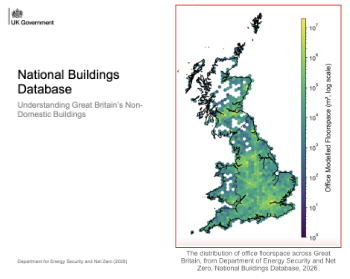
New UK National Buildings Database.
Building Safety Wiki Interviews

Chief executive of the British Woodworking Federation.
Planning condition discharge in England and Wales

A brief explanation from a building compliance expert, with further links.
Overheating guidance and tools for building designers

Guidance for dealing with element of building fabric control that have increasing importance.
Shading for housing, a design guide

From the Good Homes Alliance and British Blind and Shutter Association.
UK Standard Skills Classification (SSC)

A shared framework for describing skills needs.
Comments
[edit] To make a comment about this article, or to suggest changes, click 'Add a comment' above. Separate your comments from any existing comments by inserting a horizontal line.