





Builder's work in connection
The term ‘builder’s work in connection’ (BWIC) refers to builder's work that is necessary as a result of other works, typically mechanical and electrical services but also specialist installations, such as lifts, escalators, roller shutters, hoists and cleaning cradles, and so on.
For example, the installation of mechanical and electrical services might require:
- Cutting, forming or drilling through walls, floors or ceilings to allow services to pass.
- Ensuring structural integrity is not compromised.
- Chasing block and brickwork for conduits or pipes.
- Lifting and replacing floors.
- Asbestos removal.
- Plant moving services.
- Sealing holes.
- Reinstating fire, thermal or acoustic separation.
- Constructing plinths.
- Making good plaster and other finishes.
- Maintenance access requirements such as access panels, decking, platforms, cat ladders and handrails.
This may involve works that require building regulations approvals and possibly testing certificates (for example, cleaning cradle restraining bolts).
Builder's work in connection is generally carried out by the main contractor for a mechanical and electrical sub-contractor and other such specialist trades. However, sometimes, the mechanical and electrical works might be part of the main contract and the builders work in connection sub-contracted.
Builder’s work in connection should not be confused general site preliminaries such as; welfare provisions, site offices, plant, site waste clearance, and so on, which are priced separately.
Estimators typically price builder's work in connection as 7% of the specialist work value.
[edit] Related articles on Designing Buildings
Featured articles
Check out some of the best features and news from Designing Buildings as well as key stories from around the web.
Construction Management, 10 June

24 months to 14: CITB launches accelerated apprenticeships.
Bridging the gap between clients and contractors

Concerns remain around contractor quality, capability, and delivery.
Construction Management, 10 June.
Heat pumps beat boilers in new home tests.
Building Safety Act implementation in Wales
CIAT to host industry panel on 26 June.

New and updated CLC building safety guidance.
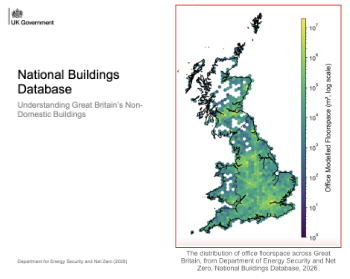
New UK National Buildings Database.
Building Safety Wiki Interviews

Chief executive of the British Woodworking Federation.
Planning condition discharge in England and Wales

A brief explanation from a building compliance expert, with further links.
Overheating guidance and tools for building designers

Guidance for dealing with element of building fabric control that have increasing importance.
Shading for housing, a design guide

From the Good Homes Alliance and British Blind and Shutter Association.
UK Standard Skills Classification (SSC)

A shared framework for describing skills needs.