






Main author
Multiple Author ArticleBREEAM Life cycle cost and service life planning
Contents |
[edit] Aim and benefits
Deliver whole life value by orienting design and specification to a life cycle approach.
Early stage understanding of the likely construction of the building and its servicing strategy, focuses the design team on likely requirements for service risers, ceiling void depth etc.especially for conditioned buildings requiring large amounts of plant. This can draw attention to the overall size requirements of the building and its projected costs, which may lead to alternative means of construction.
[edit] When to consider
At the earliest stage. Elemental level has to be completed before the end of RIBA Stage 2 and component level has to be completed before RIBA Stage 4.
[edit] Step-by-step guidance
Ensure all project team members are aware that there is a time restriction on the achievement of this issue. Therefore, it is important to define RIBA stages at the earliest opportunity and communicate them to all parties involved.
[edit] Questions to ask while seeking compliance
- Is a compliant ISO 15686 life cycle cost (LCC) study available?
- Does the design team have any experience of undertaking a BREEAM compliant LCC on any previous projects, can their experiences be shared with the o/a project team?
- Do they already have any templates that they can use?
- Are there any particular construction processes that lend themselves to favourable life cycle outcomes?
[edit] Tools and resources
Guidance on a compliant LCC analysis can be found in PD 156865:2008 Standardized method of life cycle costing for construction procurement - a supplement to BS ISO 15686-2:2008 Buildings and constructed assets, service life planning - Part 5.
PD 156865: 2008 is often quite a difficult document to get hold of. Ask the team if they have any extracts, search the Wiki for compliance details?
[edit] Tips and best practice
Collaboration between the quantity surveyor (QS), architect and energy assessor at the early stage of the design development would allow calibration of the design for a efficient and cost-effective solution.
[edit] Typical evidence
[edit] Design stage
- RIBA Stage 2 and RIBA Stage 4 reports from costing specialist.
- LCC Report.
- File notes from the project team demonstrating how the LCC study impacted design decisions etc.
[edit] Post construction
- Letter of confirmation from the developer/contractor showing that the lowest LCC option (as selected at design stage) has been implemented.
[edit] Applicable Schemes
The guidelines collated in this ISD aim to support sustainable best practice in the topic described. This issue may apply in multiple BREEAM schemes covering different stages in the life of a building, different building types and different year versions. Some content may be generic but scheme nuances should also be taken into account. Refer to the comments below and related articles to this one to understand these nuances. See this document for further guidelines.
- UK New Construction 2014
- UK RFO 2014 (just check that the requirements are slightly different to NC)
BRE Global does not endorse any of the content posted and use of the content will not guarantee the meeting of certification criteria.
--Multiple Author Article 16:21, 19 Apr 2018 (BST)
[edit] Related articles on Designing Buildings Wiki
- BREEAM Life cycle impacts.
- BREEAM.
- Building Back Better: Circularity and BREEAM.
- Building back better with BREEAM.
- Component level life cycle cost options appraisal.
- Design life.
- Elemental life cycle cost plan.
- Integrated Material Profile and Costing Tool.
- Life cycle assessment.
- Life cycle costing.
- Life Cycle Costing BG67 2016.
- Life cycle inventory.
- One Click LCA.
- Reference service life.
- RIBA stages.
- Service life.
- Service life of products.
- Whole life costs.
- Whole-life value.
Featured articles
Check out some of the best features and news from Designing Buildings as well as key stories from around the web.
Bridging the gap between clients and contractors

Concerns remain around contractor quality, capability, and delivery.
Construction Management, 10 June.

Heat pumps beat boilers in new home tests.
Building Safety Act implementation in Wales
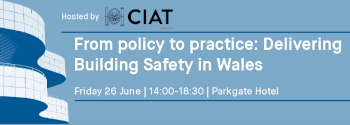
CIAT to host industry panel on 26 June.

New and updated CLC building safety guidance.
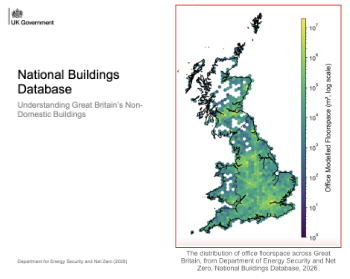
New UK National Buildings Database.
Building Safety Wiki Interviews

Chief executive of the British Woodworking Federation.
Planning condition discharge in England and Wales

A brief explanation from a building compliance expert, with further links.
Overheating guidance and tools for building designers

Guidance for dealing with element of building fabric control that have increasing importance.
Shading for housing, a design guide

From the Good Homes Alliance and British Blind and Shutter Association.
UK Standard Skills Classification (SSC)

A shared framework for describing skills needs.
Social media ban consultation comes to close

CIOB urges UK Government to consider social media’s role in careers guidance in ban debate.