





An Architect's Guide to Public Procurement
An Architect's Guide to Public Procurement, was written by architect and Director of iPM, Fin Garvey. It was published by RIBA Publishing in October 2015.
The book suggests it focusses on '…dispelling the myths and differentiating the genuine impact of EU law from other factors that may serve to diminish the quality of outcomes.' It does this from the perspective of suppliers of architectural services.
The timing of the book is a little unfortunate, given our decision to leave the European Union (EU), and this sense that it may be a little behind the times is not helped by a peculiar decision to superimpose hatching on key pages, which makes them difficult to read.
However, as the process of leaving the EU is likely to take several years, and even then, legislation that originated from EU directives may stay in place in the form of UK regulations, the book remains relevant and a valuable introduction for architects grappling with swathes of impenetrable procedures.
Garvey suggests that there is '…much suspicion in the UK and across Europe that the introduction of new European directives… and their transposition into national regulations, has prompted an abandonment of common sense, and has introduced a regime of conservatism and legal risk-aversion that leads to the delivery of the mediocre and the banal.'
It is not clear what the evidence is for this statement, or why it is necessary in the context of explaining EU law. The first few pages of the book adopt an unnecessary confrontational tone, not supported by the subsequent chapters, citing an obsessive use of 'cut and paste' procurement methodologies and a deficient understanding by procuring entities, then immediately introducing the concept of effective recourse for suppliers.
However, it quickly moves on from this slightly subjective assessment to consider the more objective legal context, and the move from informal guidance to regulation that has been created by the single market. It assesses when, and what EU law might apply, and describes with great clarity the procedures and terminology introduced by EU law and the powers of contracting authorities. It considers how suppliers might participate in public projects, the barriers to qualification, and award criteria.
It also sets out the architect's rights, and how to mount legal challenges to the process. This is a valuable description of the mechanisms available, but they are certainly not actions architects' will take lightly.
The book considers strategies for success, and closes with an assessment of the future (focussing on e-procurement and BIM rather than Brexit).
An Architect's Guide to Public Procurement is best when it sticks to the facts, rather than wandering into broader assessments of motives, quality and marketing. It could benefit from a more targeted title, making clear it focusses specifically on EU law, rather than wider or national issues related to public procurement. However, it provides a valuable introduction for architects entering a complex area.
It seems likely that a re-write will be needed very soon.
[edit] Find out more
[edit] Related articles on Designing Buildings Wiki
Featured articles
Check out some of the best features and news from Designing Buildings as well as key stories from around the web.

Households living near new pylons to save on bills.

ECA warns growth must not outpace grid capacity or skills.
The role of the client and decision making

CIOB response to built environment professions call for evidence.
Construction's sustainability reporting revolution

Tracking upfront embodied carbon with digital tools.
ECA welcomes procurement reforms

Public spending must back British jobs and skills.
Campaigning for Edinburgh: the Cockburn Association 1875-2049

The role of the civic voice in protecting character. Book review.

CIOB photography competition is open for entries.
ECA Edmundson apprentice of the year award
Finalists announced.
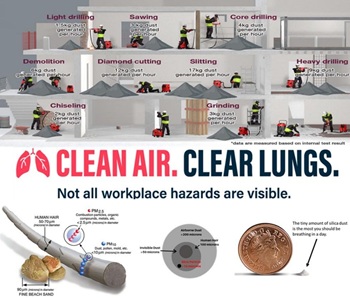
Major new study exposes serious knowledge gaps.

Generating energy from internal light as well as sunshine.

ECA welcomes plans to strengthen subcontractor quality control.

Combining mid-career qualifications with experience broadens career opportunities.