






The CIAT Climate Society; in discussion with the Chair

[edit] An interview with Chris Halligan MCIAT, Chair of the Climate Society
In 2024, CIAT launched the Climate Society, an intra-Institute network addressing the environmental aspects of Architectural Technology. It serves as a collaborative platform where professionals can share experiences and insights to avoid past pitfalls and embrace innovative, environmentally friendly approaches. Key areas of focus include carbon management, retrofitting practices and specifying sustainable alternatives on projects. I sat down with Chris Halligan MCIAT, Chair, to discuss the exciting future of the society and how you can get involved.
Chris Halligan, who describes himself as a “born meddler”, is passionate about what he sees as Architectural Technology’s essential role in tackling the climate emergency. And he has been for a while now, having been involved in sustainable design “for well over three decades”, he tells me in his dulcet Leeds accent. A lot of societies he has had experience with in the past were unfortunately all talk, and he is keen that this new society does “something meaningful” to promote and lift up the technologists’ unique skill set in tackling the crisis.
So what are some of the hurdles that have to be overcome if ATs are to be at the forefront of the industry’s response to the climate emergency? It all lies, he tells me, in policy and practice. “A lot of what’s termed net zero and sustainable design is concerned with operational energy rather than embodied energy”, he says, which is “a mistake”. As energy production becomes increasingly efficient, the proportion of a building’s carbon footprint – which lies in the embodied side of it – continues to increase.
“To me, a sustainable design is something which has the lowest impact possible on the planet,” he tells me. Through “understanding how buildings perform, how they work; the technical operation of the actual fabric of the building” technologists can “make a meaningful contribution to lowering the embodied carbon footprint of a building.” At the very earliest stages of design, “the function and performance of a building fabric needs to be taken into account as the basis for sustainable design”.
This is not true of the current legislation and guidance, which, he says, “is kind of missing the point. It’s addressing the symptoms and not the causes.” An example of this? “All too often I still see people trying to address sustainable demands by using bits of bolt-on plant!” he exclaims.

The task ahead of him is a large one, as it has to do with repositioning our industry and our society. “We’ve decided to come up with quite nice buildings which are then heated and cooled by sticking bits of machinery on them,” Chris explains. “That’s abdicated responsibility for the actual building and the climate within it. The fact is that the fabric of a building, the shape of a building, the orientation of a building, the mass of a building are all climate modifiers, and they’re going to govern what kind of climate you have inside that building, and how much energy you need to make it liveable. If we’re clever enough, you shouldn’t need hardly anything, and we know that can be done.
“This, to me, is the role of the technologist.” With ATs’ skillsets being uniquely suited to tackle the climate crisis, they should be in incredible demand at the moment, but many people still don’t know much or anything about the profession. This is where promotion comes in. “For a long time, the technologist was almost a second class citizen,” he says. “We were thought of as being like kind of the architects’ sidekicks.” In his extensive career, he has had the pleasure of working with “some very knowledgeable architects, some very good. architects”, but he’s also “worked with some architects who aren’t…” Why is that? “I do think that architectural education is lacking,” he says. “I think it concentrates far too much on auteurism – it’s aimed at creating the next superstar.
“In some respects, there’s nothing wrong with that. I love high-brow architecture,” he says, “but an essential part of building design is the way a building functions, the way it lives and breathes.” This is especially true when it comes to the way construction affects the environment.
“The term technologist relates to the technical function of buildings, and we should be grabbing that by both hands and shouting from the rooftops that we can make a difference,” he says, and I can hear the passion in his voice. “I think we don’t, and I’d like to change that, to tell you the truth, because I think we’ve got more to offer than a lot of people involved in the construction industry.”
This is what the Climate Society is aiming to achieve. They are currently “moving towards having a set of meaningful tasks” that Chris can “assign to people to actually achieve and give CIAT something to promote and say to the industry, ‘Look, here we are, we’ve got this knowledge.’” That means the more people who get involved right now, the better.
But why should you, reader, get involved? Because “it’s our Institute”, Chris says. “If you’re interested in making the role of the technologist more important, more meaningful, and more respected, it’s up to us to do that.
“A lot of the time we join clubs and societies, and we expect things to be done for us, yet every society is only the sum of its parts. CIAT isn’t just a few people telling everybody else what to do, it’s an Institute for technologists, and if you want something to change, and if you want something to happen, the only thing to do is to get off your backside and get involved.”
Membership to the Climate Society is open to all CIAT members and affiliates. It also welcomes professionals from other institutes participating in similar networks. The Society is chaired by Chris and supported by a team including Vice-President Technical, Vice-President Practice, Vice-President Education, and CIAT staff lead, Steve Fox.
In terms of plans for the future, Chris sums up, “I want the Climate Society to be a vehicle for the promotion of the technologist’s skills, but I also want us to be able to make a meaningful contribution to the climate emergency.” In the past, it’s often felt like it’s one or the other, he says, but this time the two go hand in hand, so we need to make the most of that.
“If we want things to change,” Chris concludes, “we’ve got to change it.”
This article appears in the AT Journal issue 153m spring 2025 as "An interview with Chris Halligan MCIAT, Chair of the Climate Society" and was written by Tim Fraser, Deputy Editor AT Journal.
To register an interest in the Climate Society, email Steve Fox, CIAT’s Practice & Technical Officer at s.fox@ciat.global
--CIAT
[edit] Related articles on Designing Buildings
Featured articles and news
Costs and insolvencies mount for SMEs, despite growth

Construction sector under insolvency and wage bill pressure in part linked to National Insurance, says report.
The place for vitrified clay pipes in modern infrastructure
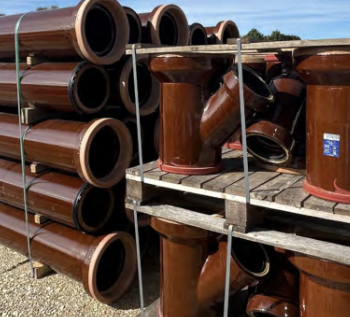
Why vitrified clay pipes are reclaiming their role in built projects.

Research by construction PR consultancy LMC published.
Roles and responsibilities of domestic clients

ACA Safety in Construction guide for domestic clients.
Fire door compliance in UK commercial buildings

Architect and manufacturer gives their low down.
Plumbing and heating for sustainability in new properties

Technical Engineer runs through changes in regulations, innovations in materials, and product systems.
Awareness of the Carbon Border Adjustment Mechanism
What CBAM is and what to do about it.
The new towns and strategic environmental assessments
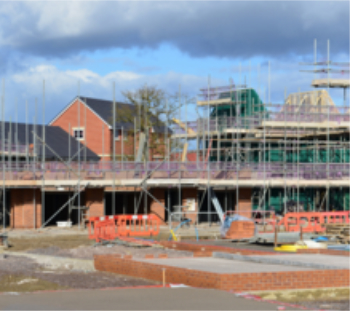
12 locations of the New Towns Taskforce reduced to 7 within the new towns draft programme and open consultation.
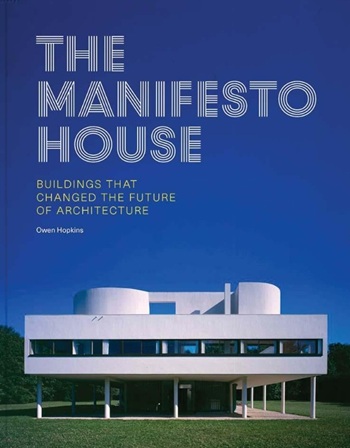
Buildings that changed the future of architecture. Book review.
The Sustainability Pathfinder© Handbook
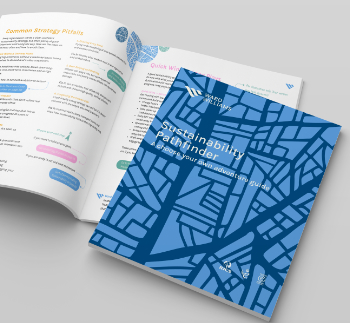
Built environment agency launches free Pathfinder© tool to help businesses progress sustainability strategies.

Government outcome to the late payment consultation, ECA reacts.
IHBC 2025 Gus Astley Student Award winners
Work on the role of hewing in UK historic conservation a win for Jack Parker of Oxford Brookes University.
Future Homes Building Standards and plug-in solar
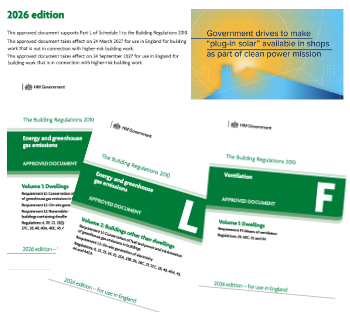
Parts F and L amendments, the availability of solar panels and industry responses.
How later living housing can help solve the housing crisis
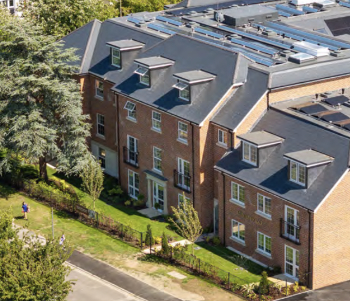
Unlocking homes, unlocking lives.
Preparing safety case reports for HRBs under the BSA
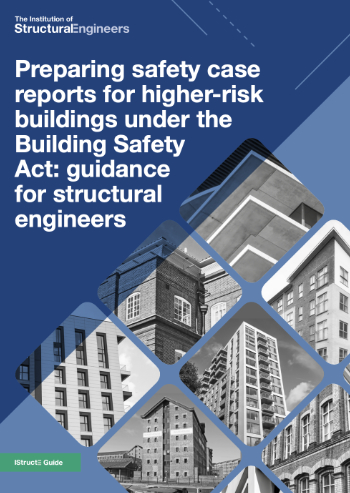
A new practical guide to preparing structural inputs for safety cases and safety case reports published by IStructE.
Male construction workers and prostate cancer
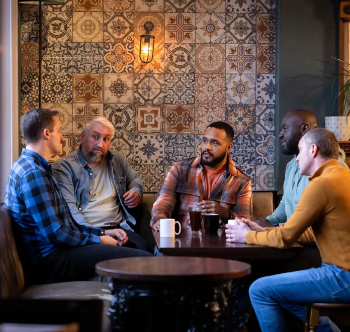
CIOB and Prostate Cancer UK encourage awareness of prostate cancer risks, and what to do about it.