




Updating Conservation Professional Practice Principles

The IHBC’s Conservation Professional Practice Principles, first published in 2017, is to be updated to mark the institute’s 25th anniversary. The IHBC launched Conservation Professional Practice Principles at the 2017 Annual School in Manchester, and published it jointly with the Historic Towns and Villages Forum and Civic Voice. Five years on, the IHBC is looking to update it.
The document emphasises that conservation professional practice is about making balanced judgments and finding ‘creative solutions, negotiation and compromise in order to find optimum outcomes for heritage assets’. This involves balancing a wide range of values within various legislative frameworks, and within finite capital and revenue budgets. The document has a strong emphasis on place-making. The five years since the original publication have been full. There has been dramatic evidence of the impacts of climate change and greater appreciation of the importance of biodiversity. The longer-term impacts of the Covid pandemic are still unfolding, and include changes to high streets and live/work patterns.
Neighbourhood planning has become more embedded and often addresses heritage as an integral part of wider planning for the area, for example through policies on high streets, economic development and green infrastructure. The National Trust’s Guide to Heritage in Neighbourhood Plans (2019) gives more insight into this.
There has also been a renewed emphasis on the need to address geographical economic inequalities (under ‘levelling up’ and various other labels). Against this context, the IHBC was involved in the establishment of the Conservation, People and Places All-Party Parliamentary Group and its first inquiry into the economic values of heritage. The current economic turmoil will also impact on high streets, homes, businesses and the ways in which historic buildings and places are used. All of this has implications for heritage practice. There is also a changing political context, including shifting positions and divides within the main political parties. For example, this led to the publication of the Planning White Paper, followed by the abandonment of most of its key reforms. In this context, it is all the more important for heritage practice to be a positive, constructive, problem-solving activity.
As part of the review process, a consultation has been undertaken. Feedback has generally been positive, with constructive suggestions for updates. The feedback suggests that it would be useful to promote awareness of the document more rigorously (the original document was sent to all members).
The current document may be downloaded from the IHBC’s Toolbox at http://ihbconline.co.uk/toolbox. It is envisaged that the updated version will be published early in 2023.
This article originally appeared in the Institute of Historic Building Conservation’s (IHBC’s) Context 174, published in December 2022. It was written by Dave Chetwyn, managing director and partner at Urban Vision Enterprise CIC, and IHBC communications and outreach chair.
--Institute of Historic Building Conservation
[edit] Related articles on Designing Buildings
- Conservation practice survey 2016.
- Conservation.
- Consultation on Conservation Professional Practice Principles.
- Heritage practice in England for balanced growth.
- Heritage.
- IHBC articles.
- Institute of Historic Building Conservation.
- Listed buildings.
What does conservation
IHBC NewsBlog
IHBC sponsors Gardens Trust event 23-4 Sept 2026
.jpeg)
'Learning from the Past, Shaping the Future’ takes place in Milton Keynes
Renovations to Frank Lloyd Wright's Fallingwater complete
.jpg)
World Heritage Preserved project opens house for tours again
Shakespeare Birthplace Trust places Hall's Croft on HAR Register
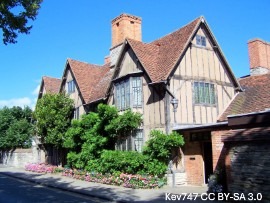
Stratford-upon-Avon home of Shakespeare's daughter is 'At Risk'
Lady Grange’s House repaired on St Kilda
.jpg)
National Trust for Scotland repairs stone cleit with link to famous island resident
Griff Rhys Jones on BBC Radio 4 Today programme
,_Green_Lane,_Derby.jpg)
The Victorian Society’s President unveiled its latest Top Ten Endangered Buildings 2026.
Need a MATE? Book your place now.
IHBC offers free webinars on applying for IHBC accreditation (Full & Associate).
UK Stained Glass Repository finds windows new homes
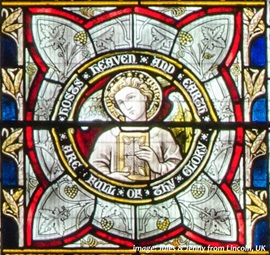
How are stained glass windows are rescued, stored and repurposed?
APPGEBE report sets high aims for quality
'Government must not sacrifice quality in drive to build 1.5m homes'
New measures protect Historic Shipwrecks from heritage crime

Underwater cultural heritage benefits from new HE guidance
How could the City of London skyline look in 6 years' time?

Visualisation shows approved planning applications as completed buildings
National Trust for Scotland calls for VAT cuts
Heritage neglect is encouraged by current policies
IHBC's 'Context' Issue 186 features Industrial Heritage
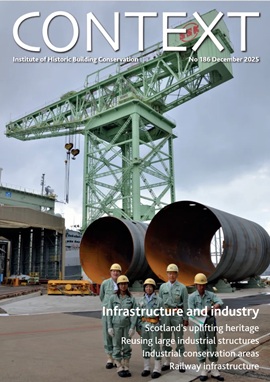
IHBC's members' journal reports on the challenges of conserving infrastructure
Book now for IHBC Annual School 2026
IHBC Annual School is taking place 18-20 June 2026 in Newcastle
RICHeS Research Infrastructure offers ‘Full Access Fund Call’
RICHeS offers a ‘Help’ webinar on 11 March
Latest IHBC Issue of Context features Roofing
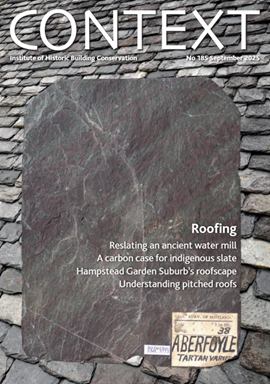
Articles range from slate to pitched roofs, and carbon impact to solar generation to roofscapes
Three reasons not to demolish Edinburgh’s Argyle House

Should 'Edinburgh's ugliest building' be saved?
IHBC’s 2025 Parliamentary Briefing...from Crafts in Crisis to Rubbish Retrofit
IHBC launches research-led ‘5 Commitments to Help Heritage Skills in Conservation’
How RDSAP 10.2 impacts EPC assessments in traditional buildings

Energy performance certificates (EPCs) tell us how energy efficient our buildings are, but the way these certificates are generated has changed.
Comments
[edit] To make a comment about this article, click 'Add a comment' above. Separate your comments from any existing comments by inserting a horizontal line.