




COSHH
Many processes involve the use of substances that could cause harm. The Control of Substances Hazardous to Health Regulations 2002 (COSHH) require employers to prevent or reduce workers' exposure to substances including:
- Chemicals, and products containing chemicals.
- Fumes, gases, vapours and mists.
- Dusts.
- Nanotechnology
- Biological agents and germs.
It does not include lead, asbestos or radioactive substances, which are controlled by other legislation.
There are a wide range of situations where workers might be exposed to substances hazardous to health:
- Dusty or fume-laden air in welding, quarries or woodworking.
- Metalworking fluids.
- Flowers, bulbs, fruit and vegetables.
- Wet working such as catering and cleaning.
- Wet cement in construction.
- Benzene in crude oil.
- Using substances such as paint, ink, glue, lubricants, detergent and beauty products.
See HSE: Control of Substances Hazardous to Health Essentials guidance publications for guidance on different types of substances that might be encountered. This includes guidance on silica, welding and metalworking, plant and machinery and does in fact include guidance about asbestos.
- Inhalation.
- Ingestion.
- Contact with the skin.
- Contact with the eyes.
- Skin puncture.
Controlling hazardous substances involves:
- Identifying potential health hazards.
- Undertaking risk assessments to determine how to prevent harm. If an employer has five or more employees they must record risk assessments, but it is sensible to do this even if there are fewer than five employees.
- Providing control measures, ensuring that they are in good working order and that they are used.
- Providing, replacing and paying for personal protective equipment (PPE).
- Where appropriate, providing monitoring to show compliance with Workplace Exposure Limits (WELs) or Biological Monitoring Guidance Values (BMGV) or to show that control equipment or personal protective equipment is working properly.
- Where appropriate, providing health surveillance.
- Emergency planning.
- Providing information, instruction and training so that employees understand; what the hazards and risks are, if there is an exposure limit, the results of any monitoring of exposure or health surveillance and what to do if there is an accident or emergency.
In the first instance, preventative measures should be taken to; avoid the substance or process, substitute it with something safer, or use the substance in a safer form. If exposure cannot be prevented, then it must be controlled to ensure that the risk of harm is ‘as low as is reasonably practicable' (ALARP).
Where proposed work has a high risk, a ‘permit to work' may be introduced to ensure that only authorised people carry out the work, within a specified time frame and in a specific way, which may be set out in a method statement.
Practical guidance on complying with COSHH is given in the HSE Approved Code of Practice and guidance L5 (sixth edition, 2013). The Workplace Exposure Limits referred to above are listed in HSE publication EH40/2005, the current edition of which was published in January 2020.
Since the UK left the European Union, the classification, labelling and packaging of chemicals in Great Britain is governed by the GB CLP Regulation, and the registration of chemicals by UK REACH, both regulated by HSE. The EU CLP Regulation continues to apply in Northern Ireland.
[edit] Related articles on Designing Buildings
- CDM.
- Competent person.
- Construction dust.
- Construction health risks.
- Design risk management.
- Hazardous substances.
- Health and safety file.
- Health and safety.
- Health and Safety Executive.
- Injuries on construction sites.
- Method statement.
- Occupational health.
- Personal protective equipment.
- Pre-construction information.
- Principal contractor.
- Registration, evaluation, authorisation and restriction of chemicals REACH.
- Reporting accidents and injuries on construction sites.
- Risk assessment.
- Volatile organic compounds.
- Workplace exposure limits.
[edit] External references
- The Control of Substances Hazardous to Health Regulations Legislation.
- HSE: COSHH.
- HSE: Control of Substances Hazardous to Health Essentials guidance publications.
- European Regulation (EC) No 1272/2008 on classification, labelling and packaging of substances and mixtures (CLP Regulations).
- HSE: The GB CLP Regulation.
- Registration, Evaluation, Authorisation & Restriction of Chemicals (REACH)
Featured articles
Check out some of the best features and news from Designing Buildings as well as key stories from around the web.

ECA calls for an exemption for contractors working away from home.
Fire performance of thermal insulation
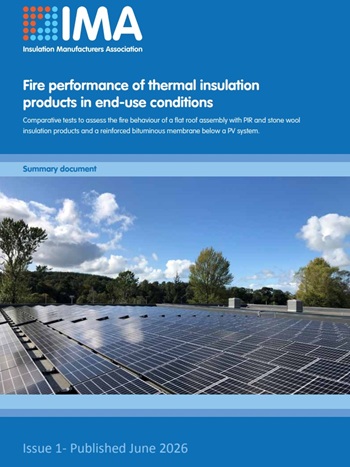
Flat roof assemblies with PV.
Become a Professional Development Partner

CIOB launches a new framework for staff development and chartered membership.

Dorset's first conservation campaigner?
Gov.uk - Hot-rolled steel plate

New anti-dumping measure imposed on South Korea.
ECA responds to the Milburn Report

Youth employment to be linked to workforce demand.
The construction industry urgently needs to attract new talent

CIOB responds to Neets report.
Grenfell Tower community update

Memorial columns to be retained as careful dismantling continues.

When buildings reflected the local resources available.

CIOB reports 57% are using artificial intelligence technologies.

More of England’s ‘hidden heroes’ will be celebrated.

CIAT calls for retrofit to be a priority.
Comments