





Rococo

Rococo, also known as ‘late Baroque’, was an extreme, decorative development of Baroque architecture that emerged in the 18th century as a reaction against grandeur and symmetry. It was a more fluid and florid elaborate style, comprising ornate, asymmetric designs and pastel shades.
It originated in Paris, in response to the ponderous, strict Baroque architecture that had risen to prominence with buildings such as the Palace of Versailles and the official art of Louis XIV’s reign. It was soon adopted as a style across France and other countries such as Germany and Austria. However, by the end of the 18th century, Rococo had largely been replaced by the Neoclassical style.
Although there are many similarities between Rococo and Baroque architecture, the design approach tends to be more playful, light and with an exuberant use of curves. One of the principal differences between the styles is with regard to symmetry; Rococo emphasising the asymmetry of forms.
Rococo is also a more secular adaptation of Baroque, which is often more serious, with the intention of instilling awe in the faithful. Walls, ceilings and mouldings are decorated with numerous interlacings of curves and counter-curves based on the shapes of ‘C’ and ‘S’, along with shell forms and other naturalistic shapes.
The colours of Rococo are predominantly pale, such as light pastel, ivory white and gold, with frequent use of mirrors to enhance the sense of open space. French furniture from the period often displays curving forms, naturalistic shell and floral ornament, and playful use of gilt-bronze and porcelain decoration.
Some of the most notable buildings of the Rococo style are:
- Salon de Monsieur le Prince, Chantilly.
- Salons of the Hotel de Soubise, Paris.
- Amalienburg, Munich.
- Charlottenburg Palace, Berlin.
- Czapski Palace, Warsaw.
[edit] Related articles on Designing Buildings Wiki
Featured articles
Check out some of the best features and news from Designing Buildings as well as key stories from around the web.
Bridging the gap between clients and contractors

Concerns remain around contractor quality, capability, and delivery.
Construction Management, 10 June.

Heat pumps beat boilers in new home tests.
Building Safety Act implementation in Wales

CIAT to host industry panel on 26 June.
New and updated CLC building safety guidance.
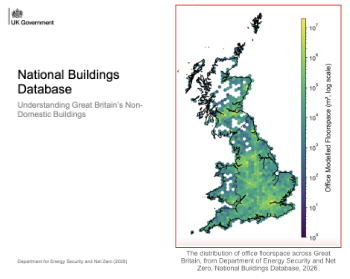
New UK National Buildings Database.
Building Safety Wiki Interviews

Chief executive of the British Woodworking Federation.
Planning condition discharge in England and Wales

A brief explanation from a building compliance expert, with further links.
Overheating guidance and tools for building designers

Guidance for dealing with element of building fabric control that have increasing importance.
Shading for housing, a design guide

From the Good Homes Alliance and British Blind and Shutter Association.
UK Standard Skills Classification (SSC)

A shared framework for describing skills needs.
Social media ban consultation comes to close

CIOB urges UK Government to consider social media’s role in careers guidance in ban debate.