





Panopticon

The Panopticon is an architectural concept design for institutional buildings, most commonly associated with prisons. It was developed by the utilitarian philosopher Jeremy Bentham in the late-18th century as a building that would serve as a system of control. The name was derived from the figure in Greek mythology, Panoptes, who was a giant with a hundred eyes.
The form of the panopticon was based around the idea that all the inhabitants (or inmates) of an institution could be monitored by a single central figure (or guard) at all times. While it is impossible for the single figure to observe everyone at once, the idea was that since those under surveillance would not know when they were being observed, they would be incentivised to act as though they were always being observed.
In terms of architecture, Bentham’s drawings proposed a circular structure with individual cells arranged along the external wall. These would face inwards towards a central rotunda or ‘inspection house’ from which the guard would be able to observe all the inmates.
Bentham conceived the panopticon as a suitable concept, not just for prisons, but for buildings such as schools, hospitals, asylums, and so on. Although no true panopticon was ever constructed, the radial concept was very influential on building designers, particularly 19th century prisons (e.g. HM Wandsworth, HM Strangeways, UK). Perhaps the closest example is the Presidio Modelo in Cuba which is now a museum.
Despite the fact that panopticons were never built, Bentham’s concept has become synonymous with theories relating to surveillance, control and security.
[edit] Find out more
[edit] Related articles on Designing Buildings Wiki
Featured articles and news
A safe energy transition – ECA launches a new Charter

Practical policy actions to speed up low carbon adoption while maintaining installation safety and competency.
Frank Duffy: Researcher and Practitioner

Reflections on achievements and relevance to the wider research and practice communities.
The 2026 Compliance Landscape: Fire doors

Why 'Business as Usual' is a Liability.
Cutting construction carbon footprint by caring for soil

Is construction neglecting one of the planet’s most powerful carbon stores and one of our greatest natural climate allies.
ARCHITECTURE: How's it progressing?

Archiblogger posing questions of a historical and contextual nature.
The roofscape of Hampstead Garden Suburb
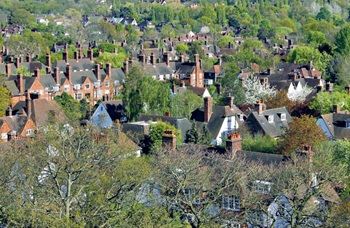
Residents, architects and roofers need to understand detailing.
Homes, landlords. tenants and the new housing standards

What will it all mean?
The Architectural Technology podcast: Where it's AT

Catch-up on the latest episodes.
Edmundson Apprentice of the Year award 2026

Entries now open for this Electrical Contractors' Association award.
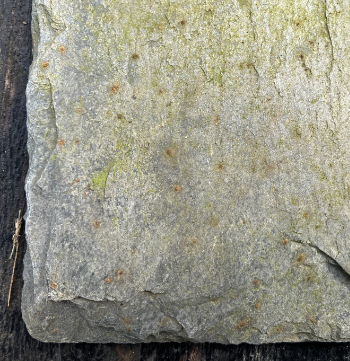
Traditional blue-grey slate from one of the oldest and largest UK slate quarries down in Cornwall.
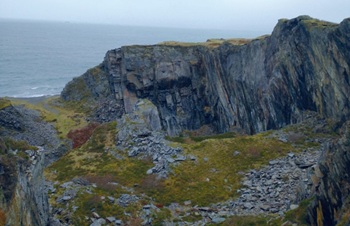
There are plenty of sources with the potential to be redeveloped.
Change of use legislation breaths new life into buildings

A run down on Class MA of the General Permitted Development Order.
Solar generation in the historic environment
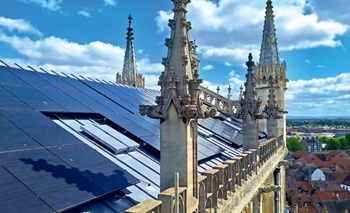
Success requires understanding each site in detail.
Level 6 Design, Construction and Management BSc

CIOB launches first-ever degree programme to develop the next generation of construction leaders.

Open for business as of April, with its 2026 prospectus and new pipeline of housing schemes.
The operational value of workforce health

Keeping projects moving. Incorporating unplanned absence and the importance of health, in operations.