





Firring
A firring is a thin strip of timber (or ‘batten’) that has been cut along its length diagonally so that it tapers, with one end deeper than the other. Firrings are used in the construction of flat roofs to create a fall, ensuring that water runs to the lower side. Typically they are designed to a fall of 1:40, which given on-site inaccuracies should result in a minimum fall of 1:80 in the finished construction.
Firrings are sometimes referred to as furring strips or furrings, when applied more generally raise building elements, such as in roof structures. In the US these might be referred to as strapping.
They are manufactured by cutting at an angle along the length of a timber batten. As this requires specialist cutting equipment, firrings are often manufactured off site. Commonly available sizes have a maximum cross section of 47mm x 50mm, 47mm x 75mm and 47 x 100mm
Firrings are cut in pairs, with the pieces on both sides of the cut line being used so as to minimise waste. They can be cut in identical pairs or folding pairs. Identical pairs are the same when cut, whereas a folding pair are cut to form a continuous fall when placed end to end.

NB: The term metal furring system or MF System refers to a technique for creating a seamless plaster internal finish with a void behind for the installation of services. Plasterboard is fixed directly to the concealed metal furrings. This can be used as an alternative to traditional timber batten construction for walls and ceilings.
For more information, see Metal furring system.
[edit] Related articles on Designing Buildings
Featured articles
Check out some of the best features and news from Designing Buildings as well as key stories from around the web.
Passive fire protection webinar
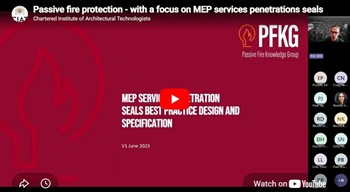
MEP services penetration seals.

Where its at podcast (and video) - The role of the Architectural Technologist as an Expert Witness.
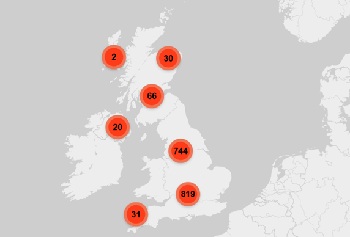
More than 200 remarkable buildings added to SAVE’s Buildings at Risk register.

Government scraps pre-application consultation for Nationally Significant Infrastructure Projects.
Historic England and infrastructure
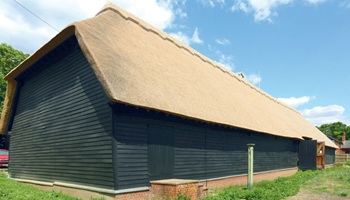
New projects offer opportunities for the historic environment and local communities.
Construction Management, 2 July

Construction deaths halve in two years.
Green Book changes to drive investment in all parts of UK.
Minimum energy efficiency standards (MEES)

CIAT briefing on response to consultations for privately rented non-domestic properties.
Connect, collaborate, shape the future

Registration now live for UK Construction Week Birmingham.

CIOB announces Saul Humphrey FCIOB as new President for 26/27 term.
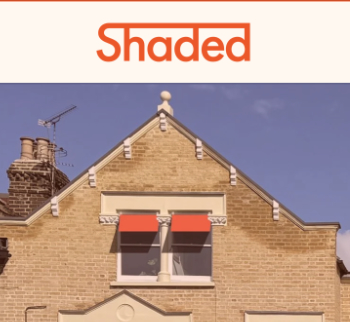
A quick, simple, and zero-bills solution to prevent overheating.
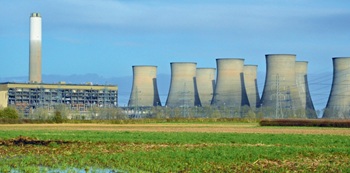
The adaptive reuse of large industrial structures.
Promoting the circular economy by extending the life of buildings.