






Counterweights

Contents |
[edit] Introduction
In engineering, a counterweight is an object that helps provide stability and balance for another system. Counterweights can be found a wide range of applications, such as cranes, bridges, and lifts, where they help to make systems more efficient at load bearing.
[edit] What are counterweights?
Counterweights help support loads when they are being lifted or lowered. For counterweights to work as efficiently as possible, they need to have the right mass and be at the optimum distance from the pivot point. In physics, this is known as the moment, and it is simply the mass of the counterweight multiplied by its distance from the pivot.
For the most efficient operation, the moment of the counterweight must be equal to the moment of the load. This is extremely important, because if the moment of one side is larger than the other, then the dominant side will topple over.
[edit] Examples of counterweights
Some of the first uses of counterweights were in medieval siege engines known as trebuchets. These were huge structures that used a counterweight to throw projectiles that weighed between 100 – 200 lb into enemy fortifications from a distance.
Counterweights are also common in modern vehicles, where they are used on the crankshaft within piston engines to minimise noise and reduce vibrations when the crankshaft rotates.
In lifts, counterweights are particularly important, as they help to lower the amount of energy required to lift or lower the lift car. The counterweight has a suggested weight that is equal to the weight of the lift car when it is at half its maximum capacity.
Counterweights are also used in bridge construction, particularly in bridges that have one platform spanning an area or two that are joined at the middle. These are known in engineering as bascule bridges, but they are commonly referred to as drawbridges. Because of the counterweight, they require very little energy to operate, which means that the bridge can be opened quickly so that boats can pass under.
[edit] Related articles on Designing Buildings
- Abutment.
- Arbour.
- Bascule bridge.
- Bridges.
- Cranes.
- Forklift truck.
- Funicular.
- Gantry.
- Hoists.
- Lifts.
- Lifting device.
- Lifting platform.
- Lifts and Their Special Operating Modes.
- Lifts for office buildings.
- Lift shaft.
- Scour.
- The importance of service lifts.
- The science of lifts.
- Wheelchair platform stairlifts.
--Nathan Massey 14:36, 11 Jul 2017 (BST)
Featured articles
Check out some of the best features and news from Designing Buildings as well as key stories from around the web.
The role of the client and decision making

CIOB response to built environment professions call for evidence.
Construction's sustainability reporting revolution
Tracking upfront embodied carbon with digital tools.
ECA welcomes procurement reforms

Public spending must back British jobs and skills.
Campaigning for Edinburgh: the Cockburn Association 1875-2049

The role of the civic voice in protecting character. Book review.

CIOB photography competition is open for entries.
ECA Edmundson apprentice of the year award

Finalists announced.
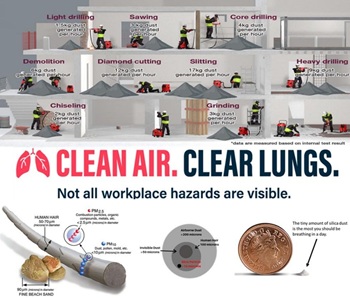
Major new study exposes serious knowledge gaps.

Generating energy from internal light as well as sunshine.

ECA welcomes plans to strengthen subcontractor quality control.

Combining mid-career qualifications with experience broadens career opportunities.

Why being a mentor can help your career.

Channel 4 broadcaster to host 125th anniversary ceremony.