






WiFi definition
WiFi technology (IEEE802.11) can be broadly categorised to IEEE802.11 a/b/g/n/ac. Each is an improvement in transmission speed and/or signal range from the previous, although these days only ‘G’ and ‘N’ are used.
The standard G versions of networking devices have an optimal transmission speed of 54 Mbps with an indoor range of approximately 40 m whereas the N versions have a theoretical maximum speed of 300 Mbps (practical of approximately 150 Mbps and above) with an indoor range in the region of 70 m.
In addition to this, N variations offer the choice of two frequency ranges; 2.4 GHz or 5 GHz. The higher frequency has no impact on the range but offers a potentially less polluted frequency to help reduce crosstalk noise.
Both the G and the N devices utilise the same channel capabilities but these vary regionally. In Europe (including UK) a channel system of 1-13 is used whereas in the US the system uses 1-11. Both use the same frequency ranges resulting in an approximate frequency void of 16.5 MHz at the end of the 2.4 GHz range.
Japan utilise a different system still, expanding the 2.4 GHz range beyond the acceptable ISM guidelines by 10.5 MHz to allow for an additional 14th channel with 11 MHz of non-interference from other channels (see Figure below) [80], [81], [82].

Image. 22MHz channel allocations for WiFi 2.4GHz frequencies, with curvatures implying affinities for intra-channel frequency selection.
The figure above shows the affinities for the frequency selection within each 22 MHz channel and the overlap between channel frequencies. The same would be seen for 40 MHz channels with the obvious exception that there would be twice the amount of overlap between channels, leaving fewer isolated channels. The solid lines show the 3 channels in the US 11 channel system that do not encroach on each other’s range at all. Each WiFi access point will secure its own channel and use that channel for all communications. Multiple channels will not be utilised by one access point other than during overlap.
WiFi communication protocols are Internet Protocol (IP) based where the destination address is in packet headers allowing large amounts of data to be transmitted through a network of nodes at high speed. This means that on any WiFi network a central control node (network coordinator) will allocate all IP’s in the network on discovery allowing for any packets to be addressed and routed to a connected device [82].
This article was created by --BRE. It was taken from The future of electricity in domestic buildings, a review, by Andrew Williams, published in November 2014.
NB The term 'WiFi' was coined by the Wi-Fi Alliance as shorthand for wireless local area network (WLAN) products based on the Institute of Electrical and Electronics Engineers' (IEEE) 802.11 standards. It did not specifically 'stand for' anything. It has popularly been adopted to mean Wireless Fidelity but this is not correct.
[edit] Find out more
[edit] Related articles on Designing Buildings Wiki
- Bluetooth.
- CAT5.
- Ethernet
- Extranet
- Glossary of electrical terms.
- ICT and Automation (ICTA) Scoping Study Report.
- In-building wireless.
- Information and communications technology.
- Internet of things.
- Internet of things in commercial buildings.
- Local area network.
- Smart buildings.
- Smart cities.
- Smart technology.
- The future of electricity in domestic buildings.
- WiMax.
- WiredScore.
- ZigBee.
[edit] External references
- [80] E. G. Villegas, E. López-Aguilera, R. Vidal and J. Paradells. Effect of adjacent-channel interference in IEEE 802.11 WLANs. Cognitive Radio Oriented Wireless Networks and Communications, Orlando, 2007.
- [81] Butler J. Wireless Networking in the Developing World, Copenhagen: Creative Commons, 2013.
- [82] Institute of Electrical and Electronics Engineering, Part 11: Wireless LAN Medium Access Control (MAC) and Physical Layer (PHY) Specifications. IEEE Standards, 2012.
Featured articles and news
Costs and insolvencies mount for SMEs, despite growth

Construction sector under insolvency and wage bill pressure in part linked to National Insurance, says report.
The place for vitrified clay pipes in modern infrastructure
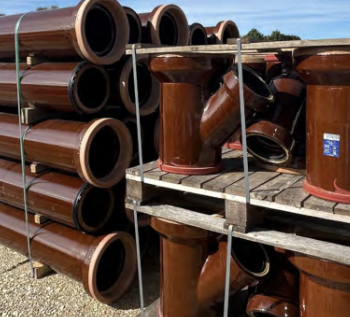
Why vitrified clay pipes are reclaiming their role in built projects.

Research by construction PR consultancy LMC published.
Roles and responsibilities of domestic clients

ACA Safety in Construction guide for domestic clients.
Fire door compliance in UK commercial buildings

Architect and manufacturer gives their low down.
Plumbing and heating for sustainability in new properties
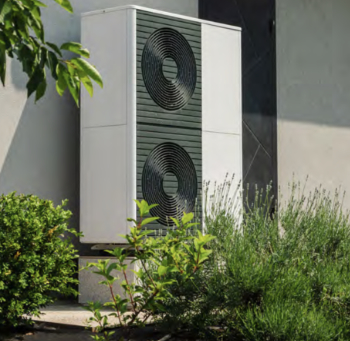
Technical Engineer runs through changes in regulations, innovations in materials, and product systems.
Awareness of the Carbon Border Adjustment Mechanism
What CBAM is and what to do about it.
The new towns and strategic environmental assessments

12 locations of the New Towns Taskforce reduced to 7 within the new towns draft programme and open consultation.

Buildings that changed the future of architecture. Book review.
The Sustainability Pathfinder© Handbook
Built environment agency launches free Pathfinder© tool to help businesses progress sustainability strategies.

Government outcome to the late payment consultation, ECA reacts.
IHBC 2025 Gus Astley Student Award winners

Work on the role of hewing in UK historic conservation a win for Jack Parker of Oxford Brookes University.
Future Homes Building Standards and plug-in solar
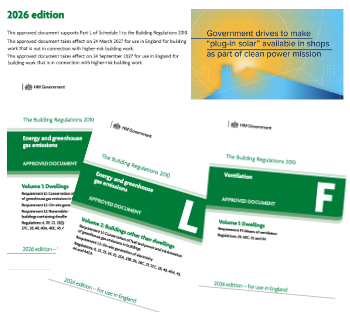
Parts F and L amendments, the availability of solar panels and industry responses.
How later living housing can help solve the housing crisis

Unlocking homes, unlocking lives.
Preparing safety case reports for HRBs under the BSA

A new practical guide to preparing structural inputs for safety cases and safety case reports published by IStructE.
Male construction workers and prostate cancer

CIOB and Prostate Cancer UK encourage awareness of prostate cancer risks, and what to do about it.
Comments
WiFi does not stand for Wireless Fidelity. It is not an acronym. It is a term to define the ieee 802.11 standard.
WiFi was coined by the Wi-Fi Alliance as shorthand for wireless local area network (WLAN) products based on the Institute of Electrical and Electronics Engineers' (IEEE) 802.11 standards. It did not specifically 'stand for' anything. It has popularly been adopted to mean Wireless Fidelity but this is not correct.