






Why collaboration is the key to future-proofing infrastructure
Judith Sykes explains why working with other disciplines is crucial if engineers are to lead the change, and why it's not always about building anew.

|
| Increasingly, we need to consider ourselves as repairers and restorers of both our built and natural assets. |
Contents |
[edit] Introduction
In the week running up to November’s UN Climate Change Conference (COP26), I re-read the Intergovernmental Panel on Climate Change (IPPC)’s 2021 report for policymakers, a recommended text for all engineers and built environment professionals.
Compared with previous IPPC reports, this one painted a far starker picture of our impact on the planet. It concluded that the time for action has already run out if we are to avoid a long-lasting change to our climate, with global warming of 1.5C and 2C predicted during this century unless deep reductions in CO2 occur in the coming decades. It added that human-induced climate change was already affecting many weather extremes.
Many of us will have been disappointed that, against this backdrop, more was not achieved in Glasgow and frustrated by the overall pace of political negotiations.
Climate impacts will disproportionality affect those people who are most disadvantaged in society. This is not just a climate emergency but a health emergency and a biodiversity one.
There is an opportunity here to rethink how we design cities and places not only to mitigate climate risks but also to deal with social inequality as part of the wider levelling-up agenda. The engineering profession should be at the heart of efforts to find sustainable solutions – but do we have the right skills and are we creating the right environment to achieve these aims?
[edit] Designing for climate
This was a question we put to ICE members in a joint investigation by the institution and the National Infrastructure Commission (NIC) into how the NIC’s design principles were being applied in practice.
The resulting report, What Makes Good Design?, was published earlier this year. The research coupled survey results with interviews with ICE fellows and NIC Design Group members. Astonishingly, only 15% of respondents stated that they always considered design for climate as part of their work, and climate was the least considered of all of the design principles.
It was this context that framed our Build Better Now panel discussion on 10 November on what more we should all be doing to future-proof our built and natural environments. I was joined by landscape architect Andrew Grant, building physicist Maria Smith, smart infrastructure specialist Jennifer Schooling and sustainable designer Sophia Kee.
Collaboration, all panellists agreed, was crucial. We are an industry that is so used to working in silos that our decision-making processes and business models get in the way. This reinforces observations made in the What Makes Good Design? report. As engineers, we need to be working with other design disciplines both to see the bigger picture and to develop integrated solutions that have multiple benefits.
[edit] Resilient systems
A related thread of the discussion was the need to recognise that resilience is a systems problem that requires a much better grasp of the interrelationships between different types of infrastructure. Understanding and responding to this interconnectedness is a key recommendation of the 2020 NIC report Anticipate, React, Recover: Resilient Infrastructure Systems.
Being generous with sharing knowledge, from better data to innovative design practice, was also highlighted as a way for the sector to develop better solutions. LETI (the London Energy Transformation Initiative) was cited as an example of the impact a collaborative and committed group of professionals can have in raising awareness of climate design approaches and performance targets.
Jennifer Schooling reminded us that most of the infrastructure that will see us through to the next century already exists, highlighting the role that digital systems can play in measuring, monitoring and improving the performance of existing assets.
Maria Smith pointed out the problem of the deployment gap, where known solutions that will help to build a more resilient environment today are not being implemented. This points to the need to address procurement approaches and build skills into the supply chain.
Dialling in from Dubai, Sophia Kee described how microclimate analysis was informing the approach to design for resiliency in a country where, for significant proportions of the year, it is already too hot to be outside.
NIC Design Group member Andrew Grant reinforced the power and universality of the National Infrastructure Commission’s design principles. As a multidisciplinary group of professionals, we need to embrace a new way of working and invest in design to resolve these systems problems.
Acting on these principles requires us to be braver and bolder. We need to seek out knowledge and partnerships to build coalitions for change. As engineers, we are often focused on the new – but, increasingly, we need to consider ourselves as repairers and restorers of both our built and natural assets.
- Missed the event? Watch on demand now on the Build Better Now website.
- Read more about the event.
Judith Sykes is a senior director of Expedition Engineering, an ICE Fellow and a member of the NIC Design Group.
This article originally appeared on the ICE Civil Engineer Blog, on 2 December, 2021.
--The Institution of Civil Engineers
[edit] Related articles on Designing Buildings
Featured articles and news
Costs and insolvencies mount for SMEs, despite growth
Construction sector under insolvency and wage bill pressure in part linked to National Insurance, says report.
The place for vitrified clay pipes in modern infrastructure
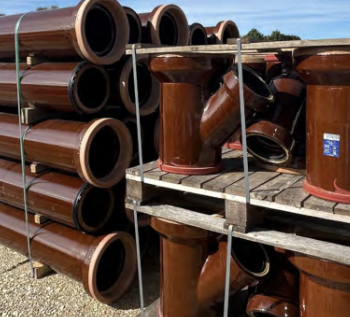
Why vitrified clay pipes are reclaiming their role in built projects.
Research by construction PR consultancy LMC published.
Roles and responsibilities of domestic clients

ACA Safety in Construction guide for domestic clients.
Fire door compliance in UK commercial buildings

Architect and manufacturer gives their low down.
Plumbing and heating for sustainability in new properties
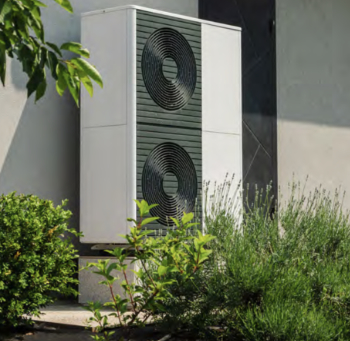
Technical Engineer runs through changes in regulations, innovations in materials, and product systems.
Awareness of the Carbon Border Adjustment Mechanism
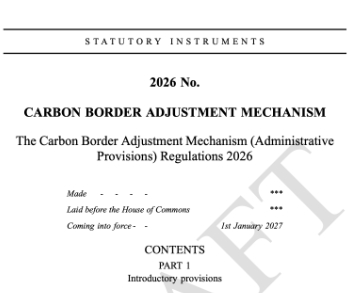
What CBAM is and what to do about it.
The new towns and strategic environmental assessments
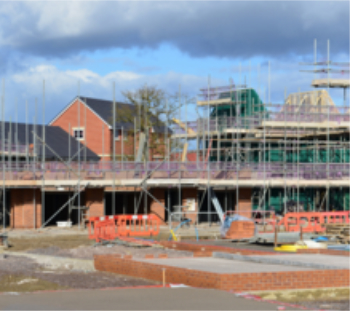
12 locations of the New Towns Taskforce reduced to 7 within the new towns draft programme and open consultation.
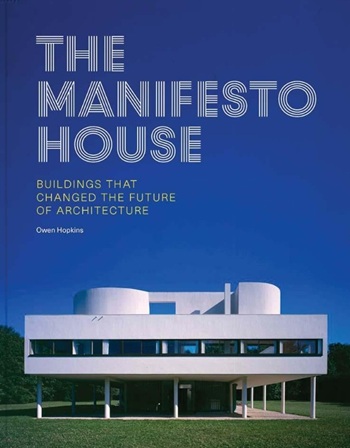
Buildings that changed the future of architecture. Book review.
The Sustainability Pathfinder© Handbook
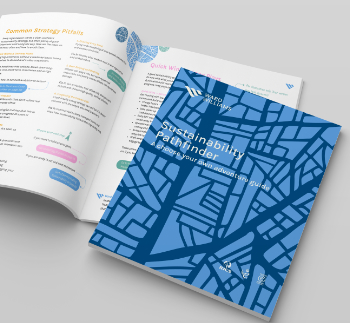
Built environment agency launches free Pathfinder© tool to help businesses progress sustainability strategies.
Government outcome to the late payment consultation, ECA reacts.
IHBC 2025 Gus Astley Student Award winners

Work on the role of hewing in UK historic conservation a win for Jack Parker of Oxford Brookes University.
Future Homes Building Standards and plug-in solar
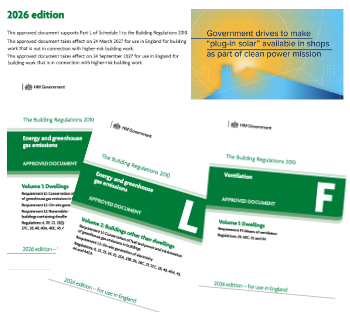
Parts F and L amendments, the availability of solar panels and industry responses.
How later living housing can help solve the housing crisis
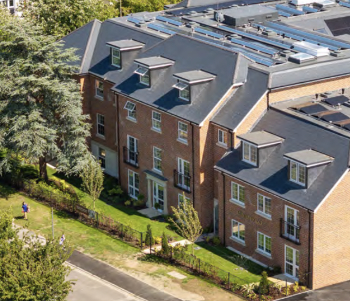
Unlocking homes, unlocking lives.
Preparing safety case reports for HRBs under the BSA
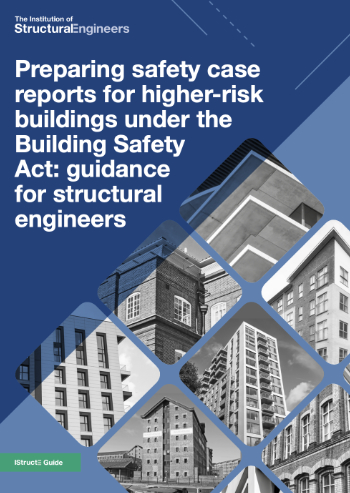
A new practical guide to preparing structural inputs for safety cases and safety case reports published by IStructE.
Male construction workers and prostate cancer
CIOB and Prostate Cancer UK encourage awareness of prostate cancer risks, and what to do about it.