





Vicarious performance

|
'Vicarious performance' refers to the carrying out of contractual obligations by a person who is not party to a contract, usually by sub-contract or assignment. So, for example, performance by a sub-contractor constitutes vicarious performance on behalf of the main contractor, who remains fully responsible for the work, except where the main contract provides otherwise.
Whether the contractor is allowed to delegate vicarious performance of either all or some of their obligations to a third party will depend on the terms of the contract.
Vicarious performance of the work and whether it is permitted is usually decided based upon whether it either:
- Does not matter who does the work.
- Or, the contract expressly prohibits it.
Where the work is of a non-specialist nature, the right of the contractor to employ a sub-contractor is normally implied.
British Waggon Co. & Parkgate Waggon Co. v. Lea (1880), is often viewed internationally as being the authoritative case. The original contractor (Parkgate) contracted to keep railway carriages in repair for Lea & Co. over a number of years. The original contract did not call for the repairs being necessarily effected by the Parkgate company itself, but could be undertaken by any company capable of completing the works to a similar standard. The Parkgate Company had arranged with the British Waggon company that the latter should execute the repairs. Therefore, on liquidation of Parkgate, the benefit and burden of the contract was assigned to British Waggon. Lea could not refuse performance despite the assignment.
Cockburn CJ stated: 'All that the hirers, the defendants, cared for in this stipulation was the wagons should be kept in repair; it was indifferent to them by whom the repairs should be done. Thus if, without going into liquidation, or assigning these contracts, the company entered into a contract with a competent party to do the repairs, and so procured them to be done, we cannot think that this would have been a departure from the terms of the contract to keep the wagons in repair.'
The ruling on this case was based on the fact that Parkgate was originally bound by the contract to undertake the repairs, thereby producing a result (not necessarily by its own efforts) but, if it wanted to, by vicarious performance through a sub-contractor or otherwise. By getting the repairs satisfactorily completed by a third party, Parkgate had discharged its obligations of repair under the contract.
NB: The British Waggon ruling may not apply where the contractor has been chosen for their specialist skills, reputation and ability to perform complex operations efficiently.
The contractor's liability for the defaults of the sub-contractor may arise in either tort or in contract.
[edit] Related articles on Designing Buildings Wiki
- Assignment.
- Back-to-back provisions in construction contracts.
- Common law.
- Construction contracts.
- Contractor.
- Contractor vs supplier.
- Domestic sub-contractor.
- Named specialist work.
- Named sub-contractor.
- Nominated sub-contractor.
- Sub-contractor.
[edit] External references
- 'Construction Contract Law: The Essentials', ADRIAANSE, A., Palgrave MacMillan (2005)
Featured articles and news
Building Control Independent Panel final report

A precis of a key report lead by Dame Hackitt with full recomendations and link to the government response.
Guide to ISO 19650 for Architecture Firms (2026)
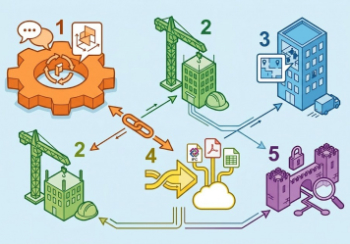
A user gives their low down.

A UK training and membership provider for mould remediation professionals.
Building Safety recap April, 2026

A short and longer run-through of the month, with links to further information and sources.

CIAT May 2026 briefing.

Independent NSI and BAFE study exploring how organisations are changing the way they buy fire safety services.

From medieval scribes to modern word art.

ECA welcomes crackdown on late payment and push for clean energy, whilst CIOB seek fixed cladding removal timeframes.
Cyber Security in the Built Environment

Protecting projects, data, and digital assets: A CIOB Academy TIS.
Managing competence in the built environment
ITFG publishes new industry guide on how to meet the ICC principles.

The UK's campaign to reduce noise pollution: Mythbusting, articles and topic guides.
Setting Expectations on Competence Management
Industry Competence Committee.
New Scottish and Welsh governments

CIOB stresses importance of construction after new parliament elections.
The sad story of Derby Hippodrome

An historic building left to decay.

ECA, JIB and JTL back Fabian Society call to invest in skills for a stronger built environment workforce.