





Variable air volume VAV
Ventilation is necessary in buildings to remove ‘stale’ air and replace it with ‘fresh’ air:
- Helping to moderate internal temperatures.
- Replenishing oxygen.
- Reducing the accumulation of moisture, odours, bacteria, dust, carbon dioxide, smoke and other contaminants that can build up during occupied periods.
- Creating air movement, which improves the comfort of occupants.
Very broadly, ventilation in buildings can be classified as ‘natural’ or ‘mechanical’. Mechanical ventilation systems can also include heating, cooling, humidity control and air filtration. These functions are often described collectively as HVAC (Heating Ventilation and Air Conditioning).
Within these systems, ventilation and temperature can be regulated either by:
- Variable air volume (VAV), in which the temperature of the supply air remains constant, but the volume varies (also known as variable volume, constant temperature VV-CT).
- Constant air volume (CAV) in which the volume of air supply remains constant, but the temperature varies (also known as constant volume, variable temperature CV-VT).
- Variable volume, variable temperature (VV-VT sometimes referred to as variable volume and temperature - VVT).
VAV systems tend to provide closer control of air temperature than CAV systems and require lower fan speeds, as a result of which they can use less energy and generate less noise.
In simple VAV systems, air handling units (AHU) supply air through ductwork to spaces within the building, and the temperature of the spaces is moderated by adjusting the supply flow.
In more complex systems, where spaces have different heating or cooling demands, there may be additional local control of the amount of air that enters each space. Typically, cool air is supplied by an air handling unit, and thermostatically controlled dampers regulate the amount of air that enters each space. The damper must always remain partially open to allow some ‘fresh’ air into the space.
The fans in the air handling unit are adjusted (variable frequency drive VFD) to control the air pressure in the ductwork. Refrigerant flow is also adjusted to ensure that the air temperature remains constant. VAV terminal units may include fans that re-circulate a proportion of internal air along with the ‘fresh’ supply air to reduce the cooling load.
Where variations between spaces mean that some local heating is required in to maintain constant temperatures throughout a building, VAV terminal units may re-heat the supply air. Despite the apparent waste of re-heating previously cooled air, this can be more economic than providing a warm air supply from the air handling unit when there is only limited heating demand. Heat may be provided in VAV terminal units by electrical elements or by hot water coils.
In dual duct systems, both cool air and warm air ducts are provided.
Ventilation in buildings is regulated by Part F of the building regulations.
[edit] Related articles on Designing Buildings
- Air conditioning.
- Building services.
- Chiller unit.
- Computational fluid dynamics.
- Constant air volume.
- Cross ventilation.
- Dew point.
- Humidity.
- Interstitial condensation.
- Mechanical ventilation.
- Natural ventilation.
- Passive building design.
- Solar chimney.
- Stack effect.
- Thermal comfort.
- Ventilation.
- Volume.
Featured articles and news

We're expanding our collaborative mission by launching DB Intelligence, an exclusive market research advisory panel. Built environment professionals can now get paid to share their expertise on industry trends, products and services.
Panel members receive direct financial incentives for participating in research projects like short surveys, 1-2-1 interviews and focus groups. Register today to shape the future of the construction sector.
Building Safety Wiki Interviews

Chief executive of the British Woodworking Federation.
Planning condition discharge in England and Wales

A brief exoplanation from a building compliance expert, with further links.
Overheating guidance and tools for building designers

Guidance for dealing with element of building fabric control that have increasing importance.
Shading for housing, a design guide

From the Good Homes Alliance and British Blind and Shutter Association.
UK Standard Skills Classification (SSC)

A shared framework for describing skills needs.
Social media ban consultation comes to close

CIOB urges UK Government to consider social media’s role in careers guidance in ban debate.
The latest of eight Skills England apprenticeship units

The addition of battery manufacturing welcomed by ECA with a warning about the risks of fast-tracked apprenticeship units.
Building Control Independent Panel final report
A precis of a key report led by Dame Hackitt with full recommendations and link to the government response.
Building Safety recap April, 2026
A short and longer run-through of the month, with links to further information and sources.
CIAT May 2026 briefing.

From medieval scribes to modern word art.
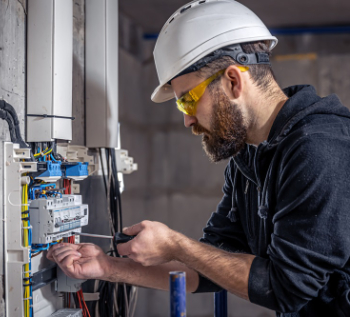
ECA welcomes crackdown on late payment and push for clean energy, whilst CIOB seek fixed cladding removal timeframes.
Cyber Security in the Built Environment
Protecting projects, data, and digital assets: A CIOB Academy TIS.
Managing competence in the built environment
ITFG publishes new industry guide on how to meet the ICC principles.