





Urban Task Force
The Urban Task Force (UTF) was established by the Department of Environment, Transport and Regions (DETR) in 1998. The then Deputy Prime Minister, John Prescott, appointed British architect Richard Rogers as the chair of the Urban Task Force. This followed publication of Rogers’ seminal book ‘Cities for a small planet’ in 1997, a re-working of his 1995 BBC radio Reith Lectures.
The purpose of the Urban Task Force was to ‘…identify causes of urban decline and establish a vision for cities in England, founded on the principles of design excellence, social well-being and environmental responsibility within appropriate delivery, fiscal and legal frameworks’ (ref The Urban Renaissance six years on, Richard Rogers).
The membership of the Urban Task Force was:
- Richard Rogers (Lord Rogers of Riverside)
- Richard Burdett (LSE)
- Tony Burton (CPRE)
- Alan Cherry (Countryside Properties plc)
- Martin Crookston (Llewelyn-Davies)
- Anthony Dunnett CBE (SEEDA)
- Sir Peter Hall (University College London)
- Phil Kirby (BG Properties)
- David Lunts (Prince of Wales Foundation for Architecture and the Urban Environment)
- Anthony Mayer (Housing Corporation)
- Anne Power ( LSE)
- Wendy Thomson (London Borough of Newham)
- Sir Crispin Tickell (Government Panel on Sustainable Development)
- Lorna Walker Director (Arup)
They confronted the challenges posed by the decline of the inner-cities, the need for 4 million additional households and the perceive blight of suburban sprawl which was swallowing greenfield land.
Their findings were presented in a report to the government on 29 June 1999 ‘Towards an urban renaissance, Final report of the Urban Task Force’. More than 100 recommendations were made, proposing that cities should be more sustainable, better designed, more compact, better connected and should support a range of diverse uses. This would require strengthened democratic local leadership, increased public participation and greater investment in urban areas (see Towards an urban renaissance for more information).
In 2000 Rogers went on to publish ‘Cities for a Small Country’, with another UTF member Anne Power, restating the need for compact sustainable cities (See Compact sustainable cities for an updated summary of Cities for a Small Country)
In November 2005, the UTF published The Urban Renaissance six years on an ‘…independent report based on the personal experience of Urban Task Force members on the ground, designed to stimulate public debate and encourage new thinking’. The report noted that there had been some success, but that new issues had emerged and many problems remained, including; continued migration of the middle classes to the suburbs, poor transport provision and a lack of housing supply.
In 2013, Ed Vaizey, Minister for Culture, Communications and Creative Industries in the Department for Culture, Media and Sport (DCMS) commissioned architect Terry Farrell to produce ‘Our future in place, The Farrell Review of Architecture + the Built Environment (FAR)’. Published in 2014, some saw this as the successor to the reports of the UTF, although Farrell suggested that Rogers’ remit ‘…was focused more specifically on town centres and urban regeneration. It also differed in that its primary role was to help the policy formulation of a government taking office….’
[edit] Find out more
[edit] Related articles on Designing Buildings Wiki
- Brownfield land.
- Compact sustainable cities.
- Farrell Review.
- Green belt.
- Richard Rogers.
- Richard Rogers - A Place for all People.
- RSH+P.
- Smart cities.
- Towards an urban renaissance.
[edit] External references
- The Urban Renaissance six years on, Richard Rogers.
- Towards and urban renaissance.
- 1995 BBC radio Reith Lectures.
Featured articles
Check out some of the best features and news from Designing Buildings as well as key stories from around the web.

Your views needed - a strategy for the professions, trades and occupations.

Confronting competency, codes, capacity and costs.

The hidden risk in modern construction supply chains.
Construction Management, 10 June

24 months to 14: CITB launches accelerated apprenticeships.
Bridging the gap between clients and contractors

Concerns remain around contractor quality, capability, and delivery.
Construction Management, 10 June.

Heat pumps beat boilers in new home tests.
Building Safety Act implementation in Wales

CIAT to host industry panel on 26 June.

New and updated CLC building safety guidance.
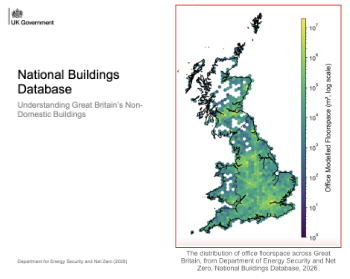
New UK National Buildings Database.
Building Safety Wiki Interviews

Chief executive of the British Woodworking Federation.
Planning condition discharge in England and Wales

A brief explanation from a building compliance expert, with further links.