





Toronto Tree Tower

In 2017, Penda architects teamed up with the Canadian timber consultants Tmber to design a modular high-rise tower for Toronto.
The Toronto Tree Tower is intended to be a catalyst for future residential buildings that are more efficient to construct and more ecological than some more common construction methods. The 18-storey tower will stand 62 m high and will provide 4,500 sq. m of residential space and 550 sq. m of public space.

Canada has a long tradition of timber construction and was one of the first countries in the world to change their building codes to use timber in vertical structures. It was also a forerunner for a modular, prefabricated construction which was both efficient and visually interesting, a primary example being Moshe Safdie’s Habitat 67.
Inspired by the Habitat, The Tree Tower proposes using pre-fabricated and pre-cut cross-laminated timber (CLT) panels, assembled into modules off-site at an indoor facility.

The modular, prefab process is faster, less noisy, reduces waste and allows a high degree of quality control as most parts of the building are assembled in a controlled indoor environment. The structure of the building is mainly massive timber panels with a hybrid of CLT, concrete and steel-elements where needed and makes a statement about the use of engineered wood products in vertical structures. The tower not only uses massive timber panels as its main structural elements, but also has timber-clad panels on its facade.
Large outdoor areas provide a space for herb and vegetable planters for the residents. The botany on the terraces offer a private garden for each apartment, which creates a degree of privacy within the density of the city. The trees also provide shade in the summer and help to keep the temperature low on warm days.
Content and images courtesy of Penda.
[edit] Find out more
[edit] Related articles on Designing Buildings Wiki
Featured articles and news

We're expanding our collaborative mission by launching DB Intelligence, an exclusive market research advisory panel. Built environment professionals can now get paid to share their expertise on industry trends, products and services.
Panel members receive direct financial incentives for participating in research projects like short surveys, 1-2-1 interviews and focus groups. Register today to shape the future of the construction sector.
Overheating guidance and tools for building designers

Guidance for dealing with element of building fabric control that have increasing importance.
Shading for housing, a design guide

From the Good Homes Alliance and British Blind and Shutter Association.
UK Standard Skills Classification (SSC)

A shared framework for describing skills needs.
Social media ban consultation comes to close

CIOB urges UK Government to consider social media’s role in careers guidance in ban debate.
The latest of eight Skills England apprenticeship units

The addition of battery manufacturing welcomed by ECA with a warning about the risks of fast-tracked apprenticeship units.
Building Control Independent Panel final report
A precis of a key report led by Dame Hackitt with full recommendations and link to the government response.
Guide to ISO 19650 for Architecture Firms (2026)
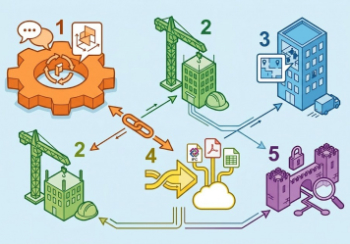
A user gives their low down.

A UK training and membership provider for mould remediation professionals.
Building Safety recap April, 2026
A short and longer run-through of the month, with links to further information and sources.
CIAT May 2026 briefing.

Independent NSI and BAFE study exploring how organisations are changing the way they buy fire safety services.

From medieval scribes to modern word art.

ECA welcomes crackdown on late payment and push for clean energy, whilst CIOB seek fixed cladding removal timeframes.
Cyber Security in the Built Environment

Protecting projects, data, and digital assets: A CIOB Academy TIS.
Managing competence in the built environment
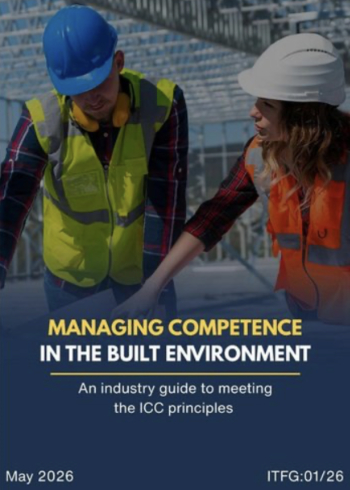
ITFG publishes new industry guide on how to meet the ICC principles.

The UK's campaign to reduce noise pollution: Mythbusting, articles and topic guides.
Comments
Can we have comments on actual living conditions encountered by residents compared to their previous living?