






The Crucial Roles of Automotive Design in Mechanical Industry
The world of engineering and mechanical services is continually evolving, with technological advancements reshaping the industry at an unprecedented pace. Amid these changes, the role of automotive design in the mechanical sector has become increasingly crucial. This blog will delve into the various facets of how automotive design plays a pivotal role in the mechanical industry, particularly in the context of engineering services.

[edit] Innovative Design and Engineering Integration
The automotive industry has long been at the forefront of innovation in design and engineering. The principles and practices that have evolved in the automotive sector are directly applicable to other mechanical industries. In the field of engineering services, for instance, the integration of automotive design concepts can result in more efficient and creative solutions. The modular design approach used in automotive design, where components are designed to be easily assembled or replaced, can be leveraged in mechanical engineering to streamline manufacturing processes.
[edit] Advanced Materials and Manufacturing Techniques
Automotive design often pushes the boundaries of materials science and manufacturing techniques. Lightweight materials like carbon fibre, advanced composites, and high-strength alloys are extensively used in the automotive sector to improve fuel efficiency and safety. These innovations can be adapted to the mechanical industry, resulting in more durable and lightweight products. In the context of engineering services, this translates into cost-effective and sustainable solutions.
[edit] Safety and Reliability
Safety is a paramount concern in both the automotive and mechanical industries. The stringent safety standards applied in automotive design, including crash tests and extensive simulations, can be adopted in the engineering sector to ensure the safety and reliability of mechanical systems. This cross-pollination of ideas contributes to the development of robust and secure mechanical solutions.
[edit] Digital Twin Technology
Digital twin technology, which involves creating a digital replica of a physical system, is a concept that has gained significant traction in the automotive sector. The same technology is incredibly valuable in the field of engineering services. By creating digital twins of mechanical systems, engineers can simulate and analyse performance, identify potential issues, and optimise designs before the physical product is built. This approach not only reduces development costs but also speeds up the design process.
[edit] Environmental Sustainability
Sustainability is a growing concern across industries. Automotive design has seen an increased focus on electric and hybrid vehicles, as well as alternative fuels and energy-efficient systems. These innovations can be adapted to the mechanical sector to develop environmentally friendly solutions. In engineering services, this translates into designing more energy-efficient HVAC systems, sustainable building materials, and water conservation methods.
[edit] AI and Machine Learning
Artificial intelligence and machine learning have transformed the automotive industry, enabling self-driving cars, predictive maintenance, and advanced driver assistance systems. These AI tools have the potential to revolutionise the mechanical industry as well. In engineering services, AI-driven predictive maintenance can ensure the longevity and reliability of mechanical systems. AI can also be used for predictive analytics in building management, improving energy efficiency and occupant comfort.
[edit] 3D Printing and Prototyping
3D printing has been a game-changer in automotive design, allowing for rapid prototyping and iteration. In the mechanical industry, 3D printing can be used to create custom components and prototypes, reducing lead times and costs. Engineering services can benefit from this technology by quickly producing scale models for project presentations and testing.
[edit] Cross-Industry Collaboration
Collaboration between the automotive and mechanical industries fosters innovation. Engineers and designers from both sectors can exchange ideas and best practices, leading to cross-fertilization of knowledge. In engineering services, this collaborative approach can result in out-of-the-box solutions that combine the best of both worlds.
In conclusion, automotive design plays a pivotal role in the mechanical industry, offering innovative solutions, advanced materials, safety practices, digital twin technology, sustainability, AI tools, 3D printing, and collaboration opportunities. As technology continues to advance, the synergy between these two industries will become even more pronounced. Engineering services can greatly benefit from adopting and adapting the principles and practices of automotive design, creating a brighter and more efficient future for the mechanical industry.
--Engineering Design & BIM Services
[edit] Related articles on Designing Buildings
Featured articles and news

A landmark moment for postmodern heritage.
A safe energy transition – ECA launches a new Charter

Practical policy actions to speed up low carbon adoption while maintaining installation safety and competency.
Frank Duffy: Researcher and Practitioner

Reflections on achievements and relevance to the wider research and practice communities.
The 2026 Compliance Landscape: Fire doors

Why 'Business as Usual' is a Liability.
Cutting construction carbon footprint by caring for soil

Is construction neglecting one of the planet’s most powerful carbon stores and one of our greatest natural climate allies.
ARCHITECTURE: How's it progressing?
Archiblogger posing questions of a historical and contextual nature.
The roofscape of Hampstead Garden Suburb

Residents, architects and roofers need to understand detailing.
Homes, landlords. tenants and the new housing standards

What will it all mean?
The Architectural Technology podcast: Where it's AT

Catch-up on the latest episodes.
Edmundson Apprentice of the Year award 2026

Entries now open for this Electrical Contractors' Association award.

Traditional blue-grey slate from one of the oldest and largest UK slate quarries down in Cornwall.

There are plenty of sources with the potential to be redeveloped.
Change of use legislation breaths new life into buildings

A run down on Class MA of the General Permitted Development Order.
Solar generation in the historic environment
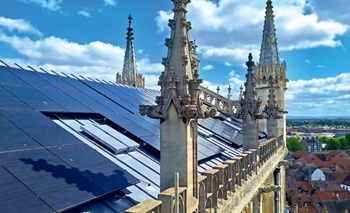
Success requires understanding each site in detail.